
Claude Code on Opus 5.5 refuses to clone existing games

Anthropic added two sentences to Claude Code’s prompt on Opus 5.5 that tell it not to rebuild a specific existing game. chasm spotted the rule on X, said it was pushed around October 27 under the flag tengu_heron_brook, and Anthropic confirmed it on October 30. The wording isn’t in the Claude Code client, so it isn’t tied to any release: Anthropic’s servers feed it into a general prompt slot that has carried other instructions since May, and the one opt-out on record is a pair of environment variables we could not test ourselves.
Game Developer reproduced the rule in full from chasm’s post:
Do build original games, games in a genre, and games from the user’s own designs and assets. Do not build a recreation of a specific existing game, even if it is renamed or called original.
Asked for comment, an Anthropic spokesperson pointed Game Developer to a post by Addy Osmani, which was a direct reply to chasm. “We added two sentences to Claude Code’s prompt on Opus 5.5 to steer it away from recreating someone else’s specific game because using Claude to infringe IP is against our usage policy,” Osmani wrote. “Original games, genre games, and games built from your own designs and assets are meant to keep working. We’ll continue to iterate to ensure we’re striking the right balance.” chasm, for their part, reported that there is no way to switch the rule off.
Why games, and why now
The rule follows weeks in which indie studios held back demos. Kotaku describes Opus 5.5 as able to decompile a game’s code and recompile it in a way that would previously have taken determined coders months to years, and it links that to a rush of games reverse-engineered and uploaded to play in browsers. Digital Sun, the studio behind Moonlighter, announced on October 19 that ReVamp’s first playtest would move from Steam to a smaller one on Discord: “We’ve been concerned by the recent news of games being reverse-engineered, cloned and published before the original is even out.” Alliance Arts delayed its Steam Next Fest demo for Drunken Goddess Reflex, worried that its content “could be used to quickly imitate or replicate the game’s presentation and gameplay with AI or other tools.”
Game Developer reports that developers have also pressed Valve on how it can keep clones from supplanting their games on Steam, and that the company gave developers in South Korea a rare explanation earlier in the week. Tom’s Hardware adds that some developers have been hit by extortion scams threatening to turn their demos into complete games before the originals ship. McPixel developer Sos Sosowski, who has been collecting indie complaints about AI clones, summed up the bind in a line quoted by Ars Technica: “Don’t share your game—no sales. Share your game—gets stolen.”
Where the line blurs
Tom’s Hardware cites several user claims that Claude Code or Opus 5.5 now refuses harmless reverse-engineering, including work done with the Reverse Engineer Anything (REA) tool, and says the refusals may be linked to the new rule. Game Developer expects the rule to deter only the most low-effort copycats. It notes that researchers and reporters have repeatedly shown that safety limits on generative AI tools can be talked around, and that it is unclear how the software would tell whether a user owns a game idea or its assets. Many replies to chasm made a further point: cloners who find Claude too restrictive can move to open-weight models, which have no such rule.
Our analysis
What we checked
On November 1 we searched the linux-x64 binaries of Claude Code 2.1.311 and 2.1.312, read the code that loads the flag, and went through the GitHub issues that mention it, plus the ones Tom’s Hardware links.
chasm was right that the rule comes from Anthropic’s servers. But the flag is a general-purpose slot for prompt text the server sends, and it has been used for other instructions before. chasm reported no way to disable the rule, yet a commenter answering for Anthropic described an opt-out back in May, which we could not measure. And the run of GitHub complaints that Tom’s Hardware presents as fallout from the rule mostly predates it.
- Neither 2.1.311 (published October 26) nor 2.1.312 (October 27) contains the rule’s wording. Both contain the flag name, so the October 27 client release did not add the rule.
- The client takes a string from its bootstrap data or from the GrowthBook flag service, and injects whatever text it receives. That code has no model check, so by our reading the Opus 5.5 targeting happens server-side. This is an inference from the code, not a measurement.
- The slot first appeared in v2.1.150, and a developer reported it on May 24. In July and August it carried “Do not call the AgentTool unless the user requested it” for Opus 5 only. That text no longer appears in 2.1.312.
- Tom’s Hardware links five issues. Three of them, filed October 15, 24 and 26, came before the rule and blame the cyber classifier. The October 24 one is the “tabletop-like game.” Of the two filed after October 27, only one names the games rule.
- That one issue comes from Conflict Simulations LLC, which builds board-wargame modules on commission. In a follow-up, the author says the work kept running after the rule shipped, and refusals began only after they asked Claude whether the rule applied. It is one report from one user.
If it refuses your own game
Osmani asked developers to send him cases where Claude turns down something that is theirs. The other route is on the May issue, where the commenter answering for Anthropic wrote that CLAUDE_CODE_DISABLE_NONESSENTIAL_TRAFFIC=1 and DISABLE_GROWTHBOOK=1 opt out of system-prompt experiments. GitHub shows no maintainer badge on that account, so we cannot confirm the person works at Anthropic. Both variables exist in the 2.1.312 binary. The flag refreshes every 60 seconds and is also cached to disk, and an issue closed on October 2 reports that the first variable stops the fetch but not the read: a payload already cached in ~/.claude.json keeps applying.
Up next
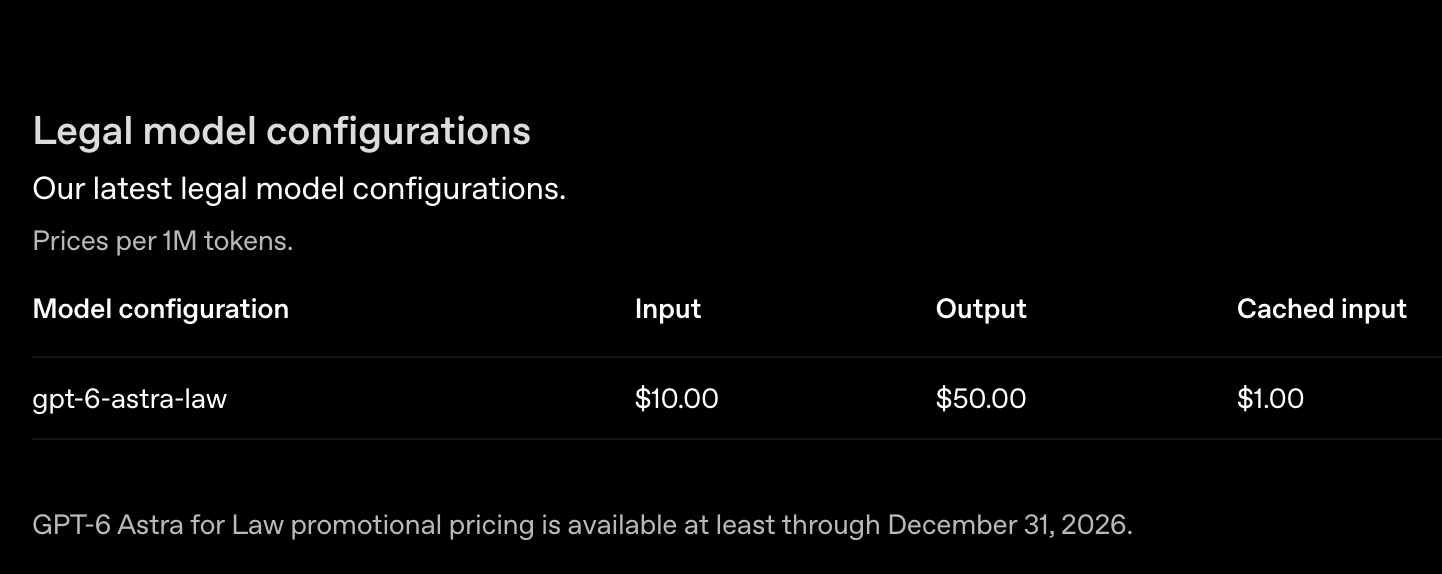
OpenAI prices GPT-6 Astra for Law same as base Astra
gpt-6-astra-law shows up on OpenAI’s API pricing page at $10 in and $50 out per million tokens, base Astra’s rate, but as promotional pricing through at least Dec 31, 2026. Has a promo API price ever ended under a product you’d already built on?
Related stories
- Claude Code won’t type passwords, even in a test env
- No multiplayer in Claude Code Projects yet, Anthropic says
- Claude Code on Pro lists Haiku 5.5 as the recommended default
- Your claude.ai skills follow you into Claude Code 2.1.275
- Claude Code projects can burn your limits faster
- Claude Code 2.1.274 warns before memory turns critical
Comments
No comments yet. Be the first.
Join the conversation
Sign in to leave a comment. It appears after moderation.