
Claude Opus 5.5 finished Baldur’s Gate 3 alone in 38.9 hours
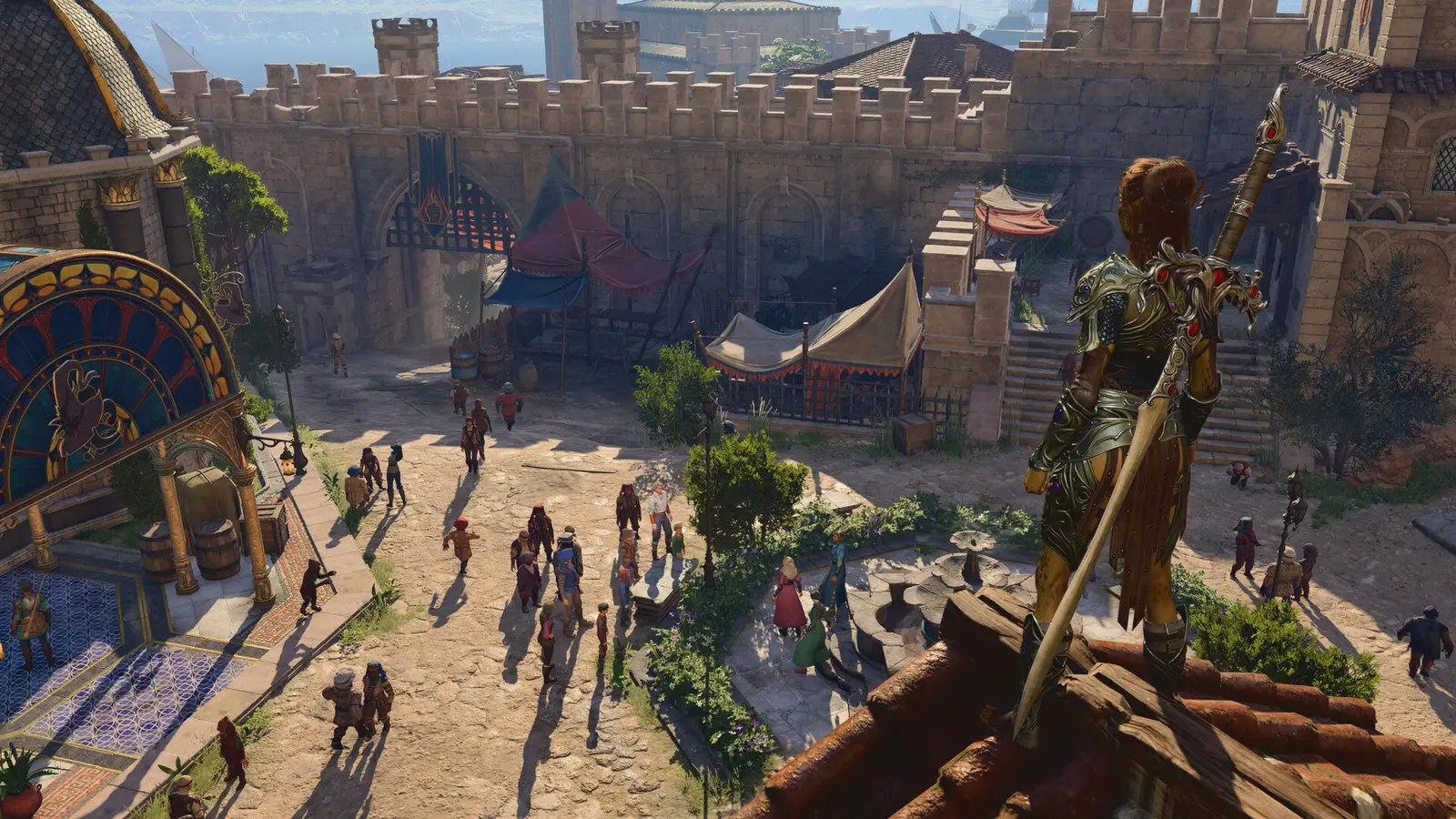
Claude Opus 5.5 has played Baldur’s Gate 3 through to its ending with nobody at the controls. Its paladin killed the Netherbrain on the twelfth attempt on October 18. The run took 96 sessions, 38.9 hours of play and $711.66 in model cost, according to a write-up on the Bogdantruta blog by the person who built the mod and MCP server it played through. In the author’s own words, the run shows the game can be finished this way but doesn’t say how good the agent is: it was a single run on Explorer, the easiest difficulty, and the harness was being fixed between sessions.
Opus 5.5 ran in Claude Code at medium reasoning effort, the default Anthropic set for the model in September, with every built-in tool switched off. That left it 93 tools, all exposed by a Python MCP server. The server talks to a Lua mod inside the native Linux build of the game, loaded through bg3le, a community Linux port of the Script Extender. The agent saw only what a party member could perceive, judged by the engine’s own line-of-sight checks, plus whatever the game’s UI shows. It could take screenshots and read bg3.wiki, and it read the wiki 577 times. Its instructions contained no puzzle or encounter answers.
Each session ran 20 to 45 minutes and started with a fresh context and the previous session’s handoff note. The agent’s memory was a folder of Markdown files in git that it wrote itself. Between sessions a second agent, the memory keeper, sorted the logs into files on people, places, quests and decisions, at a cost of $17.46. The author found lessons.md the most useful of these files. It held 70 one-line lessons, each keyed by words the game shows, and each was shown to the agent again when a matching fight or place came up. One of them:
WHEN Crown of Karsus, Netherbrain: Compulsion at x,y,z didn’t channel → cast at the Crown entity id within 6 m (S095)
The caveats, in numbers
About 33 rounds of harness fixes landed between sessions. They changed the tools, never the save or the game state, and all 182 test files ran on every merge. The run came in two stretches: sessions 1 to 65 from October 9 to 11, then a six-day pause while parts of the harness were rebuilt, then sessions 66 to 96 on October 17 and 18. Reloads were allowed after a party wipe, a clear accident or a harness bug, never to reroll a failed dialogue check. Even so, 91 of the 149 recorded fights included one, roughly three in five. About 12% of the 20,809 tool calls returned an error or were refused, many of them because of harness bugs the author fixed later. The bill works out to a little over $18 per hour of play, $694.20 of it spent on playing.
Two problems gave the agent help it shouldn’t have had. In sessions 1 to 65, a bug let it cast spells it had not prepared, and the author couldn’t tell from the logs how often that mattered. In session 36, one of his tools drew the agent a text map of the invisible path across the Faith-Leap Trial, built from hidden platform positions no player sees. So on October 18 he had it replay the trial from the same save, with fresh memory and no map. The rerun took 36 minutes, 674 tool calls and $24.13, with one death and eleven reloads, most of them to reset the trial’s lights after a misstep. At a dead end about three metres short of the altar platform, the agent jumped.
Only Claude has played, and the instructions were tuned on its failures. The author doesn’t know whether this is the first time an AI has finished the game.
Twelve tries at the Netherbrain
The four longest stalls were the Gauntlet of Shar and the Shadowfell (four and a half hours), Gortash and Orin (nearly four), Cazador and Viconia (three and a half) and, at the end, the Netherbrain. The author traces most long stalls to one of two causes. Some were gaps in his interface: a jump tool capped at 8.5 metres that knew nothing about the Shadowfell’s lower gravity, text tools that saw nothing in magical darkness, and a door the tools couldn’t target. He fixed those between sessions. The rest were game rules the agent had to find by losing. It wrote a lesson after each loss and read it back before the next try.
Viconia, a late boss whose cultists keep filling the room with Darkness, beat the party twelve times. In session 82 the agent found that Daylight cast at a point on the ground works while blinded, though Daylight cast at an ally fails. The final battle took seven sessions, about three and a half hours. On try 12 the agent found that the Emperor’s channel, cast at a point next to the Crown of Karsus, reports success but does nothing; cast at the Crown itself from within 6 metres, it works. The platforms the brain marks are destroyed at the end of each round, along with anyone standing on them, so the agent spread the party across separate ones. Gale’s upcast Magic Missile finished the brain at 11:35:52, in round 16.
The oath and the promise
The agent named its half-orc paladin Claude and took the Oath of Devotion. It broke the oath twice for good and paid to restore it each time. In the House of Healing, a Confused Claude read a Scroll of Cloudkill, and the cloud killed an innocent patient. The agent logged that as “a game outcome, not a misclick” and paid the Oathbreaker Knight 1,000 gold, which left it with 43. Two sessions later, Claude’s crossbow killed a prison warden, and that break cost 2,000; the agent saved up for eleven sessions to pay it. A third break, at the Steel Watch Foundry, it reloaded away, which stretched its own rule. It had read on the wiki that a third restoration would cost 10,000 gold, so on the second go it had Wyll give the order instead. Other mistakes stayed in: Lae’zel never joined after the agent misread an option at her cage, because reloading “would only reroll the checks”.
In session 62, Claude had promised Karlach to stay with her when her infernal engine gave out. In the epilogue the agent chose to go to Avernus with her, noting that it had “kept the S062 promise”. Karlach had meant being with her at the end, so the choice isn’t quite what she asked for. Still, the promise outlasted 34 sessions and as many fresh contexts because it sat in the notes the agent read at the start of every session.
From one run to a benchmark
The code is open source under the MIT license at github.com/Bogzx/bg3-agent-harness. The repo calls itself a research project and a work in progress that has finished the game once. Setup needs Linux and a Steam copy of the game, and things break when the game updates. The author plans to cut short scenarios from this run, such as a hard boss fight, the Faith-Leap Trial and a stretch of exploration, and have different models and agents play them through the same tools. They would be scored on whether they finish, how many attempts it takes, how long and what it costs. On the repo’s reorganised overhaul branch, the live runs so far are checks, not benchmark results. In one, Claude Code with Opus 5.5 escaped the Nautiloid, the opening level, in 15.2 minutes of play. In another, DeepSeek Flash via the pi client took 24.6 minutes and was billed $0.19.
Up next

Grok Bot can now keep its reports and dashboards updated, Video
Grok Bot’s live artifacts don’t freeze once written: the reports, memos and dashboards it builds can be edited later or kept updated over time on request. Would you let Grok keep a dashboard updated on its own, or refresh it by hand?
Related stories
- Claude Fable 5 tripled Opus 4.6’s EVE Online trading gains
- Opus 5.5 matches Fable 5.1 on most work for less money
- Claude Desktop on Linux freezes over a 27-byte reply
- Managed Agents goes fully self-hosted in private beta
- Fable 5.2 keeps thinking when told to answer directly
- Claude expands MCP Apps support with app tools and more
Comments
No comments yet. Be the first.
Join the conversation
Sign in to leave a comment. It appears after moderation.