
Claude’s connectors can now bring their own skills
MCP, the open standard that lets Claude plug into other apps and data, turned two this week, and Anthropic used the moment to give it more to do. The services on the other end, called MCP servers, can now ship skills alongside their tools, run long jobs in the background and stop to ask you before a risky step. Skills over MCP is in public beta, Tasks and Elicitation are now generally available, and a fourth piece, File Uploads, is coming soon, Anthropic said on the Claude blog.
When MCP launched in November 2024, it handled tools and data. David Soria Parra, who co-created it at Anthropic, told The New Stack that it launched with “just tools and resources” because “MCP never tries to predict where the future goes.” Since then, agents have taken off. Anthropic now says Claude can work with a server “more like it works with another agent: learning from it, delegating to it, and exchanging input and files along the way.”
Skills that come with the service
A tool’s name and description tell Claude what a server can do, not how to handle a particular job. A skill fills that gap: instructions such as best practices, a step-by-step workflow or a playbook tailored to your account or organization. Claude loads a skill only when it needs it, so it takes up little of the model’s working memory, and the skill updates with the server, so there is nothing extra to install. Shopify’s skills walk Claude through building and updating a merchant’s online store; HubSpot and Atlassian are among the other early adopters.
Since many servers already make you log in, Soria Parra says they can serve skills made for one user or company, something a plugin can’t do. He also names the hard part: “Skills are text that steers the model, and that comes with security and approval implications.”
Skills over MCP works in Claude and Claude Code and is on by default for Pro, Max and Ultra. On Team plans an admin has to turn it on first; Enterprise support is coming soon.
Long jobs and sign-offs
Until now, a tool call had to finish before Claude could move on. With Tasks, a server can run something that takes time, even a whole agent of its own, while Claude keeps working and picks up the result when it’s ready. Soria Parra’s example: a developer asks a server to look into a failed automated test run, the agent on the other side works for a few hours, and the chat pops back open with the answer.
Elicitation lets a server pause and ask you for input through a form or a link, then carry on. Supabase now confirms the cost before it creates a paid project, and GitHub makes you type a repository’s name before an agent can delete it.
Both first reached the Claude Code command line in October. They are now generally available in Claude and Claude Code on Pro, Max and Ultra, and still rolling out to Team and Enterprise.
What isn’t ready yet
File Uploads will let Claude hand PDFs, spreadsheets and images to a server without passing them through the model’s context. Until now, a file had to be packed into the tool call itself, which Den Delimarsky, a lead maintainer of MCP at Anthropic, called “a little hacky” and which fails for large audio and video. The New Stack calls it the most experimental of the new features: the extension is still a draft, and at first it will work only with servers from Intuit and Dropbox. It rolls out soon to Pro, Max, Ultra and eligible Team and Enterprise plans.
All of these are open extensions to MCP, so a server that supports them works in any compatible app, not just Claude. Next on the maintainers’ list, Delimarsky says, is a standard for agents that need to reach third-party services on their own, with no person there to click “allow.”
Up next
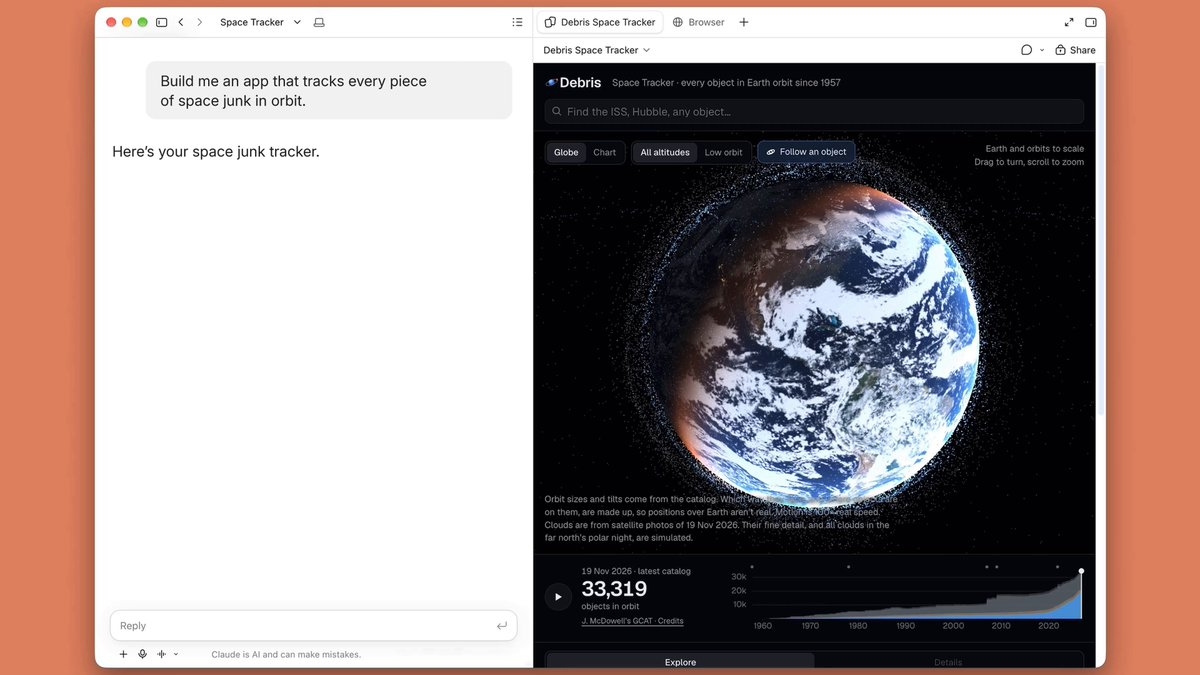
Claude artifacts can now become desktop apps, Video
In beta, a Claude artifact can now become a Mac or Windows app with its own icon and window, no packaging or API key. Its calls to Claude count toward your usage limits. Is there an artifact you already open in Claude every day?
Related stories
- Claude merges connectors and skills into plugins
- Long-running jobs and mid-task questions reach Claude Code
- Claude apps switch to auto mode by default next week
- Claude Duet works while you’re away and asks before acting
- Claude Managed Agents now plans runs of up to 1,000 agents
- Claude Marketplace opens its shelf to outside builders
Comments
No comments yet. Be the first.
Join the conversation
Sign in to leave a comment. It appears after moderation.