
Opus 4.8 fast mode ends November 30 in Claude Code

Claude Code 2.1.316, published by Anthropic on October 31, deprecates fast mode for Opus 4.8 as of October 30 and schedules its removal for November 30, the v2.1.316 release notes on GitHub say. After that date, fast-mode requests on Opus 4.8 return an error and do not fall back to standard Opus 4.8. According to the notes, migrating to Opus 5.5 is how you keep the speedup.
Who has to move
Opus 4.8 itself stays. Anthropic’s model-deprecations page still lists claude-opus-4-8 as Active, with retirement “Not sooner than May 28, 2027”, so sessions that run it at standard speed carry on unchanged. In Claude Code, fast mode is also first-party only: the Claude Code docs limit it to the Anthropic Console API and to subscription plans using usage credits, and say it is not available on Amazon Bedrock, Google Cloud’s Agent Platform, Microsoft Foundry or Claude Platform on AWS. Teams that reach Claude Code through those providers have no fast mode on Opus 4.8 to lose.
Opus 4.7 went through the same thing over the summer. Its fast mode was deprecated on June 25 and removed on July 24, and Opus 4.7 now rejects fast requests outright, with no fallback to standard speed. Fast mode was never a separate model: the documentation calls it “a different API configuration that prioritizes speed over cost efficiency,” with “identical quality and capabilities,” and up to 2.5x higher output tokens per second, a gain focused on output speed more than on time to the first token. Moving off Opus 4.8 fast therefore means changing the model behind the session.
For direct API callers the move also changes the access status. On Opus 4.8 and Opus 5, fast mode is a research preview that needs the fast-mode-2026-02-01 beta header and access provisioned in the Console. On Opus 5.5 it is generally available: requests set speed: "fast" with no beta header, and the model has a default fast-mode rate limit in the Start, Build and Scale usage tiers. Fast-mode pricing applies across the full context window, including requests over 200k input tokens, and fast mode does not work with the Batch API.
What Opus 5.5 fast costs
Fast mode costs twice the standard rate on both models. Anthropic’s pricing page lists Opus 4.8 at $5 per million input tokens and $25 per million output at standard speed, and $10/$50 in fast mode; Opus 5.5 is $4/$20 standard and $8/$40 fast. So fast Opus 5.5 costs 20% less than fast Opus 4.8 on uncached input and on output. Cache reads drop further: Opus 5.5 bills a cache hit at 0.05x base input, $0.20 per million tokens against $0.50 on Opus 4.8, which is 60% less. Caching multipliers stack on top of fast-mode pricing, and from that rule we infer a fast-mode cache read at $0.40 per million on Opus 5.5 against $1.00 on Opus 4.8.
Those savings hold only at equal token counts, and Anthropic’s Opus 5.5 migration guide lists three differences that change the counts. On Opus 4.8, thinking is off unless a request asks for it. On Opus 5.5, a request with no thinking field runs with thinking, and thinking tokens are billed as output even when the thinking text is not returned, so a workload that ran Opus 4.8 without thinking can produce more output tokens per request (the guide documents this; we did not measure it). The minimum cacheable prompt drops from 1,024 tokens to 512. Priority Tier, which Opus 4.8 keeps, is not supported on Opus 5.5.
Inside Claude Code there is one more shift. The model catalog built into 2.1.316 sets the default effort to high for Opus 4.8 and to medium for Opus 5.5. We found this in the binary and did not measure it, but it means a session switched to Opus 5.5 without an explicit effort setting also changes its default effort.
Also in 2.1.316
CLAUDE_CODE_SUBAGENT_EFFORTsets the effort level subagents run at when nothing else names one, so they no longer inherit the session’s. In the binary we found that it acceptslow,medium,high,xhighandmax, treatsinheritas no default and ignores any other value. It applies only when the agent definition sets no effort of its own.- The Claude apps gateway adds pooled group budgets, set with
pooled_budgeton the spend limits admin API: one monthly budget that a group’s members share, on top of each member’s own limit. Withmanaged.policy_mode: layered, every policy that matches a developer applies, each merged over the ones listed below it, where before only the first applied. - On Bedrock upstreams, the gateway’s
guardrail.input_taggingwraps prompts in the input tags that an Amazon Bedrock guardrail’s prompt attacks filter needs. The gateway also now checks every model a request names againstavailableModels,deniedModelsandmodels, and a request naming a blocked model gets a 400 that names the field. CLAUDE_CODE_DISABLE_ULTRATHINKturns off the ultrathink keyword. In VS Code, ultrathink now runs its turn at xhigh effort, matching the terminal since 2.1.311, where that applies on Opus 5.5, Sonnet 5.5, Haiku 5.5 and Fable 5.1 through Anthropic’s API.--restrictedsessions no longer upload files from outside the working directories when a Read allow rule covered them.- On Vertex AI and Bedrock, the
sonnet,opusandhaikualiases now switch to an older model when the newest isn’t available to the account or region. Before the fix they showed an error mid-session. - Server-managed settings for Team and Enterprise logins now apply without an approval prompt, and a stored copy that doesn’t verify is refused.
The remaining fixes cover Bash aliases and SHELLOPTS, PowerShell hooks, the VS Code panel, cloud sessions and Claude Tag in Slack, and are listed in the notes.
Our analysis
What we checked
On November 1 we read Anthropic’s pricing page, the fast mode and Claude Code docs, the Opus 5.5 migration guide and the model-deprecations page. We also searched the strings of the 2.1.316 and 2.1.314 binaries, without running either.
The prices and the 2x premium check out. The 20% saving on fast Opus 5.5 covers uncached input and output only: cache reads get much cheaper, and thinking that is on by default can add output tokens. The notes say Opus 4.8 fast requests will return an error, but the client we inspected only shows a warning, so the cut-off on November 30 looks set to come from Anthropic’s API.
- The 2x premium on Opus 4.8 dates from Claude Code 2.1.154, which repriced fast mode on that model to “2x the standard rate for 2.5x the speed”. It cost more before that.
- The older-model chain behind the Vertex and Bedrock fix (Opus 5.5, then Opus 5, Opus 4.8, 4.7, 4.6, 4.5 and 4.1) was already in the 2.1.314 catalog, so the fix changed the logic, not the data.
- The same deprecation banner was already in 2.1.314, released October 30. It reads “Opus 4.8 fast mode is deprecated and will be removed on Nov 30”, appears when fast mode is switched on with Opus 4.8, and takes its date from a remotely served flag that defaults to November 30. Once the date passes, the banner stops showing.
- The built-in catalog still lists fast mode among Opus 4.8’s capabilities, and we found no code that turns it off after the date. The error comes from the API side, by our inference from the strings.
Up next
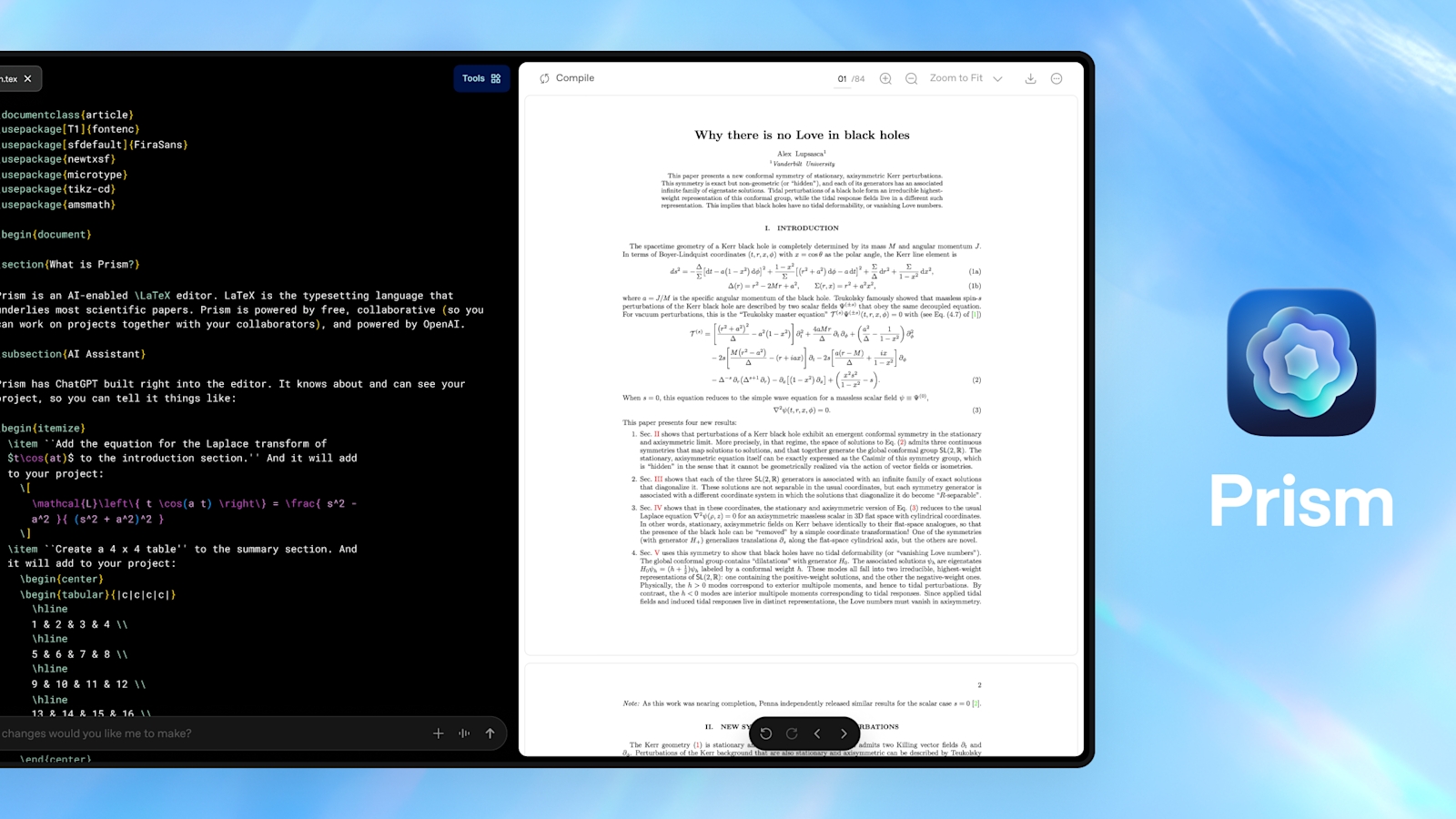
OpenAI sets a January 1, 2027 shutdown date for Prism
OpenAI’s Prism pages list a shutdown date of January 1, 2027. According to Dealroom, the app launched in January as a web app to help scientists work with AI. If a research tool you use got a shutdown date, would you migrate now or wait?
Related stories
- Claude Code 2.1.318: login expiry warning, runner log change
- Claude Code 2.1.317: email check, SDK hook block, cost API
- Claude Code on Pro lists Haiku 5.5 as the recommended default
- Claude Code 2.1.314 adds write fence, IdP groups, compaction
- Claude Code stops wiping .env files
- Claude Code on desktop folds an iPhone Duo to test layouts
Comments
No comments yet. Be the first.
Join the conversation
Sign in to leave a comment. It appears after moderation.