
Each coding session gets its own EC2 box

Each task given to Vorflux gets a whole computer: a dedicated EC2 instance running the customer’s actual application, from the database up to a mobile build. On August 17 the startup, founded by Rippling co-founder Prasanna Sankar, opened public sign-ups for that setup. It covers the work from the first plan to a merged pull request, and no laptop needs to stay connected along the way.
As Testingcatalog describes it, a session starts from what Vorflux calls two links and a sentence. From there it moves through planning, building, testing, review and the merge itself. The person who filed the task approves by exception and steps in only when something needs them. Sign-up is open on Vorflux’s website. For larger setups, the Vorflux team configures the environment together with the customer.
Vorflux says the machine is what sets it apart from a cloud sandbox. Each session clones the repos, installs the libraries and brings up the frontend, backend, mobile services and databases, with CI/CD, feature flags and environment variables wired in. Vorflux then snapshots the box with all of that still running, so later sessions start on a computer that is already up.
Because the application really runs, testing can go further than unit tests. A test pass can drive a browser through the real user flow, record it, and attach the recording to the pull request as proof. For native tests a phone boots in the cloud, and every branch gets a live URL that reviewers can open before merging. The company has been showing this in short demos. “Circle the bug,” one began on August 11, promising a PR back “with proof it’s fixed.” Five days earlier, the pitch was: “Ask why prod is slow. Get back a diagram of exactly where.”
Vorflux trains none of its own models. Each stage goes to whichever frontier model leads that particular job, drawing on Claude, GPT, Gemini and open-weight options. Planning gets the largest token budget: the model expands the request into a plan of sub-tasks, each with its own test cases, and a model from a different lab critiques that draft before any code is written. Review works the same cross-lab way. A reviewer from outside the author model’s family grades the diff and retells it in plain language, with the most important change first. Then a merge queue handles rebases and conflicts against a master branch that keeps moving.
That reliance on other labs’ models is exactly where the doubts sit. DeepTech India notes that sceptics see many products in this category as wrappers around third-party models, which leaves them open to commoditisation as the labs ship more capable agents of their own. Vorflux is betting that the lasting value sits in orchestration, reliability and the end-to-end workflow. As for the browser validation and cross-provider review, Capital Insider cautioned that those claims have not been independently verified.
The part Vorflux treats as its own is what it calls the harness. That’s where a team writes down its engineering standards so they get applied in every session. Sankar argues that the bottleneck left in software delivery is human time, not tokens. The product is aimed at technical founders, CTOs and engineering leaders who carry review backlogs and testing debt.
Billing comes in three forms:
- The customer’s own provider keys, paid to the providers directly.
- Tokens bought through Vorflux at standard provider rates, with no platform fee.
- An existing Codex subscription, routed in under a partnership with OpenAI.
Compute is billed by the hour, from roughly 21 cents for a 2 vCPU box up to $3.39 for 32 vCPUs. Servers auto-stop after an hour of idle time.
Vorflux came out of stealth in July with a $15 million seed round from Y Combinator, Peak XV Partners, Powerset and Alliance. Its angel investors include Parker Conrad, Immad Akhund and Balaji Srinivasan. The company follows Sankar’s previous venture, the crypto portfolio tracker 0xPPL, which was wound down in June after its target market didn’t materialise as expected. Entrackr reported that Sankar co-founded Rippling in 2016 and served as its CTO until July 2020.
Teams that don’t want to run the platform themselves can pick a white-glove tier. A Vorflux engineer is embedded with the customer, runs the agents against their backlog, and ships verified pull requests every week.
Up next
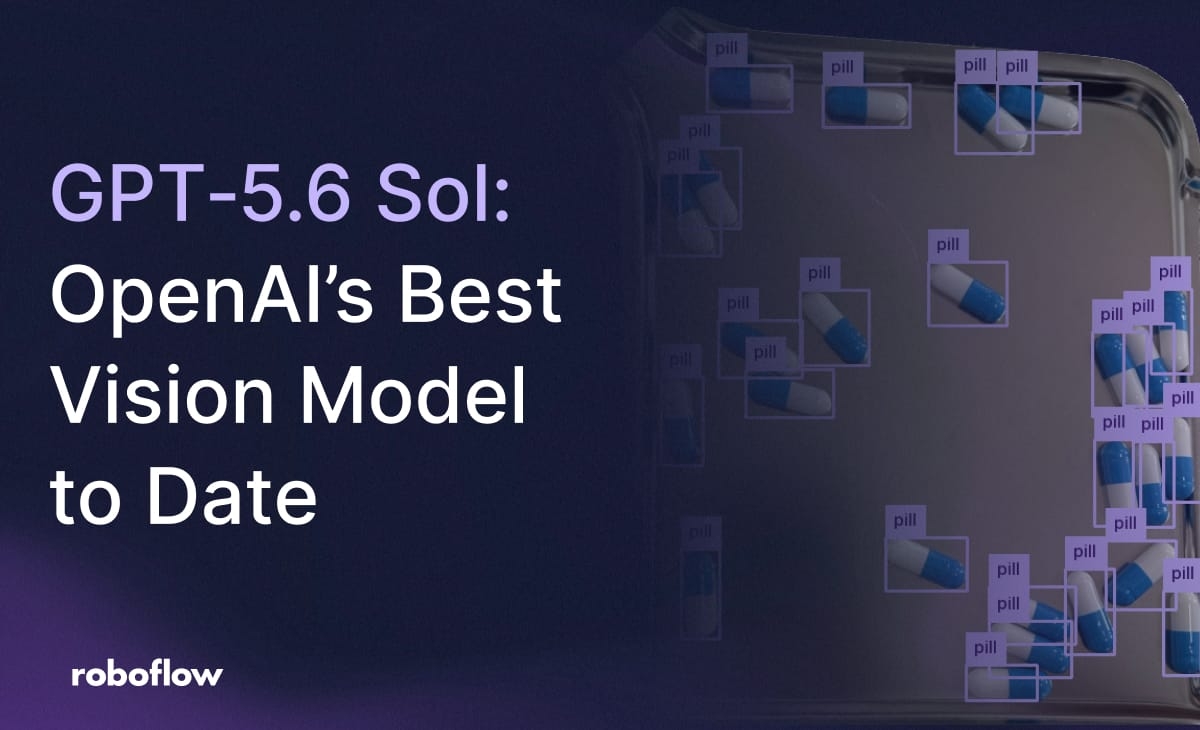
Detection climbs from 13.8 to 46.2 mAP at Roboflow
“Sol is clearly the best vision model OpenAI has released so far,” Roboflow says, with detection up from 13.8 to 46.2 mAP@50. Gemini 3.5 Flash still leads that task at 0.8 cents per image against Sol’s roughly 2.5.
Related stories
- Cursor hosts and deploys apps its cloud agents build
- AWS Emulator mocks 438 AWS APIs, written by agents
- Conductor joins Meta and shuts Conductor Cloud on Nov 20
- OpenAI to buy Pierre, whose diff tools already run in Codex
- OpenAI’s Pando cut monorepo push latency nearly 5x
- Claude API enforces thinking blocks and moves to Rust
Comments
No comments yet. Be the first.
Join the conversation
Sign in to leave a comment. It appears after moderation.