
GPT-Live-1.1 hits the API with a cheaper standby
Developers can now use GPT-Live-1.1 in OpenAI’s API. GPT-Live-1.1 is OpenAI’s voice model that can listen while it speaks. The model’s page in OpenAI’s API docs lists it as gpt-live-1.1 and sets a price per minute of conversation: $0.05 while the model is active and a new, lower standby rate of $0.02.
ChatGPT users already have the model. In October GPT-Live-1.1 took over Voice in ChatGPT, Codex and dots, and at the time OpenAI said API access was “coming soon.” The model it replaces, GPT-Live-1, opened to API developers on September 10.
What’s new for developers
Older voice assistants waited for you to stop talking before they answered. GPT-Live doesn’t wait: it hears you while it speaks, so a caller can cut in mid-sentence. According to OpenAI, version 1.1 transcribes speech more accurately than GPT-Live-1 and keeps a more consistent accent and voice across languages.
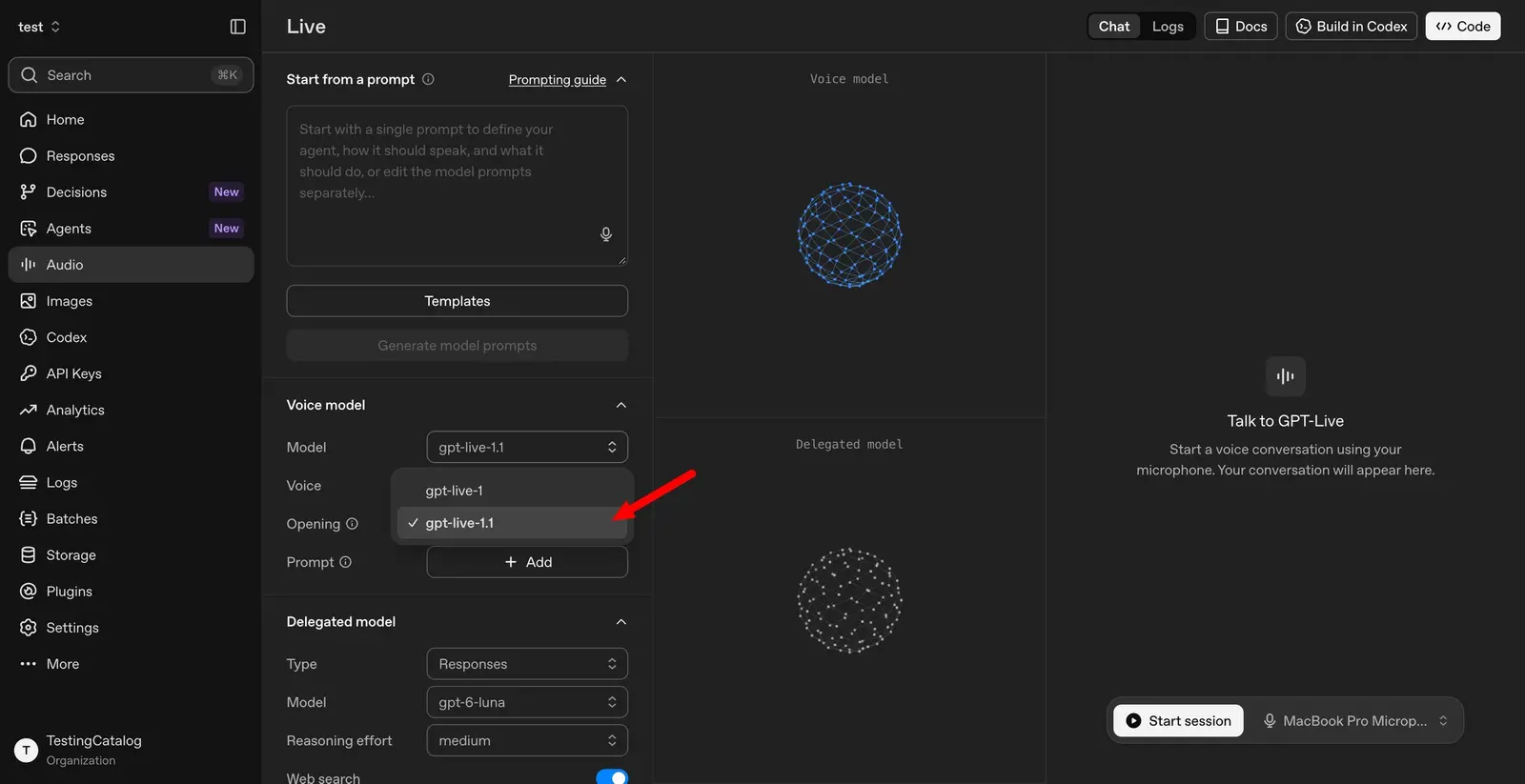
The voice model doesn’t do the heavy work itself. Developers describe in plain language when it should hand a task to their backend for reasoning or tool use, and the voice model keeps talking while that runs. Testing Catalog reports that the Live tab on the OpenAI Platform lets developers try all of these features right away. In a screenshot it published, the tab has separate settings for the voice model and for the model it hands work to.
What it costs
Voice sessions are billed by how long they last. The $0.02 standby rate is meant to cut the cost of idle time, but it applies only to WebRTC sessions (a standard way to stream live audio) while inference is paused. Any other session is billed at the active rate. The per-minute price also isn’t the whole bill: the backend models and tools the voice agent hands work to are billed separately.
The limits
The model takes and returns audio and text. It doesn’t handle images or video. It supports function calling but not structured outputs or fine-tuning. GPT-Live-1.1 and GPT-Live-1 have separate caps on how many sessions can run at once, and each cap counts sessions across all inference regions.
Up next
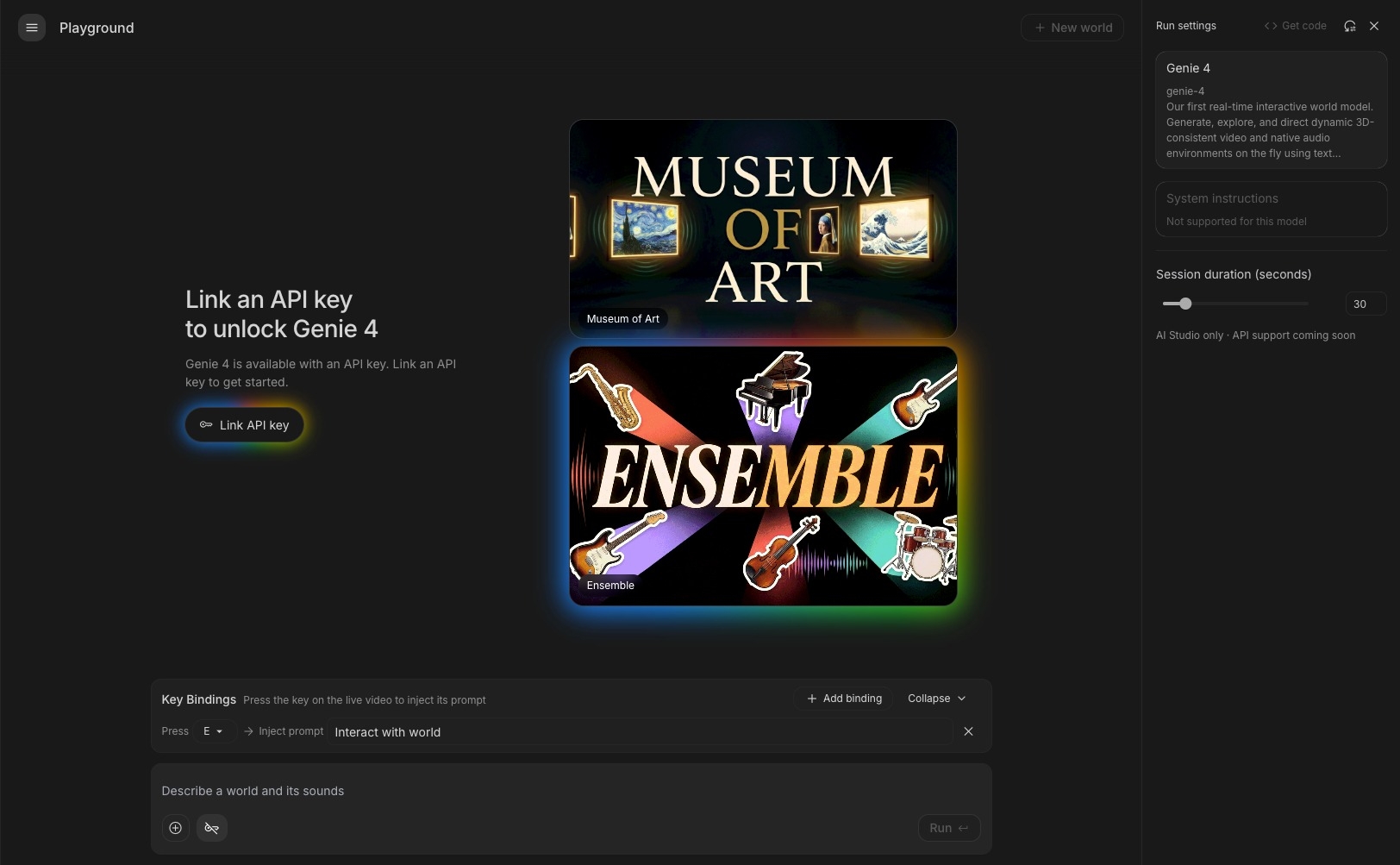
Genie 4 opens up to developers in AI Studio
Genie 4, Google’s world model you can walk around in, was Ultra-only. Now it shows up in Google AI Studio with an API key, and one key press can change the weather mid-walk. What world would you build first in Genie 4?
Related stories
- GPT-Live-1.1 makes ChatGPT Voice say “checking...” less
- Voice model that listens and talks at once hits the API
- Flare and Sunburst share rates, not the same bill
- OpenAI drops lottery for free ChatGPT access for scientists
- GIFs and 50% faster generation land in ChatGPT Images 2.6
- ChatGPT and Codex will share one usage pool in December
Comments
No comments yet. Be the first.
Join the conversation
Sign in to leave a comment. It appears after moderation.