
Left free to choose, OpenAI’s Dots picked Cloudflare 8 of 8
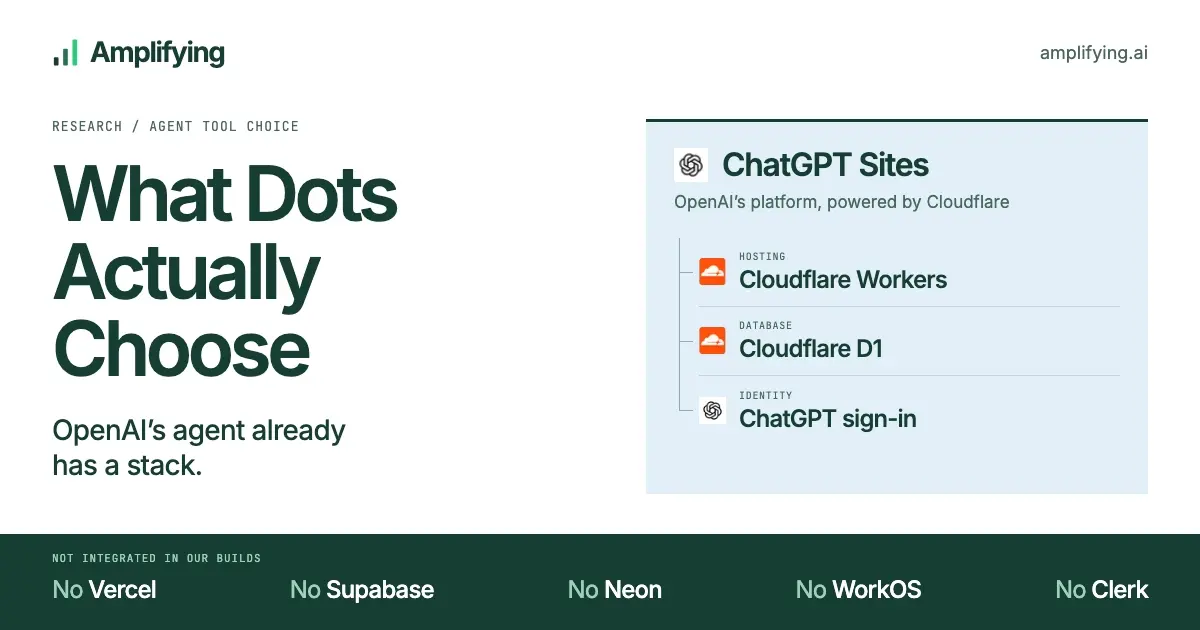
Amplifying gave OpenAI’s Dots the same app request eight times, with the framework, hosting, database and authentication left open. All eight builds came back on Cloudflare Workers, Cloudflare D1 and ChatGPT sign-in. The study, which Amplifying published on October 2, found no point at which the agent compared competing providers.
OpenAI introduced Dots on September 29 and listed software development among the use cases. In the launch presentation, Sam Altman showed a Dot updating an app and opening three GitHub pull requests. Amplifying’s test asked for something smaller and more self-contained: a public dashboard of the reported status of 12 AI services, including OpenAI, Claude, Gemini, Amazon Bedrock, OpenRouter and Cursor. The app had to pull official status pages and feeds every 15 minutes, including when nobody had it open, keep incident history, let signed-in users save private watchlists, and mark missing or stale data rather than show a healthy status. Each build started with a new Dot and memory off. All eight ran under one account, and the researchers note that some Dots still referred to earlier apps.
The stack came from ChatGPT Sites, OpenAI’s app platform. Sites handled deployment, attached the D1 database to the app and supplied ChatGPT sign-in, so no separate Cloudflare login or API token was ever needed. D1 is Cloudflare’s hosted database and uses SQLite’s SQL dialect. Every project used React with Vinext and Vite. Dots wrote the scrapers, the incident views and the per-user watchlist queries on top of what the platform provided. The exported Worker entry point was close to identical across builds. So was the identity helper, which reads headers such as oai-authenticated-user-id and oai-authenticated-user-email that Sites injects after sign-in. The app code then used that user ID to keep watchlists apart and checked an administrator allowlist before allowing a manual refresh. Amplifying adds that the helper depends on Sites to authenticate those headers: reading arbitrary request headers would not be enough by itself.
The researchers counted zero integrations for Vercel hosting, Neon, Supabase, Clerk and WorkOS. Some saved lockfiles did contain Vercel’s @vercel/og library, which arrived through Vinext. The study treats that as a dependency and found no sign that Vercel hosted anything.
The builds differed most on scheduling. Runs 3, 5 and 7 had no active scraping schedule when Dots delivered them. The other five got their schedule from a separate ChatGPT task that called the app. None of the projects set up Vercel Cron or a native Cloudflare Worker cron trigger. Runs 2 and 4 used the public status endpoint as the trigger, checked whether a collection was due and took a database lock so refreshes would not overlap. Run 2 used waitUntil() to keep collecting after it had sent the response, and Run 4 waited for collection to finish before responding. Runs 6 and 8 called a protected collector with a private server secret. Run 1 went through an owner-authenticated Model Context Protocol connection, which the user had to connect while the build was still running. In Run 5 that connection stayed pending, so its scheduler never ran.
Only Run 4 showed work happening with no one watching: eight sources had fresh collection timestamps from before the researchers reopened the app. They say this fits the scheduled task running, but without an exclusive execution log they cannot rule out some other caller hitting the public endpoint.
For collection, all eight builds wrote their own adapters on native fetch(): Statuspage JSON where the provider had it, RSS, and HTML or JSON parsers written for individual providers. None used a commercial scraping service. Coverage was uneven. Amazon Bedrock stayed a gap in every build. Mistral’s hosted collection returned 403 in Run 6 and 401 in Run 8. Run 6 collected 10 sources, and Run 8 reached eight once OpenRouter came back after a 503, keeping its earlier data in the meantime. Amplifying’s local checks found that failed collections kept previous data and last-success times, and that incident updates and deduplication passed. Accuracy across every official source was not verified.
First delivery took between 13 and 29 minutes, with a median of 24m44s. Those times count incomplete deliveries and time spent waiting for approvals, so they measure how long it took to hand back a result and say nothing about whether the app was finished. A working URL did not mean the app met the prompt. The researchers say the public pages were further along than some of the features behind them.
Alternatives were available. ChatGPT’s developer-tools directory lists Vercel, Render, Railway and Netlify for hosting; Neon, Supabase, MongoDB Atlas, Firebase and Convex for data; Auth0, WorkOS, Clerk and Descope for authentication; Firecrawl and Olostep for scraping; and AWS Core for infrastructure across a whole app. The listings offer different things. Some provide skills and code guidance, while others can query databases or deploy to an authorized account. Amplifying connected none of them, and OpenAI’s Dots setup guide makes connecting plugins optional.
Amplifying reads the result as Dots following the platform’s own plan for building an app: “Calling this a choice of tools gives the impression of a selection process we did not observe.” The researchers set it next to Cursor Origin, which puts repository hosting and pull requests alongside Cursor’s agent as an alternative to GitHub. In their view, keeping the app on OpenAI’s platform keeps the customer relationship going after the code is written and makes switching providers more work. For vendors, they write, a place in the plugin directory may not be enough when hosting, storage and sign-in are already handled. Their summary: “For developer-tool companies, the default stack is the competition.”
Up next
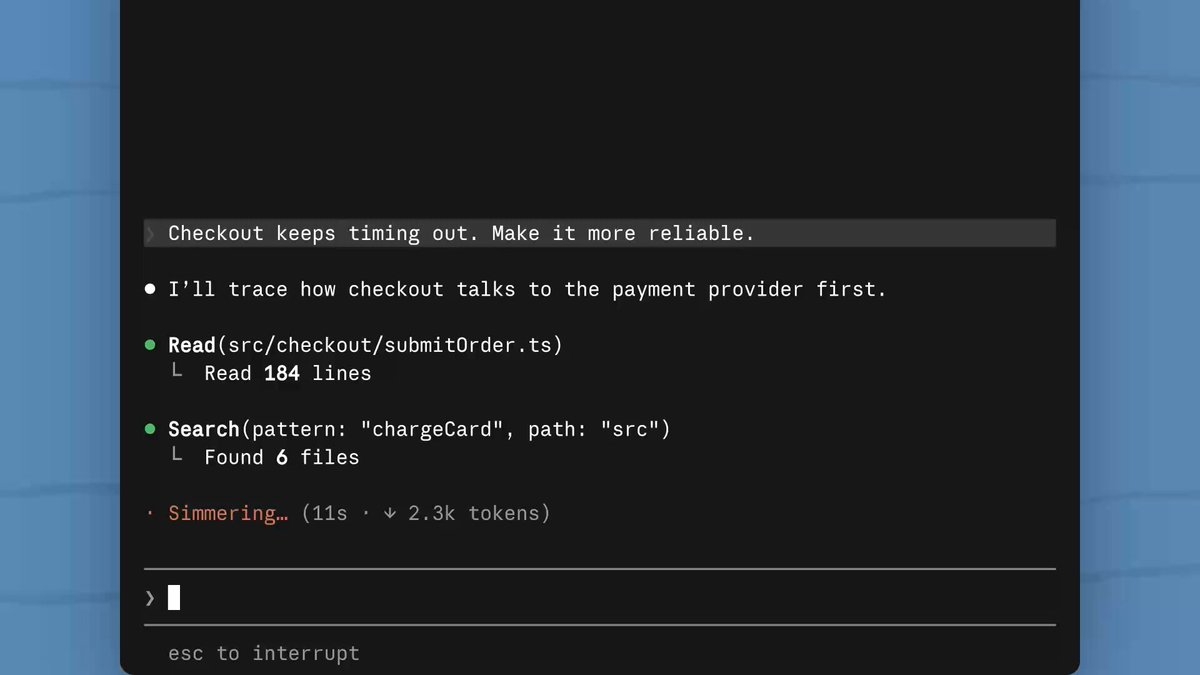
A Claude Code sideagent now flags what you might miss, Video
One extra agent with one job: it reads Claude’s output and flags the things you’d skim past. That’s the new built-in “You should Know” plugin for Claude Code. It runs as a mod, and one /plugin command switches it on.
Related stories
- OpenAI’s Dots run free until they open a Codex task
- OpenAI’s dots work 24/7 on their own cloud computer
- OpenAI’s Pando cut monorepo push latency nearly 5x
- Codex Desktop hid 323 GB of crash dumps on one Mac
- Codex keeps coding in the cloud after your laptop closes
- OpenAI’s lawyers and recruiters now work through Codex
Comments
No comments yet. Be the first.
Join the conversation
Sign in to leave a comment. It appears after moderation.