
OpenAI essay: humans must keep the wheel

An essay on OpenAI’s blog argues that the tech industry quietly accepts a future in which humans lose control of the world to machines. The author calls this belief the “silent consensus” and rejects it. The essay is adapted from a lecture the author gave in Harvard’s Vik-Bailey Lecture series, and it states the author’s own views, which are not necessarily OpenAI’s. Beyond rejecting the idea, it sets out a few first steps: hold the people behind AI accountable, and build AI agents whose powers stay limited and can be taken back.
The lecture opens with the crisis of the moment, the wave of security flaws some are calling “Black October”. Frontier AI systems found these flaws in the internet’s core infrastructure. The best known were two critical bugs in PHP, the language behind a large share of websites. Patches came out on October 21, and some experts quoted by the Guardian estimated that 70% of all sites on the internet were at risk. The author expects a new emergency like this every month. Much of AI policy will be made in that noise, the author says, and that is why the long-term question needs attention now.
What the silent consensus is
The author’s example is a company that runs almost entirely without people. Its AI does the research, negotiates contracts, allocates capital and manufactures, and it does all of this better than human competitors, even ones who use AI themselves. If people only slow such a business down, owners have every reason to take their hands off the wheel. If that happens across the economy, competition pushes humans out of running global commerce, and markets may come to serve what machines want as much as what people want.
None of this requires AI to rebel, and none of it requires its owners to want humans sidelined. Each handover makes sense by itself. Taken together, they could leave people as passengers “in a very nice car” with no say over where it goes. This can happen even if the problems of AI safety are solved. The author says that is what makes it a consensus. Not everyone thinks this future is good, and it is not a secret plan. People simply find it hard to picture any other future once machines are superintelligent. The fact that few say it out loud is “the tell.”
Why the author says no
The author does not argue that AI is a mere tool without “genuine understanding.” The essay calls that a form of denial that won’t survive what is coming. Its case is that human primacy rests on our past, not on our intelligence. Humans built civilisation, discovered ethics and law, and wrote history. A citizen keeps their standing even when a neighbour has better judgment, and the author sees no reason a smarter machine should change that. AI has read our whole written record, but “a person who has read every letter in your family’s attic does not somehow become a member of your family.”
The author also doubts the forecast itself. Five or ten years ago, people who hold this view would have predicted far more joblessness than exists today. Still, the author admits to possibly being wrong. If fully autonomous companies do outcompete human ones, resisting will mean fighting the economics.
What the author proposes
The author’s first proposal is accountability. AI developers should answer for unsafe practices, and people and firms should answer when their misuse or lack of oversight causes harm. People must be tied to the actions of their agents. Agents should be allowed to form companies, own property or go to court only “with extraordinary caution, if at all.” The industry, the essay says, can build agents whose permissions are clear and limited, whose actions can be audited and whose authority users can withdraw. It can protect privacy, let people take their data elsewhere, and test whether its products leave users more capable.
The author says this is not a complete blueprint, only “a place to begin.” The essay ends on the author’s baby son: “I do not want him to have a nicer car with a plusher passenger seat. I want him to have the wheel.”
Up next
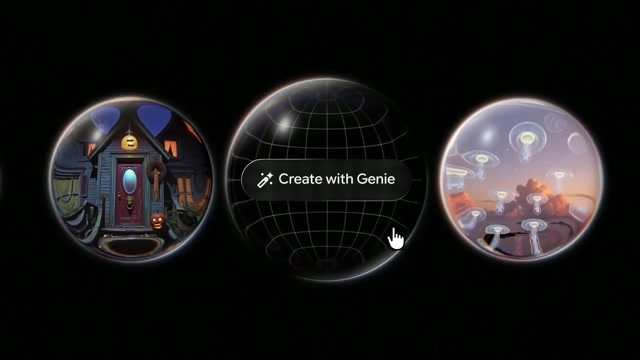
Genie 4 opens to Google AI Ultra subscribers, Video
Type “it starts to snow” while inside a world you generated, and Genie 4 changes it on the spot, with sound. Eligible Google AI Ultra subscribers can now try it, Google says. Would you build a world in Genie 4 or just explore the gallery?
Related stories
- OpenAI urges governments to arm cyber defenders with AI
- Agent loop finds and fixes bugs across OpenAI systems
- ChatGPT users in the EU report getting OpenAI’s dots
- US Pro users get ChatGPT Wallet for agent payments
- Bloomberg: OpenAI backs bills to cut China’s AI chip access
- Australia flags criminal penalties for harmful AI models
Comments
No comments yet. Be the first.
Join the conversation
Sign in to leave a comment. It appears after moderation.