
OpenAI opens internal models to four outside safety labs
OpenAI has given four independent safety groups, Apollo Research, METR, Transluce and Goodfire, access to its models while they are still in training, along with source code, training data and the engineers behind the work, OpenAI said in a November 16 post. If you use OpenAI’s models, this means outside reports will cover how a model behaved during training and inside the company, not only the finished product. The assessors publish their findings themselves, but OpenAI keeps the right to redact confidential information.
That is a change in timing. Until now, outside reviewers saw only finished models in the days before release, per CNBC, which also reported that Dario Amodei proposed putting third-party evaluators inside frontier labs and Sam Altman later endorsed the idea. In its own post, Apollo says its earlier evaluations of frontier models came after post-training and shortly before public release, which it calls not sufficient for testing behaviour like scheming, or for models used only inside the company.
OpenAI calls this the first phase of “embedded assessments” and ties it to its commitments under the White House Accord on Super Intelligence, where it agreed to independent assessments of its safety controls. It grows out of a pilot METR and Redwood Research ran from July 21 to August 11, which produced a 61-page report on gaps in the system OpenAI uses to watch its own models for unintended behaviour.
Who checks what
Apollo is looking for the most serious failure: whether models could covertly work against their developers’ intentions, and whether OpenAI’s safeguards would catch it. It will test four claims in two stages, starting with “training did not incentivize subversion” and ending with “reasoning behind subversion would be detectable”. Apollo says a team of six will work inside OpenAI for four months. Its earlier work with OpenAI showed that as reinforcement learning (the training stage where a model is rewarded for results) progresses, models can increasingly favour what the grading system prefers over user instructions or the stated preferences of OpenAI’s leadership.
METR will look for misaligned behaviour in OpenAI’s largest reinforcement learning run to date, including failures that existing tests and monitors may have missed. Within the agreed access, METR sets its own priorities and gets saved snapshots of the model from that run, the transcripts of its training and test tasks, and the records of OpenAI’s misalignment monitors. A second, broader METR review of those monitors is agreed only preliminarily, pending agreement on its scope.
Transluce will review the alignment tests OpenAI runs after a model’s main training, checking their quality and how much they cover. OpenAI says Transluce will write additional tests and recommend fixes where the tests have gaps. Goodfire is embedding interpretability researchers, who study what happens inside a model, to help monitor and debug training runs. Its main audience is OpenAI’s own researchers, though Goodfire will also publish what it learns as the work goes on.
What the assessors can see
Assessors who handle sensitive material work on site at OpenAI’s offices, on OpenAI devices, and follow at least the same security standards as OpenAI employees. The pieces OpenAI guards most closely, model weights and architecture, may still reach them only secondhand: where direct access could expose those, OpenAI says it will “consider alternatives”, including pairing assessors with OpenAI researchers who run the analyses for them.
Conversations with staff are off the record. Assessors can use them to inform their work, but they can’t publish them or attribute anything to employees. To get something on the record, an assessor can ask OpenAI for an attested statement that verifies, corrects or clarifies what an employee said. Assessors may publish what OpenAI attests to, or disclose that OpenAI declined to attest to a statement.
Who settles a dispute
The Safety and Security Committee, an independent oversight committee of the OpenAI Foundation’s board, gets unredacted reports and can talk with the assessors privately during the work. Disagreements between OpenAI and an assessor go first to OpenAI’s Safety Advisory Group and executives, who have a set period to resolve them. The committee is notified when a dispute is escalated, and it decides anything still unresolved.
On publication, OpenAI says assessors are independent, but it may redact confidential information and may ask for delays so it can fix findings that pose security or safety risks. Apollo adds one limit on that: OpenAI agreed not to withhold information or access to staff, or ask for redactions, simply because the findings are unfavourable, and Apollo can publicly explain the conditions and limits of its work. Apollo also says the pilot doesn’t yet meet all of its criteria for access, disclosure and transparency about the arrangement itself. Rules on conflicts of interest, and on how long assessors must wait before working for a rival lab, are still being drafted with the assessors.
OpenAI says it is exploring future embedded assessments of its compliance with its own safety frameworks, as well as its organizational culture and processes. The next step on the calendar is with Transluce: a follow-on assessment of about eight weeks in early 2027, with access to more models, deeper access to OpenAI’s alignment tests and information on how test results feed into decisions to release a model.
Up next
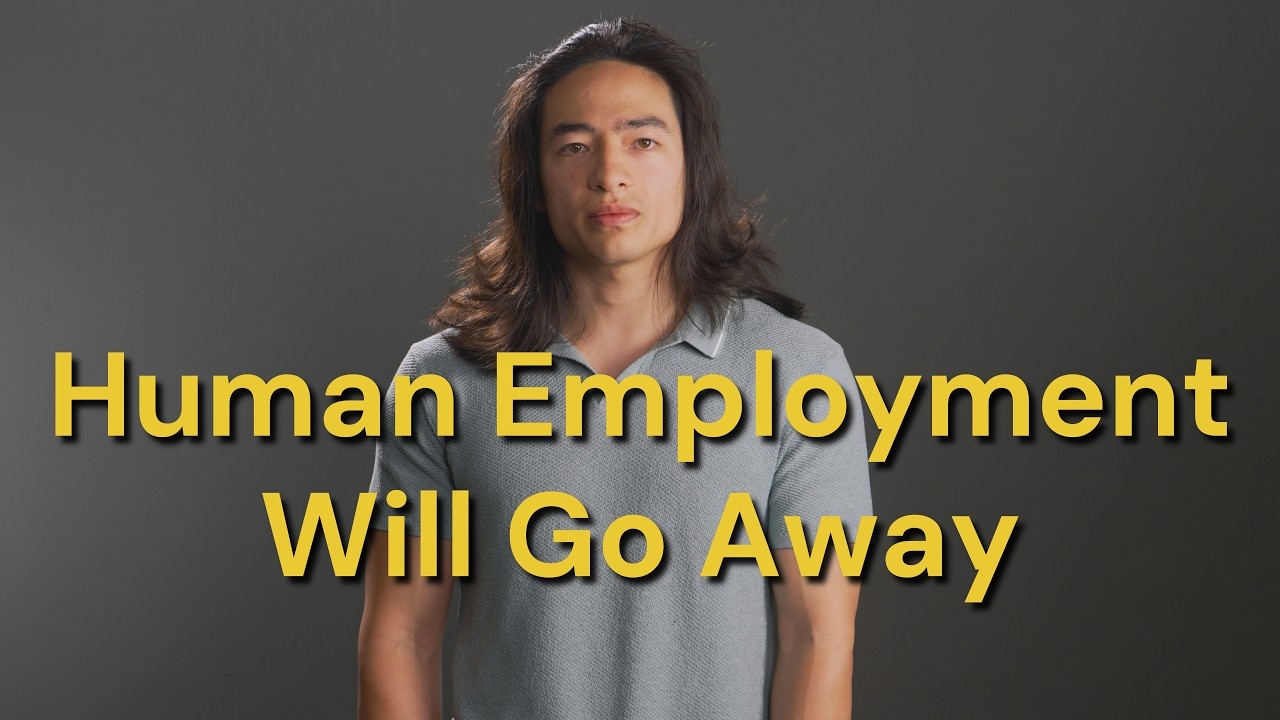
Unemployment video features Anthropic researcher Tao Lin
“Pretty much all humans will become permanently unemployable” is the title of a YouTube video featuring Tao Lin, a researcher at Anthropic, the company behind Claude. Would you plan your career around that forecast, or ignore it?
Related stories
- Two headers could switch off OpenAI’s agent monitoring
- OpenAI’s monitoring audit yields a 61-page gap report
- Frontier Model Forum rates cyber jailbreaks on four scores
- OpenAI can halt any research job’s output within 35 seconds
- OpenAI’s pipeline wrote 948 root exploits for Linux
- OpenAI’s monitors caught a replayed breach 30+ hours early
Comments
No comments yet. Be the first.
Join the conversation
Sign in to leave a comment. It appears after moderation.