
OpenAI sends GPT-4o users to Luna ahead of 2027 retirement
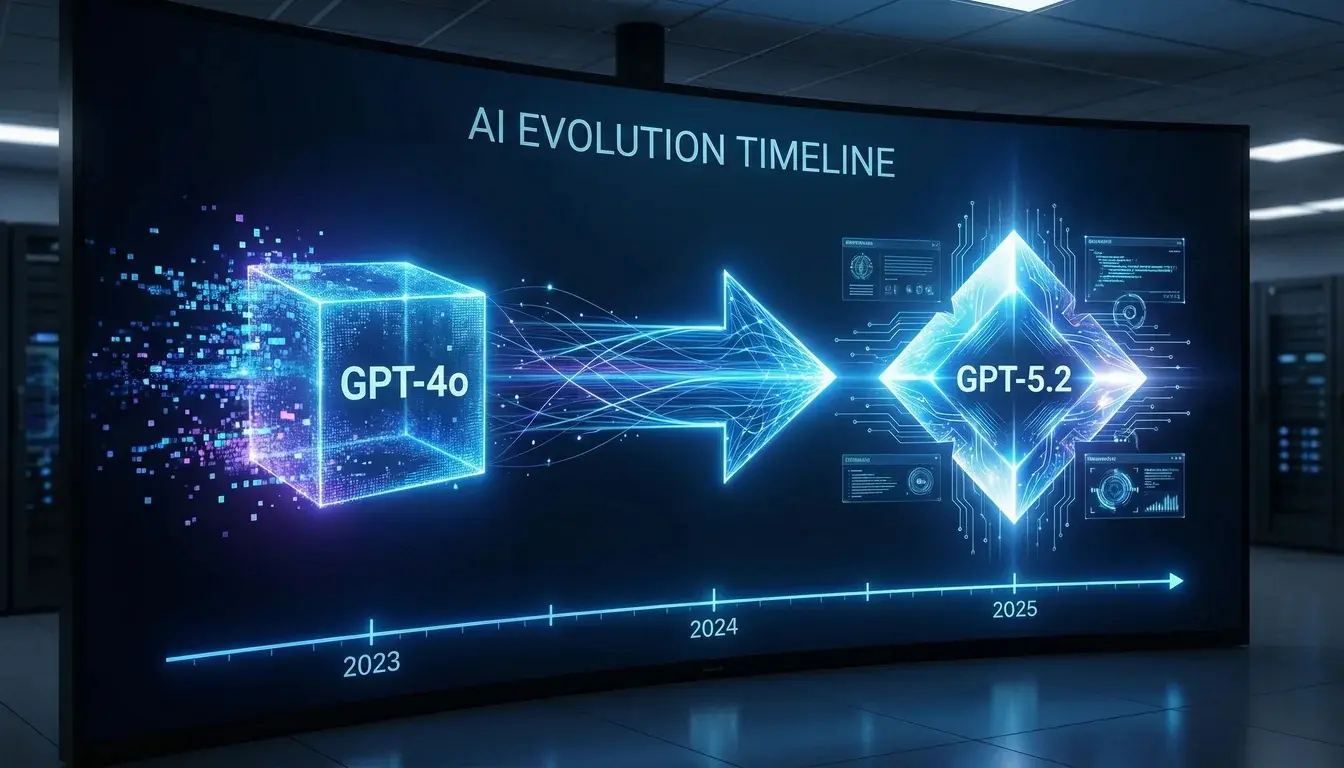
OpenAI on October 14 named GPT-6 Luna the recommended starting point for moving existing GPT-4.x workloads. If your team runs GPT-4.x, OpenAI’s guide says to start testing Luna with reasoning effort set to none, the setting most of those use cases are expected to migrate with, and to evaluate it on representative workloads before any production traffic moves.
Developers using GPT-4o, GPT-4o mini, GPT-4.1 and GPT-4.1 mini were notified the same day that those models leave the API on January 14, 2027; OpenAI’s deprecations page lists the snapshots (gpt-4o-2024-08-06, gpt-4o-2024-11-20, gpt-4o-mini-2024-07-18, gpt-4.1-2025-04-14, gpt-4.1-mini-2025-04-14), names gpt-6-luna as the replacement for each and puts fine-tuned versions on the same shutdown schedule as their base models. When OpenAI announced on October 1 that gpt-5.4-nano leaves the API on April 1, 2027, it gave six months’ notice; teams on the GPT-4.x models get only three for the guide’s cycle of baseline, tests and gradual rollout.
The guide’s cycle starts with a baseline: your current model’s quality, latency and cost, recorded on representative requests with the important edge cases included. Luna is then tested against it at reasoning effort none, with a check on the behaviors your application depends on, such as output formatting and tool use. Based on the results, you adjust prompts, reasoning effort and verbosity and retest, trying other reasoning settings to find the balance of quality, latency and cost that suits your application. Production traffic moves over in a limited share first, and quality, latency, errors and cost are monitored before the migration is completed.
Per token, Luna is cheaper than the GPT-4.x models the migration covers, and for most use cases OpenAI calls it a more capable model. GPT-4.1 launched on April 14, 2025 at $2.00 for input and $8.00 for output, and GPT-4.1 mini at $0.40 and $1.60, GIGAZINE reported; Luna’s list price, set in September at $0.10 per million input tokens and $0.50 per million output, is a quarter of GPT-4.1 mini’s launch input price and under a third of its output price. Yet OpenAI asks teams to compare total cost on their own workloads before migrating, since token usage and reasoning settings can change what each task costs.
Self-serve customers get support through the chat bubble at help.openai.com. Sales-managed customers can ask their account team to bring in OpenAI’s engineers for a migration plan tailored to their product. For teams that cannot move in time, OpenAI says that in some cases developers may be able to provision dedicated capacity through its sales team and keep access after a model’s shutdown date.
Up next
Claude Code 2.1.300 splits cache writes by lifetime in OTel
A team lead watching Claude Code spend in OpenTelemetry sees every cache write in one bucket. Version 2.1.300 splits that bucket by cache lifetime, 5-minute and 1-hour. Which cache lifetime do you run Claude Code on, 5-minute or 1-hour?
Related stories
- OpenAI sets a January 1, 2027 shutdown date for Prism
- OpenAI’s GPT-6 guide says drop blanket “always ask” rules
- OpenAI pulls GPT-5.5 from Codex on October 14, API spared
- OpenAI’s half-price GPT-6 Sol and Luna aren’t a promo
- OpenAI ships an official CLI for its REST API
- OpenAI’s Decisions API beats its own engine by up to 10x
Comments
No comments yet. Be the first.
Join the conversation
Sign in to leave a comment. It appears after moderation.