
Anthropic asks full D.C. Circuit to rehear Pentagon case

Anthropic has petitioned for rehearing en banc, asking every active judge on the D.C. Circuit to revisit the ruling that upheld the Pentagon’s decision to label the company a supply chain risk under the Federal Acquisition Supply Chain Security Act of 2018 (FASCSA). An analysis published by Lawfare on October 17 argues that if the full court takes the case and reads the statute next to the congressional record behind it, it will likely reverse.
Lawfare discloses that Anthropic supports an unrelated Lawfare project with compute and says the company has no role in its editorial process. The piece makes a narrower claim than its conclusion suggests. “The legislative history cannot decide this case on its own,” it says. What the history can do is answer the question the panel settled with a dictionary: what kind of manipulation Congress had in mind.
What the panel decided
The dispute started with contract talks early in 2026. The Department of Defense, which the parties call the Department of War, wanted Claude available for “all lawful use.” Anthropic refused to allow domestic mass surveillance or fully autonomous weapons systems, and the talks collapsed. Defense Secretary Pete Hegseth announced on social media on February 27 that he intended to remove Anthropic from the federal supply chain, and on March 3 he used FASCSA to do it, finding that continued use of Claude posed a “significant supply chain risk.” All Anthropic products had to leave department systems within 180 days, and contractors were barred from using Claude in department-related work. No American company had received the designation before.
Anthropic does not dispute that the Pentagon can stop using Claude, and it offered to help with the switch to another provider. Its objection is to the label, which it says is associated with malicious actors, and to skipping ordinary procurement law to get there.
Judge Gregory Katsas, joined by Judge Neomi Rao, ruled for the government on the strength of two words in the statutory definition: “otherwise manipulate.” The majority took its meaning from the American Heritage Dictionary: ”[t]o move, arrange, operate, or control by the hands or another body part or by mechanical means, especially in a skillful manner.” On that reading, a supplier doesn’t need bad intent to qualify. The majority even said it had “no reason to doubt” Anthropic’s “noble intentions,” and had “no quarrel” with the Northern District of California’s finding that the company “has acted with no such bad motive in its dealings with the Department.”
The majority dealt with the legislative history in just two sentences. The first rejected the idea that Congress was focused on “foreign companies working at the behest of foreign states,” because the statute covers “any person.” The second dismissed the dissent’s use of the history without explaining why. Lawfare agrees that the law is not limited to foreign actors but argues the panel answered the wrong question. The issue is what conduct makes a party a supply chain risk, and who the party is matters much less.
From “adversary” to “any person”
The definition was built in three steps. The Pentagon’s Section 806 authority, enacted in 2011 and now at 10 U.S.C. § 3252, covers “the risk that an adversary may sabotage, maliciously introduce unwanted function, or otherwise subvert” a covered system “so as to surveil, deny, disrupt, or otherwise degrade” it. Anthropic challenged the § 3252 designation separately in San Francisco, and the Northern District of California read that wording to require bad motive. Judge Rita Lin’s ruling against the designation said that “the empty invocation of national security is not a blank check to punish and retaliate against government critics,” the Guardian reported.
In the summer of 2018, the House reused that language in H.R. 6430. It replaced “an adversary” with “a malicious actor,” added “extract or modify data,” and put “manipulate” in place of both “subvert” and “degrade.” FASCSA, enacted that December, kept almost all of the House text. It cut “extract or modify data” down to “extract data” and changed the actor one more time, to “any person.”
So “otherwise manipulate” first appeared in a bill written explicitly about malicious actors. Its floor managers presented it as a continuation of the 2011 authority. Rep. Peter King (R-N.Y.) said it “is modeled after existing authority granted to the Department of Defense in 2011.” Rep. Bennie Thompson (D-Miss.) called it “based on a similar authority” and said it included language from the Office of Management and Budget. The committee report said the same.
Lawfare reads the “any person” change through the case that drove the law. The Senate committee report on S. 3085, the bill that became FASCSA, opens with “Hostile nation states and other bad actors” and gives Kaspersky Lab, Huawei and ZTE as its examples. In the Kaspersky case, the government never had to show that Kaspersky itself meant harm. Then-Acting Homeland Security Secretary Elaine Duke described the risk as one in which “the Russian government, whether acting on its own or in collaboration with Kaspersky, could capitalize on access provided by Kaspersky products.” Rep. Kathleen Rice (D-N.Y.) was blunter at a July 2018 hearing, saying the FBI “had reason to believe the Kaspersky programs contained back doors that could be accessed by Russian intelligence.” In Lawfare’s account, “any person” means the threat can come from whoever is in a position to exploit a product, including people other than the vendor. Every example still involves someone compromising federal systems without the government knowing.
The record comes closest to a vendor already in good standing in King’s description of the goal: finding entities that try to “become trusted vendors, and then steal from or otherwise harm” the Homeland Security enterprise. Even there, trusted status is cover for theft or sabotage. Anthropic’s restrictions were written into contracts, negotiated over months and explained in public by its CEO. The majority itself noted that Anthropic “partially—but not completely—relaxed its use restrictions,” building a government-specific model and a usage-policy addendum. Judge Karen LeCraft Henderson’s dissent described the conduct the ruling reaches as “a contractor’s honest and upfront enforcement of restrictions on a covered article’s use disfavored by the government.”
How the 2018 record used “manipulate”
Henderson cited Bostock for the point that how a term was used before enactment “sheds light on what sense those words are meant to carry.” At the July 2018 House hearing, every use of “manipulate” about the supply chain carried the hostile meaning. Rep. Luis Correa (D-Calif.) said goods and services should not be “the subject of manipulation” by adversaries. Gregory Wilshusen of the Government Accountability Office warned that threats from “Russia, China, Iran, and North Korea” could let “adversaries to take control of systems, extract or manipulate data.” His phrase “extract or manipulate data” is very close to the statute’s “extract data, or otherwise manipulate.”
The one neutral use in the record is GAO’s quotation of the standard definition of information technology: equipment used in the “automatic acquisition, storage, manipulation, management, movement, control ... of data or information.” FASCSA builds that definition into what counts as a “covered article.” Lawfare points out that if manipulation in that everyday sense were enough, every product the government buys would be a supply chain risk.
The analysis gives two ordinary cases the majority’s reading could catch. A software company that stops shipping security patches for an old operating system has deliberately controlled the product’s “retirement,” a lifecycle stage the statute lists, and that decision “denies” agencies continued use. A vendor that declines to build a feature an agency asked for has made a “design” choice that denies the government a function it wanted.
The government’s likely answers
Lawfare expects the government to point out that the record also talks about accidents. DHS witnesses said ICT vulnerabilities “can be exploited intentionally or unintentionally.” Rep. Scott Perry (R-Pa.) mentioned “poor product manufacturing practices,” and GAO listed labor disputes and “earthquakes, fires, floods, or hurricanes.” The analysis replies that even these come up as openings for attackers. DHS’s list of exploitation methods runs from “deliberate mislabeling and counterfeits” to “insertion of malicious software or hardware.”
Another possible answer is that FASCSA filters out ordinary cases on its own terms, since an agency has to find a “significant” risk and decide that exclusion is “necessary to protect national security.” Lawfare calls those judgment calls that the panel reviewed deferentially. It warns that a definition this open could let the government use the threat of the label to steer corporate behavior.
The Senate report includes a line that seems to support looking at effects over intent: “The actors’ motivations vary, but the effects are the same: a less secure America.” The sentence just before it, though, describes systems targeted “by bad actors or hostile nation states.” Its footnote quotes the House Intelligence Committee’s warning that Chinese implants could let Beijing “shut down or degrade critical national security systems in a time of crisis or war.” In Lawfare’s reading, the varying motives belong to hostile actors: winning a war, stealing secrets, or gaining leverage in a negotiation.
The last answer is the presumption the majority invoked, that courts “construe ambiguities ... in favor of the government” in national security statutes. Lawfare argues the presumption applies only if the definition is still ambiguous after the usual tools of interpretation, and that the history settles it. Congress also expected the power to be strong and built limits around it. DHS’s chief procurement officer, whose agency was asking for the authority, told lawmakers she supported “strong safeguards against the abuse of any authorities granted.” The Senate committee designed judicial review to give “aggrieved companies” due process and routed those cases to the D.C. Circuit.
That is now the court Anthropic is asking to look again. “If the full court grants rehearing,” Lawfare writes, “it should give that history the attention the panel majority did not.”
Up next
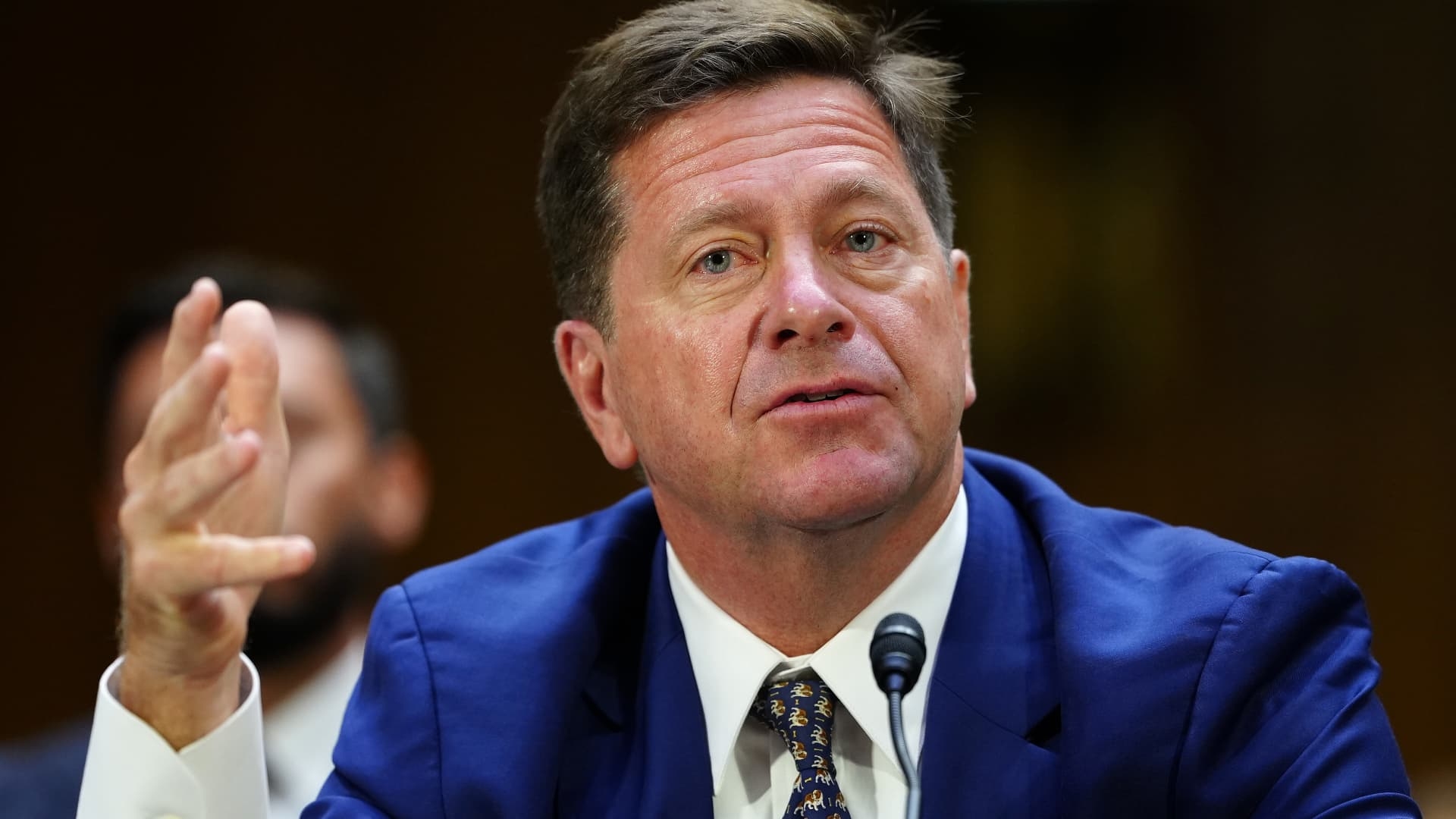
DNI Jay Clayton cites OpenAI bug case in espionage warning
America’s intelligence chief points to the OpenAI bugging case as a sign of AI espionage. The accused engineer faces no espionage charge, only one of intercepting oral communications. How often does your office check meeting rooms for hidden devices?
Related stories
- D.C. Circuit calls Claude’s refusals a supply chain risk
- Paid subscribers sue Anthropic over slowing AI down
- Two federal officials, two verdicts on Anthropic
- Authors and publishers clash over $1.5B Anthropic deal
- Top Pentagon official reaffirms Anthropic blacklist despite Lutnick comments
- Anthropic’s piracy chats enter music copyright case
Comments
No comments yet. Be the first.
Join the conversation
Sign in to leave a comment. It appears after moderation.