
Anthropic mathematician claims Riemann proof with Claude
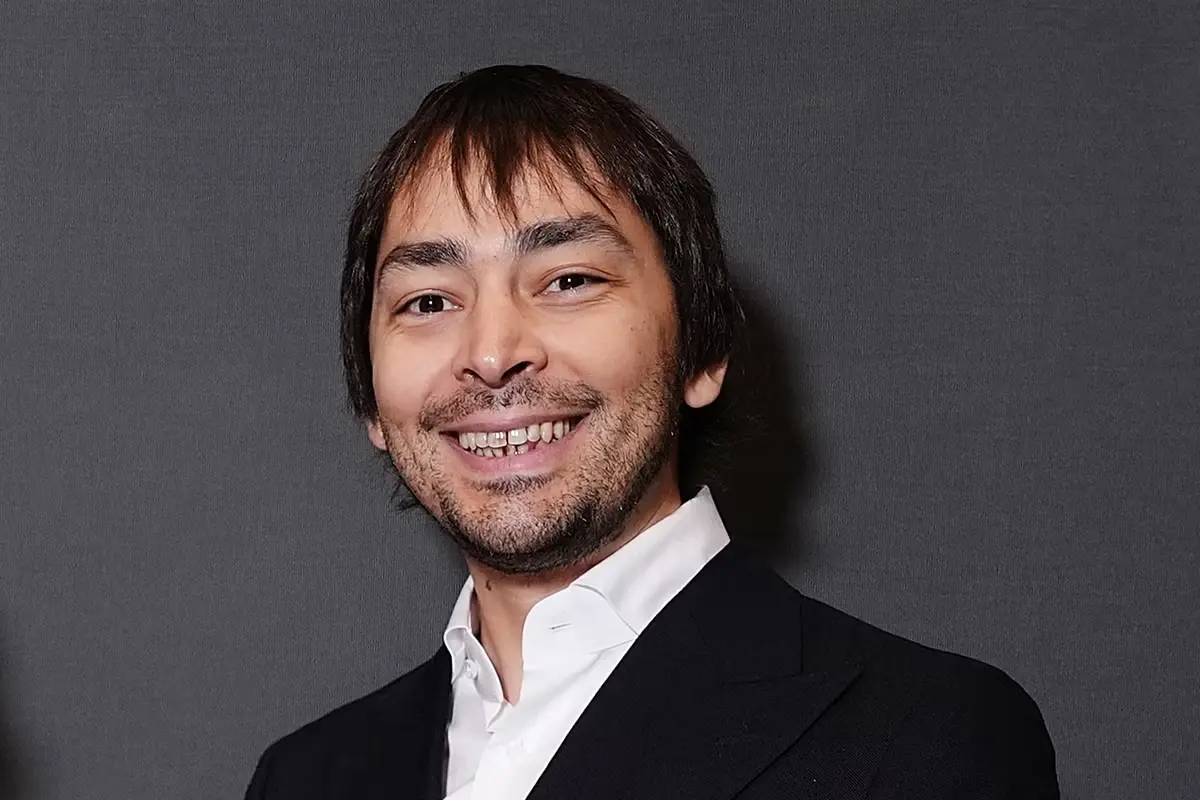
Levent Alpöge, a mathematician who works at Anthropic, says he has proved the Riemann hypothesis with Claude. It is the most famous unsolved problem in mathematics. He made the claim on Friday in a statement on his website, alpo.ge. He published the proof only as code in Lean, a language that lets a computer check every step of a mathematical argument. Experts now have to work out whether the code is correct and whether it really proves the hypothesis.
Bernhard Riemann proposed the hypothesis in 1859. It says prime numbers are not scattered along the number line at random but follow a precise order. In 1900 David Hilbert put it on his list of 23 challenges for the 20th century, and since 2000 the Clay Mathematics Institute has offered $1 million for a proof.
What Alpöge claims
“I believe I have, working with Claude, discovered a proof of the Riemann Hypothesis,” he wrote. The statement claims more than that. He says the method also resolves the Generalized Riemann Hypothesis, a broader version of the same claim, and that “with more time” he expects to prove the Extended Riemann Hypothesis too. He says he and Claude have formalized the arguments “without assumptions” and that the formalization is finished.
He gives Claude more credit than help. “This time Claude far outpaced me near the finish line,” he writes. He steered the work to the right setting, “and then Claude began to leave me in awe.” Claude also compiled a timeline for the statement, which Alpöge calls rough. It runs 41 days, from October 6 to “GRH” on November 16. The statement does not say which Claude model he used.
He also admits that he is presenting “a complete argument before having mastered a massive neighbourhood around its mathematics.”
How it came to this
Alpöge, who has a PhD from Princeton, has made claims like this before. In July he posted on X that he and Claude Fable 5 had found a counterexample to the Jacobian conjecture, a well-known problem in algebraic geometry. That result was a single line of mathematics. Abhishek Saha of Queen Mary University of London told New Scientist that it was simple to verify and that many mathematicians had already done so.
Claude had also worked on Riemann’s problem itself. Formally, the hypothesis says that all the “nontrivial” zeros of a function called the Riemann zeta function lie on one line. In August, Anthropic said an unpublished research version of Claude had raised the proven share of zeros on that line from 41.6% to 67.2%. That work stopped short of proving the hypothesis.
Our analysis
What we checked
On November 21 we read Alpöge’s statement, unpacked the Lean archive he posted, and counted and read its files. We did not run the proof through Lean.
The Lean code is the only version of the proof. The Independent reported that he released “a version” of the proof in Lean, which suggests another one exists. It doesn’t. The statement says he “decided to only present Lean” rather than post “some massive unreadable travesty”. He says a version printed out for people to read came to more than 250,000 pages.
The code is huge. The archive holds 175,187 Lean files, more than 17 million lines and about 1 GB of code. About 81% of the files sit in a single folder. The entry point, though, is tiny. One file of 12 lines states the main theorems, and another of 16 lines defines what they mean.
The main theorem is called RiemannHypothesis, and the two top files don’t define that name themselves. From reading them, we infer that it points to the standard definition in Mathlib, the shared library of mathematics for Lean: every nontrivial zero of the zeta function lies on the line. That is our inference only. We did not compile the code, and our search of the other files for a different definition with the same name did not finish.
The “generalized” result in the code is narrower than the name suggests. Besides the Riemann hypothesis itself, it covers only one family of related functions, Dirichlet L-functions. That fits the statement’s own words: the Extended Riemann Hypothesis is still to come.
Up next
OpenAI tests whether AI can think like a drug chemist, Video
On OpenAI’s new drug chemistry test, GPT-6 Astra earned 95.4% for rebuilding molecules from drawings, but only about half for choosing compounds and predicting their properties. Would you let AI pick which compound a lab makes next?
Related stories
- Lamzouri publishes a simpler proof of Claude’s Theorem
- Claude pushed the zeta-zero lower bound from 41.6% to 67.2%
- Claude Fable 5 helped produce a counterexample to the Jacobian conjecture
- Claude modeled a whole virus shell overnight
- Claude solved two open problems about black holes
- Claude learned proteins, not just papers about them
Comments
No comments yet. Be the first.
Join the conversation
Sign in to leave a comment. It appears after moderation.