
Claude Dashboards shows the query behind every chart
Anthropic on October 8 opened a beta of Claude Dashboards, which turns a plain-language question into a live dashboard over a warehouse like BigQuery, Snowflake or Databricks, with the query behind every number one click away. Enterprise organizations get it switched off by default, along with the new Claude Motion, until an admin turns both on in Organization settings > Artifacts. Dashboards is open on paid plans and Motion on Team and Enterprise, while Docs, Slides and Design leave beta for every plan, Free included, Anthropic said.
Enterprise admins have two more dates to plan around. Docs, Slides and Design switch on by default on October 15, or earlier if an admin turns them on. And the standalone Claude Design site at claude.ai/design closes on December 14, with chats and project comments still stored there.
What’s behind each number
Setup means connecting a data platform (Anthropic names Amazon Redshift, BigQuery, ClickHouse, Databricks and Snowflake) and asking a question. Claude pulls the answer from the data, builds the dashboard and keeps it current as the data changes, and each chart shows when its data was last refreshed. Clicking any number brings up its query, or you can ask Claude to explain the figure instead. The New Stack points out that Anthropic hasn’t said whose credentials a dashboard refreshes under.
Other connectors feed dashboards too. Anthropic’s example is a dashboard of Salesforce opportunities, the pipeline data that Salesforce in Claude started pulling into chat in September.
Anthropic pitches Dashboards at quick, exploratory questions, like how this week’s signups compare with last month’s, and says it works alongside BI and analytics tools. When a question needs deeper analysis, the dashboard goes straight to Amplitude, Grafana, Hex, Mixpanel, Omni, Perplexity, PostHog or Sigma, with Looker, monday.com and Tableau coming soon. In The New Stack’s version of the list, monday.com is already supported and Perplexity is among the integrations coming later.
OpenAI’s Data agent came first
Anthropic shipped this a month after OpenAI gave ChatGPT Work a data agent that builds dashboards, The New Stack reported. That Data agent, a ChatGPT Work plugin, connects to Redshift, BigQuery, ClickHouse, Databricks, MongoDB, Snowflake and Datadog, and can build dashboards directly in Power BI, Tableau, ThoughtSpot and other BI tools. It also supports semantic layers, the shared business definitions a company keeps on top of its warehouse, such as Databricks Genie Ontology.
Snowflake signed a $200 million deal with Anthropic in December 2025, yet OpenAI’s Data agent announcement carried comments from product leaders at both Snowflake and Databricks, the outlet notes. Both warehouse vendors also have their own natural-language analytics tools.
Motion writes code
Claude Motion builds an animation from a prompt that plays like a short video. Anthropic’s examples: a 30-second explainer of a quarterly report for an all-hands, motion added to a chart in a board deck, a product walkthrough for customer onboarding. Claude writes code that animates your text, charts, shapes and images, so any word, number or timing can be changed in the editor or by asking Claude.
No video generation model is involved, so there is no generated footage and there are no AI-generated people. The result downloads as an MP4 file or opens in Adobe, Descript, HeyGen, Higgsfield, invideo, Luma AI or Runway, with Canva and Captions coming soon.
Out of beta, Free included
People have made more than 45 million docs, decks and designs in Claude since Docs, Slides and Design arrived in every conversation, according to Anthropic. With the beta label gone, the set now includes:
- CMEK for artifacts, so an organization can encrypt them with keys it manages, plus admin control over which artifact templates the organization uses;
- shared editing, where your team and Claude work on the same doc, deck, design or dashboard;
- sharing of slides, designs, dashboards and animations outside the organization or with anyone who has the link, if the admin allows it;
- PowerPoint and PDF exports that match the editor, and decks sent to Google Slides as editable files;
- editing docs, decks and designs in the Claude mobile app.
Leaving claude.ai/design
Claude Design started at its own URL. Since September 16 it has also worked inside every Claude conversation, where it can use your context, files and connectors, and Anthropic says running two versions slows down fixes for both. So the standalone site folds into Claude and stays up only until December 14.
Projects need nothing yet: they keep working in the standalone version until it closes. Chats with Claude and comments on projects stay behind and won’t be available after that date, and public links to standalone projects stop working then too.
Design systems can move today. On the Artifacts page in Claude, “Migrate team design systems” brings over every design system in the organization in one migration, and the originals stay unchanged in the standalone version until it shuts down.
Up next
$200 fine-tune beats OpenAI’s Decisions API on email attacks
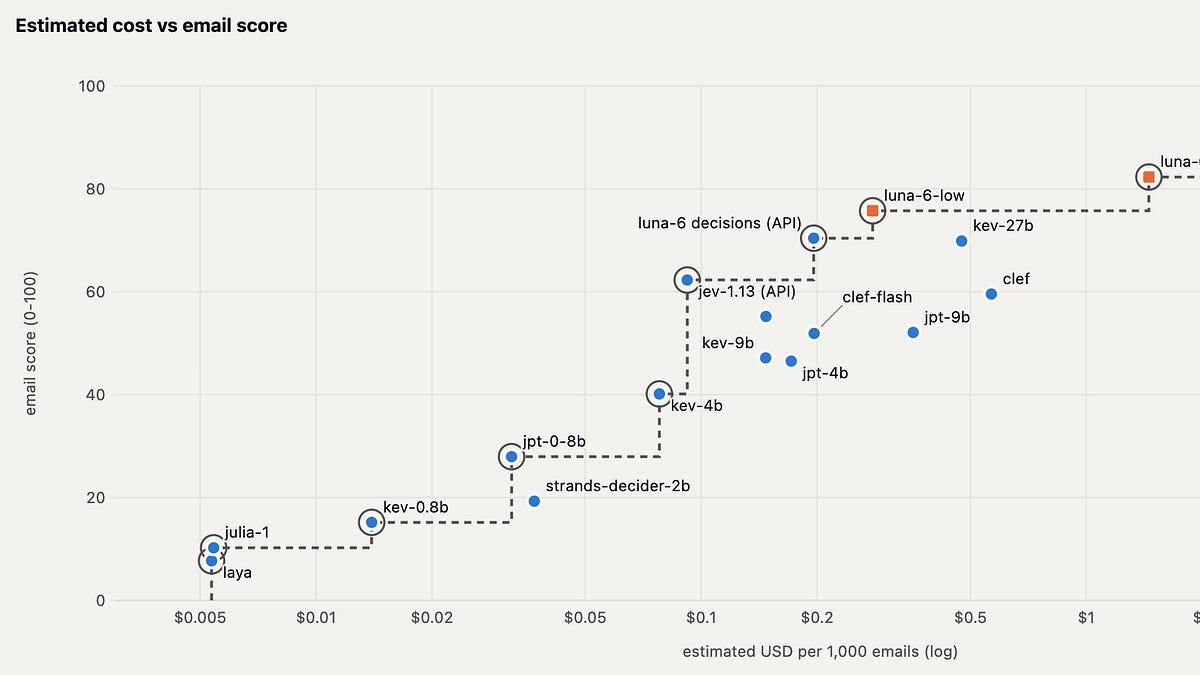
Abnormal sorts billions of emails a week, and it just ran 40 models against its hardest cases. A $200 fine-tune of the small kev-4b caught more attacks at 99% precision than any of them, though it got worse at naming the attack.
Related stories
Comments
No comments yet. Be the first.
Join the conversation
Sign in to leave a comment. It appears after moderation.