
Claude text watermarks: detector limited to vetted groups
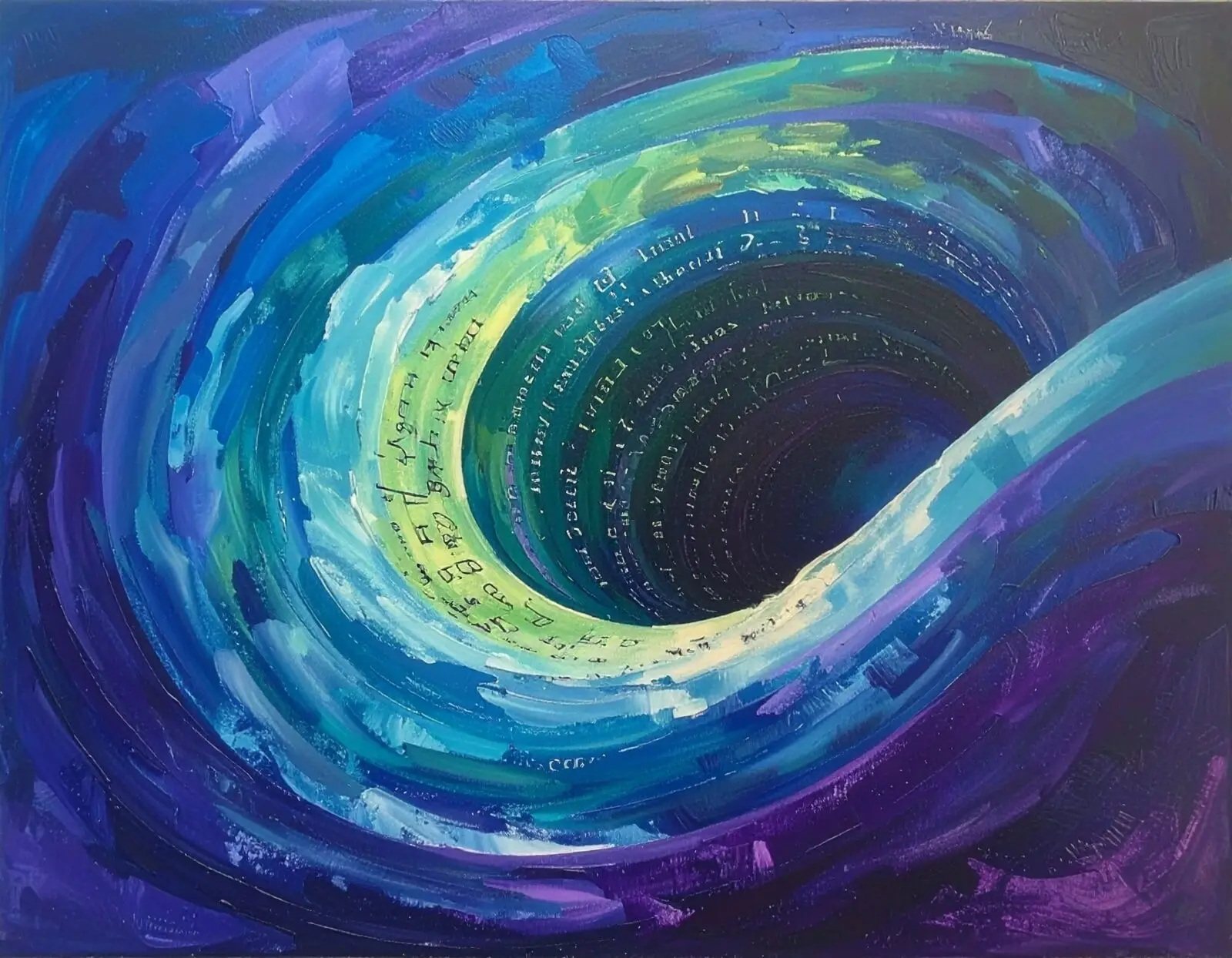
Anthropic’s help-center page on marking Claude output, updated on October 22, lists 16 models whose text carries an invisible watermark, Opus 4.5 through 4.7 and other models released before August 2 among them. So on Anthropic’s own surfaces, staying on an older model does not keep your text unmarked. Checking text for the mark is a different matter: it sits in a private preview open only to groups EU law names and to enterprises that need it for their own compliance.
Anthropic is doing this under the EU AI Act’s Article 50(2) Code of Practice on Transparency of AI-Generated Content, which it signed as a provider of both generative AI models and generative AI systems. The marking applies worldwide and is not limited to the EU, and it covers the API, the Claude apps, Claude Code, Cowork and Tag.
Which models, which surfaces
The table on the page splits marking by surface. Nine models also mark text served through AWS, Google Cloud and Microsoft Foundry: Fable 5.1, Fable 5, Mythos 5.1, Opus 5.5, Opus 5, Opus 4.8, Sonnet 5.5, Sonnet 5 and Haiku 5.5. For Fable 5, Opus 4.8 and Sonnet 5, the Amazon Bedrock rollout was due to finish by October 23.
The other seven, Mythos 5, Opus 4.5, 4.6 and 4.7, Sonnet 4.5 and 4.6 and Haiku 4.5, have a check only for first-party output. If you call one of them through a cloud partner, the table lists no text watermark for that output. The same seven get no Content Credentials on generated files either. Anthropic does describe the watermark as applied at the model level, present “no matter which Claude product or surface the text comes from”, but for those seven models the table covers first-party output only.
The older models are a change from the summer. In August, Anthropic’s announcement read: “Future Claude models will generate text that contains a watermark.” Models launched in the EU on or after August 2 support marking at launch, and earlier ones fall under a transition period. The help page now says Anthropic “is adding watermarks to outputs from models released before August 2, 2026.”
How the mark works and what wears it off
A language model picks each word from a set of candidates, and when two fit equally well (“overcast” or “grey”), a random number usually settles it. Under watermarking, Claude still picks at random, but a key plus a few preceding words decide the pick, Anthropic explains. Anyone holding the key can then check whether a passage matches the choices Claude would have made and estimate the probability that Claude wrote it. Anthropic says the method adds no hidden characters, needs no extra tokens, costs nothing more and carries nothing that traces back to a specific person, organization or chat.
Because the mark lives in the word choices, it travels with copy-paste and “may persist through some editing,” the help page says. How much editing it takes to remove it was tested in August on an open model, not on Claude’s scheme. James Padolsey’s explainer at NOPE found that a full rewrite left about 0.5% of windows intact under MarkLLM’s KGW and EXP schemes, with detector accuracy falling from AUC 0.99 to about 0.5, while lighter passes did far less.
Files are handled separately. When Claude generates a PNG or JPEG, it attaches a Content Credential, signed provenance metadata that follows the C2PA open standard, and anyone can verify it with the free Claude Content Checker.
Who gets to run the detector
The text detector only goes to regulators, law enforcement, media, fact-checkers, independent researchers, educational organizations, EU civil society groups and enterprises that must verify watermarking for their own compliance with the Act. Anthropic plans to expand access to the detection API over time, and organizations can register interest through the Claude Watermark Detector Access Request Form.
An O’Reilly live-training instructor, writing up the questions his students asked, put it more broadly: “anyone who has an AI watermark detector can easily determine if that content was AI generated.” Anthropic’s own limitations are narrower. A detected mark shows that Claude may have processed the content and does not confirm that Claude wrote it, Search Engine Journal reported: proofreading, translation, summarizing and file conversion can leave a mark on ideas and text that came from elsewhere. And text can lack a detectable mark when an older model produced it, when it was heavily edited, or when it is too short to give a clear signal. In practice, a human draft you run through Claude for proofreading can come back carrying the mark.
Anthropic isn’t the only provider doing this. The European Commission counted about 190 signatories to the Code by the end of July, and Google, Meta, Microsoft, Mistral and OpenAI joined Anthropic on its provider section, which covers machine-readable marking and detection. Anthropic says the other developers will implement their own watermarks.
Teams that build Claude into their own products still carry their own obligations. Anthropic’s advice to them is to “independently assess what Article 50 requires of your products and services.”
Up next
OpenAI had fired researchers unlock their personal phones
Per the WSJ, OpenAI security had three safety researchers unlock their personal phones, and some had disappearing messages on in Signal. A week later, all three were fired.
Related stories
Comments
No comments yet. Be the first.
Join the conversation
Sign in to leave a comment. It appears after moderation.