
Anthropic paid $740,000 to a firm led by Rubio’s ex-aide
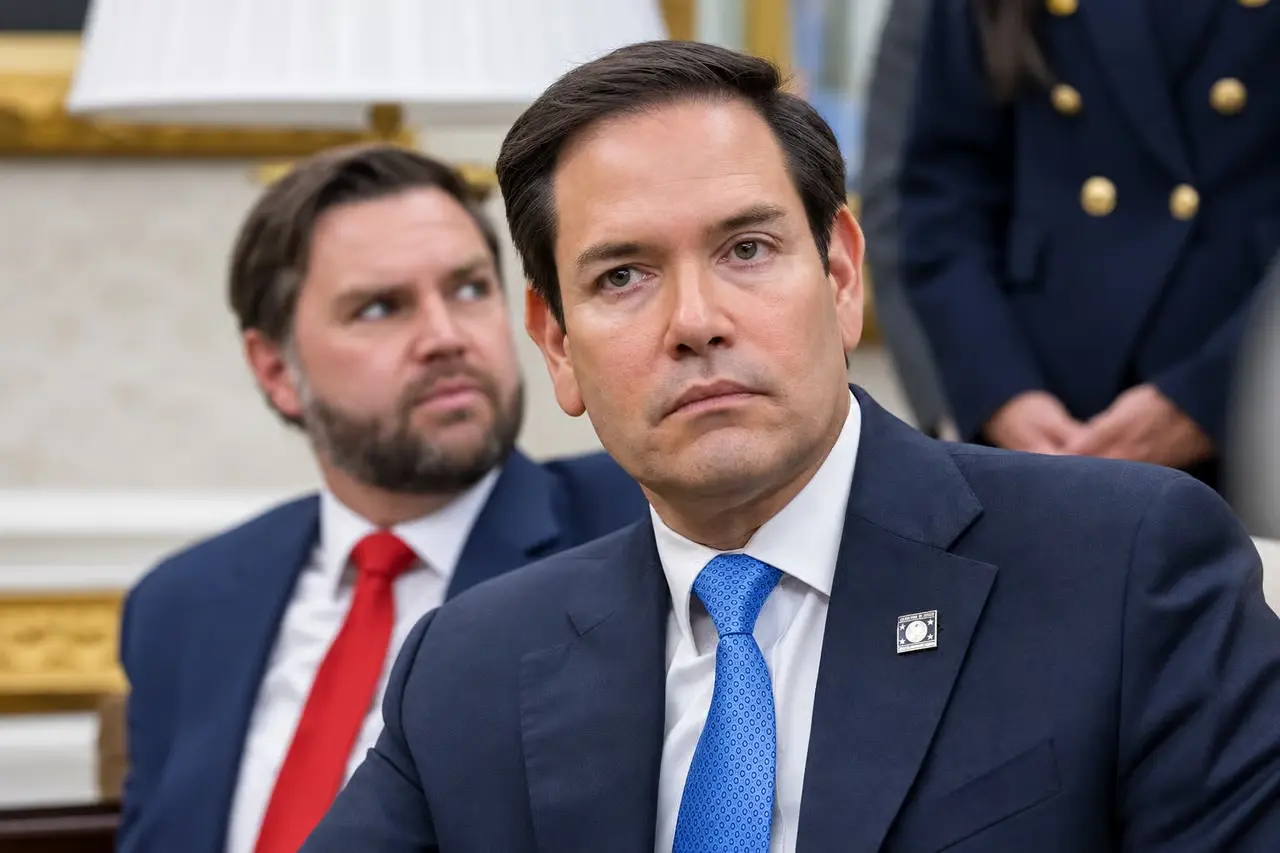
Anthropic has paid Continental Strategy, the lobbying firm run in Washington by Marco Rubio’s former Senate chief of staff, $740,000 since April 2025, Zerohedge reported on November 17 from federal disclosures. In the months after Rubio wrote the memo that set off Jensen Huang’s fall at Nvidia, the firm’s reports list the National Security Council and the State Department, the two offices Rubio runs as national security adviser and secretary of state.
Continental is one of two Trump-connected firms on Anthropic’s payroll. The other, Ballard Partners, is where Susie Wiles was a managing partner until 2019. Anthropic has paid Ballard $890,000 this year, which brings the two firms to $1.63 million since April 2025.
Who lobbied which office
Alberto Martinez, Continental’s Washington managing partner, is named on all six of the firm’s quarterly reports for Anthropic. The report for April through June lists the NSC; the one for July through September lists the State Department. Treasury appears on four of the six, and in the third quarter Continental put Caroline Farr, listed as a former senior adviser at the Treasury Department, on the account. Commerce is on three. That is the department that put export controls on Anthropic’s top models in June and lifted them June 30.
Continental also promoted Katie Wiles, Susie Wiles’ daughter, days after the 2024 election, around the time it brought in Martinez. She is not a registered lobbyist and is not named on the firm’s Anthropic reports. A White House official told CBS last month that Susie Wiles doesn’t discuss work with her daughters.
Anthropic hired Ballard on March 9, four days after the Pentagon labeled the company a supply-chain risk, Bloomberg reported. That was also the day Anthropic sued in two federal courts to challenge the designation, per Mayer Brown, after it refused the Pentagon’s request to waive its restrictions on mass domestic surveillance and fully autonomous weapons. Ballard’s first report, covering only the rest of March, already lists the White House Office and the Executive Office of the President. The NSC joins in the second quarter. By the third, the brief had widened from Pentagon procurement to “US policy regarding AI,” with the Pentagon and the Office of the Director of National Intelligence added, at a time when the Pentagon was still calling Anthropic a supply chain risk in September.
Two of the five Ballard lobbyists on that third-quarter report came out of the national security apparatus. Amaryllis Fox Kennedy is listed as a CIA clandestine service officer from 2003 to 2009 and a deputy director of national intelligence in 2025 and 2026. Micah Ketchel, on the account since March, is listed as Rep. Mike Waltz’s chief of staff from 2019 to 2025, then a senior adviser to the national security adviser and at the State Department.
On April 17, Wiles hosted Dario Amodei at the White House with Treasury Secretary Scott Bessent, a meeting the White House called “productive and constructive.” Wiles was out as chief of staff on November 6. Former Kennedy adviser Calley Means has since accused her of “pay-for-play” centered on Ballard, though he wrongly said the firm represented Pfizer. Brian Ballard says the firm’s dealings with her as chief of staff “have been limited and have been the exception, not the rule.”
Why Rubio’s offices matter here
Rubio’s memo, dated March 30, went to a handful of Cabinet secretaries ahead of Trump’s May trip to China, the New York Times reported. He wrote it from a CIA report, recasting the agency’s findings “in his own more assertive terms,” the Washington Post reported, though CIA officials aren’t convinced that Alice Huang, the Chinese national at the center of Jensen Huang’s ouster, knowingly passed anything to Beijing. Huang tried at least three times to get a meeting with Rubio and never got one, two people familiar with the matter told the Washington Sun.
Huang was Washington’s loudest corporate backer of open-weight models, the cheaper alternative to the closed systems Anthropic sells. Under him, Nvidia built its own open model family, Nemotron, backed startups including Reflection AI, Thinking Machines Lab and Poolside, and was moving to acquire Hugging Face. David Sacks argued on All-In that the ouster served Anthropic’s “safetyist” allies, and physicist Steve Hsu wrote that he had heard Nvidia was planning “to go hard at producing frontier class open models.” Replit CEO Amjad Masad called the ouster an attack on open models. Amodei, for his part, wrote on July 27 that “Anthropic has never advocated for a ban on open-weights models.”
The policy moves since have gone Anthropic’s way. On November 16, Commerce closed the loophole that let Chinese firms rent Nvidia chips in data centers outside China, a rule the Washington Sun said was “written by and at the direction” of Treasury and the NSC, both offices on Anthropic’s lobbying reports. Anthropic’s own third-quarter disclosure, which reports $2.11 million in lobbying, names the AI Overwatch Act, the Chip Security Act and the MATCH Act. All three are now attached to the Senate’s defense bill, and Sen. Jim Banks told the Post after Huang’s exit that he is more hopeful than ever they will pass.
All of this lands as Anthropic’s IPO is due to price this week. Nvidia committed $10 billion to a private placement alongside it.
What the filings leave open
No report from either firm names Nvidia, Huang or chips, and the forms don’t say which lobbyist contacted which office. The memo grew out of electronic surveillance of Alice Huang that had run for well over a year, and Trump was first briefed on it late in 2025, according to the Times, months before Anthropic hired Ballard. Commerce’s own Megaspeed investigation began in 2024, before Anthropic hired either firm, Commerce and the Justice Department said in a joint statement on Monday. And that spring Anthropic had business of its own before the offices on Continental’s reports: the Pentagon blacklisting, its Mythos talks with Treasury and the White House, and the June export controls.
The scrutiny is still building. Rep. Robert Garcia said last week that Wiles could face a House probe once Democrats take over next year, and her successor, Stephen Miller, has tightened the rules on White House staff meeting lobbyists. Huang has been asked to appear before House panels on December 1, Nvidia General Counsel Tim Teter will testify December 2, and Commerce Secretary Howard Lutnick has agreed to testify before the Senate Banking Committee on December 10.
The next lobbying reports, covering October through December, are due January 20, and they will show whether Continental and Ballard are still working the offices Rubio runs.
Up next
AI industryModel releasesanalysis
Microsoft’s MAI Code 2 claims 96% of Opus 5.5 at 5% of price
96% of Claude Opus 5.5’s coding quality for 5% of the price is Microsoft’s claim for MAI Code 2, now in GitHub Copilot, though it isn’t tuned for very long agent tasks yet. Which model is your Copilot default right now, the priciest or a cheap one?
Related stories
- Anthropic’s draft AI bill sets a $1 billion harm bar
- Top Pentagon official reaffirms Anthropic blacklist despite Lutnick comments
- WSJ: Anthropic on Trump’s list of AI national champions
- Hong Kong and mainland funds barred from Anthropic IPO
- Trump adviser’s memo puts Amodei at the root of EA
- A $700K sales job points Anthropic back to the Pentagon
Comments
No comments yet. Be the first.
Join the conversation
Sign in to leave a comment. It appears after moderation.