
Cowork and chat share one Claude memory, on by default
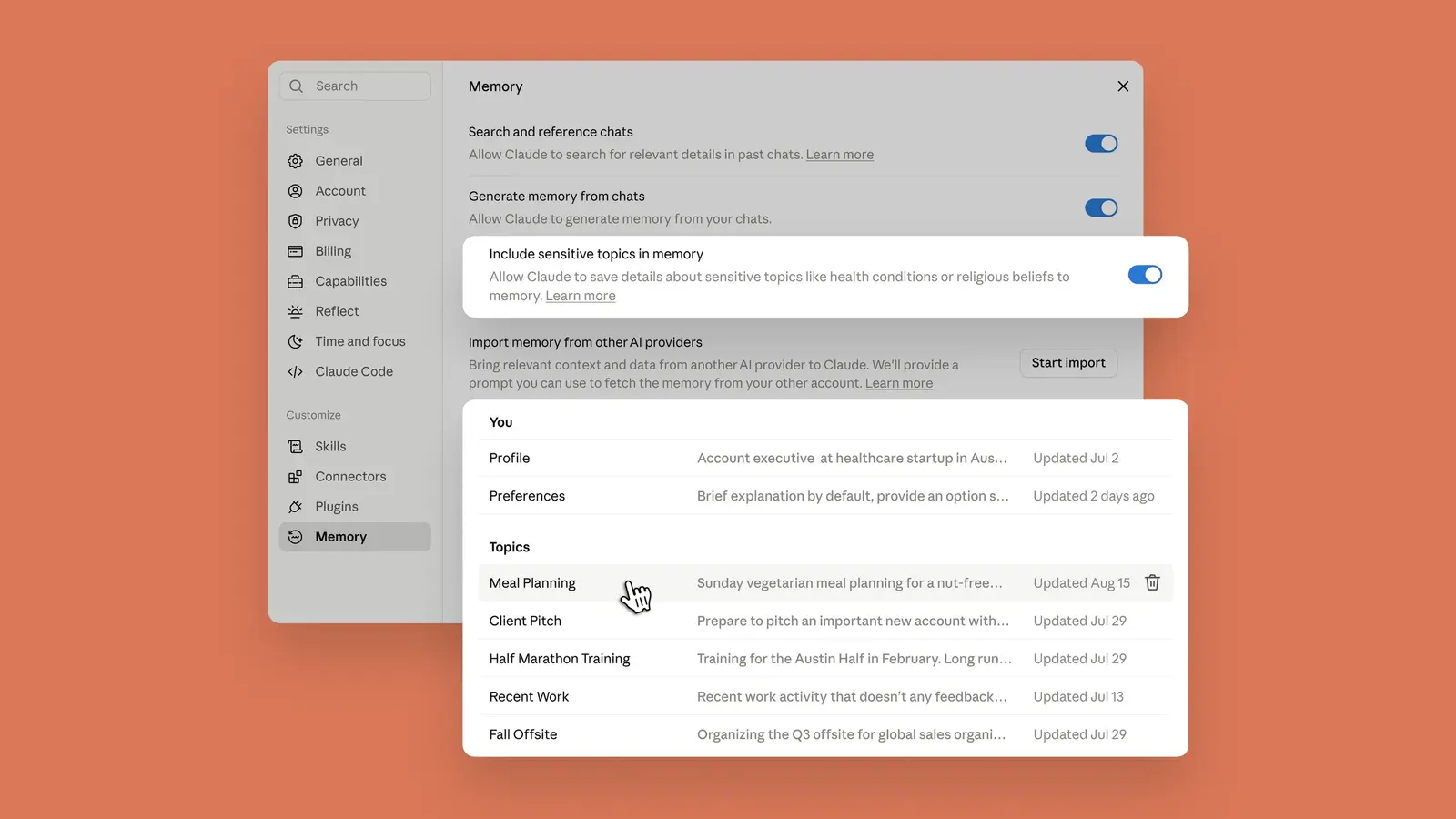
On August 25, Anthropic merged Claude’s chat memory and Cowork memory into a single store. Context from your conversations now carries into Cowork tasks and back again, and you can review the whole thing topic by topic, the company said in a post on Threads. Before this, The New Stack reports, Cowork’s memory was bound to individual projects and had no link to anything Claude knew about you from chat.
The examples are ordinary on purpose: the project you talked through, your manager’s preferences, the client from last quarter. Hand Cowork a task and it starts from all of that, so you don’t have to explain it again.
What carries over
Anthropic gave two scenarios, as quoted by The New Stack. “Ask Cowork to draft an update for your manager, and it already knows who that is and how she likes updates written.” And: “Brainstorm the agenda in chat for a conference you’re organizing; when Cowork builds the budget and logistics doc, it knows the headcount, the city, and the speakers.”
Memory runs both ways. “The context you’ve built up across months of conversations — for instance, your Q3 priorities and the status of your projects — is there the moment you hand Cowork a task, and what comes up in Cowork carries back to chat,” the company said. The New Stack sees this as part of a longer push by Anthropic to bring chat and Cowork closer together, and notes that Cowork is where people tend to do their more in-depth work.
When memory reached Pro and Max on October 23, 2025, Anthropic’s documentation said Claude kept a separate memory for each project, and the company described those project boundaries as a safety guardrail that keeps sensitive conversations contained. At that launch Mike Krieger, Anthropic’s chief product officer, said: “Memory starts with project continuity, but it’s really about creating sustained thinking partnerships that evolve over weeks and months,” Mashable reported.
When Claude writes things down
The timing changed too. Until now, Claude updated its memory only after a chat ended. Now it saves new details during the conversation as they come up, The New Stack says. For Cowork that difference is practical: sessions there can run for hours or days, and a memory that waited for the session to close would lag the work by that long. You can also tell Claude “remember this” to save a specific item.
What Claude keeps shows up in Settings as a list of topics. Anthropic’s post says you can read, edit or delete each one, and that “fix something once and it’s fixed everywhere,” in chat and Cowork alike. Under the hood these are small files organised by topic, according to The New Stack, and you can delete them but can’t change them directly; edits happen by chatting with Claude from the settings menu.
What stays out of memory
By default, Claude doesn’t store anything it considers sensitive: health data, religious beliefs, race, ethnicity and gender identity, for example. Anthropic accepts that some users will want exactly that remembered, so Settings has an option to include those topics. The New Stack reports that it’s all or nothing, with no way to turn on health while leaving religion off. For a feature announced under the line “you decide what’s in it”, that’s a blunt control.
A second tier is never stored, toggle or not, per The New Stack: sensitive identification numbers such as Social Security and government ID numbers, criminal history, immigration status, and anything that violates Anthropic’s Acceptable Use Policy.
An Anthropic spokesperson also added: “Claude also remains ad-free, so nothing in memory is used for ad targeting.” The New Stack reads this as a dig at OpenAI, which recently launched Computer History, an optional feature that can keep tabs on everything you do on your Mac, including inside Claude, and make that part of its recallable history.
Who has it on?
Memory first launched in September 2025 for Team and Enterprise users. Unified memory is now on by default for Free, Pro and Max across web, desktop and mobile, while on Enterprise and Teams plans all memory features start switched off. Enterprise admins can disable memory for their whole organisation at any time. Incognito chat, which doesn’t appear in your conversation history or save to memory, is available to every Claude user.
To see what Claude has saved about you so far, and to delete or correct it, open Settings > Memory.
Up next

Granite 4.2 stays dense while rivals go hybrid
Most new open models are drifting toward hybrid Mamba/attention; IBM’s Granite 4.2 went the other way with dense, decoder-only reasoning models, and the 8B often lands near the 30B on benchmarks.
Related stories
Comments
No comments yet. Be the first.
Join the conversation
Sign in to leave a comment. It appears after moderation.