
Granite 4.2 stays dense while rivals go hybrid

Less than four months after arguing that reasoning models weren’t efficient enough for enterprise work, IBM on August 25 shipped Granite 4.2 as a “reasoning-focused release,” with open weights in 3B, 8B and 30B sizes under Apache 2.0. All three are dense, decoder-only models pre-trained from scratch, The New Stack reported, while much of the field has gone the other way on architecture.
Many recent models, including Nvidia’s Nemotron 3 family, have moved from all-attention Transformers to hybrids that mix attention with Mamba layers. Mamba layers are state-space blocks that process long sequences without attending over every token. Granite 4.2 uses no hybrid layers at all.
IBM has already been down the hybrid road. Granite 4.0, released on October 2, 2025, included conventional dense, dense-hybrid and hybrid mixture-of-experts models. Granite 4.1 followed on April 29, 2026, in the same three sizes as today’s release, returned the main family to a dense all-attention Transformer and replaced the 4.0 series. At the time IBM said the new models outperformed the older generation “while using a simpler — and therefore more flexible — architecture for fine-tuning for downstream tasks.”
Granite 4.1 also came with a case against reasoning. IBM said then that “turning to less expensive, non-reasoning models with similar benchmark performance for select tasks like instruction following and tool calling makes sense for enterprise users.” The 4.2 release reverses that position, though reasoning stays optional.
The models run in thinking and non-thinking modes, plus a third low-effort mode that spends only a small number of reasoning tokens on easy questions. That mode looks like IBM’s answer to its own April objection on cost. Turning reasoning off entirely is still an option for teams that tuned their pipelines around 4.1.
The training recipe was pre-training on 15 trillion tokens in five phases. One phase is a long-context stage that brings the family’s context window to 512,000 tokens, although the released configuration natively supports 128K. The training set included 1 trillion tokens of synthetic code generated by IBM’s CodeAlchemy pipeline, yet overall coding performance remains average, per The New Stack.
The 8B and 30B models went through an additional agentic reinforcement learning step that trained them to call tools, edit and run code, work in a terminal and search the web. “Combined with reinforcement learning from human feedback (RLHF) alignment, this approach produces models better equipped for complex, multi-step agentic work,” IBM writes. The 3B model supports tool calling too, but The New Stack advises not to expect too much from it.
On benchmarks the family isn’t breaking new ground, The New Stack found. The 8B often gets very close to the 30B, and it runs on virtually any modern Mac and even some relatively lower-end Nvidia RTX GPUs. Qwen 3.8 27B beats the Granite models across the board, especially in coding, where IBM’s results are inconsistent.
Granite 4.2 is also text-only. Qwen-3.8 27B, Muse Glimmer 30B and Google’s Gemma 4 31B are all multimodal. IBM does offer separate vision models such as Granite Vision 4.1 4B. It also released two new speech recognition models in the Granite Speech family the same day.
For the right use case frontier models are often overkill, The New Stack notes, and IBM argues that the main case for Granite is its performance in high-throughput agentic tasks. “Now that AI systems are being asked to carry out tasks in the real world, our expectations have risen,” IBM writes in its announcement. “An AI system must be able to plan, call applications, and execute complex tasks in a reliable and consistent way — while staying light enough to actually use without breaking the bank.”
Up next
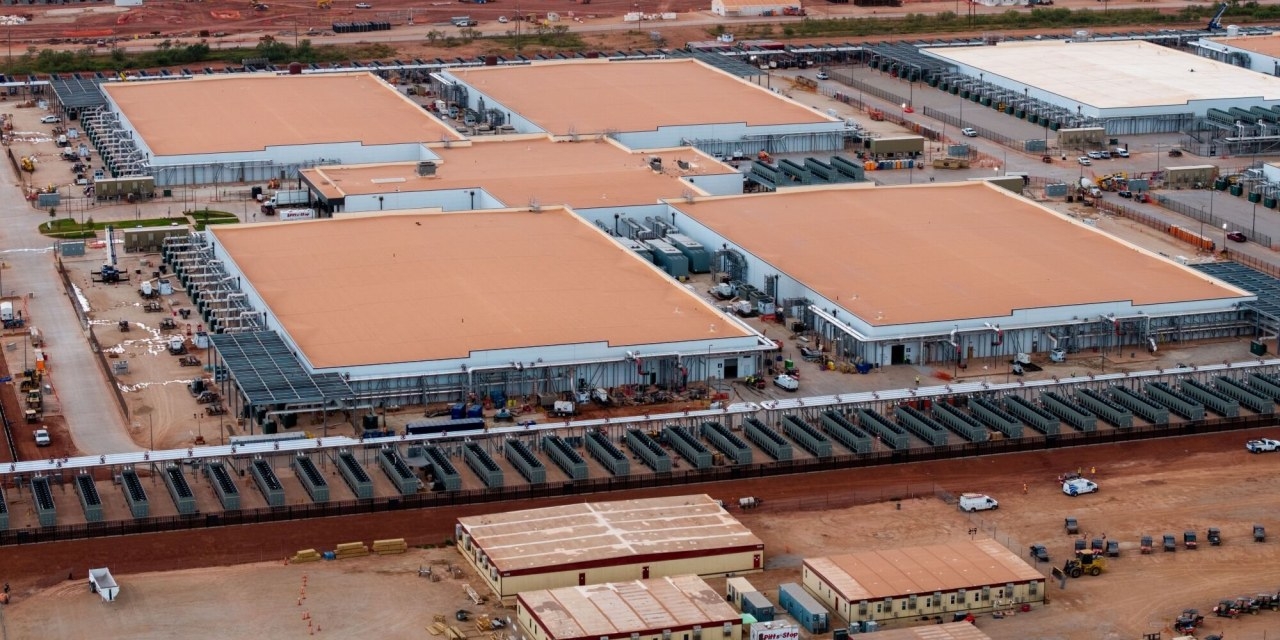
Data-center chief exits OpenAI before the IPO
Chris Malone left OpenAI last week, per WSJ sources, after joining in March 2025 to run the data-center build-out behind Stargate. His exit adds to a wave of leadership departures ahead of the planned public offering.
Related stories
- Kimi K3.1 Pro weights land on HuggingFace at 2.8T params
- Tencent ships Hy4 at Hy4 preview’s API price
- Revolut moves 2,000 engineers from Claude Code to GLM
- Nvidia’s open transcriber tops English ASR at 5.33% WER
- Mistral Large 4 weights are out, API now from $0.70 per 1M
- Kimi K3.1 Pro lands just behind Opus 5.5 on Terminal-Bench
Comments
No comments yet. Be the first.
Join the conversation
Sign in to leave a comment. It appears after moderation.