
FTC plans to make Anthropic and OpenAI executives testify
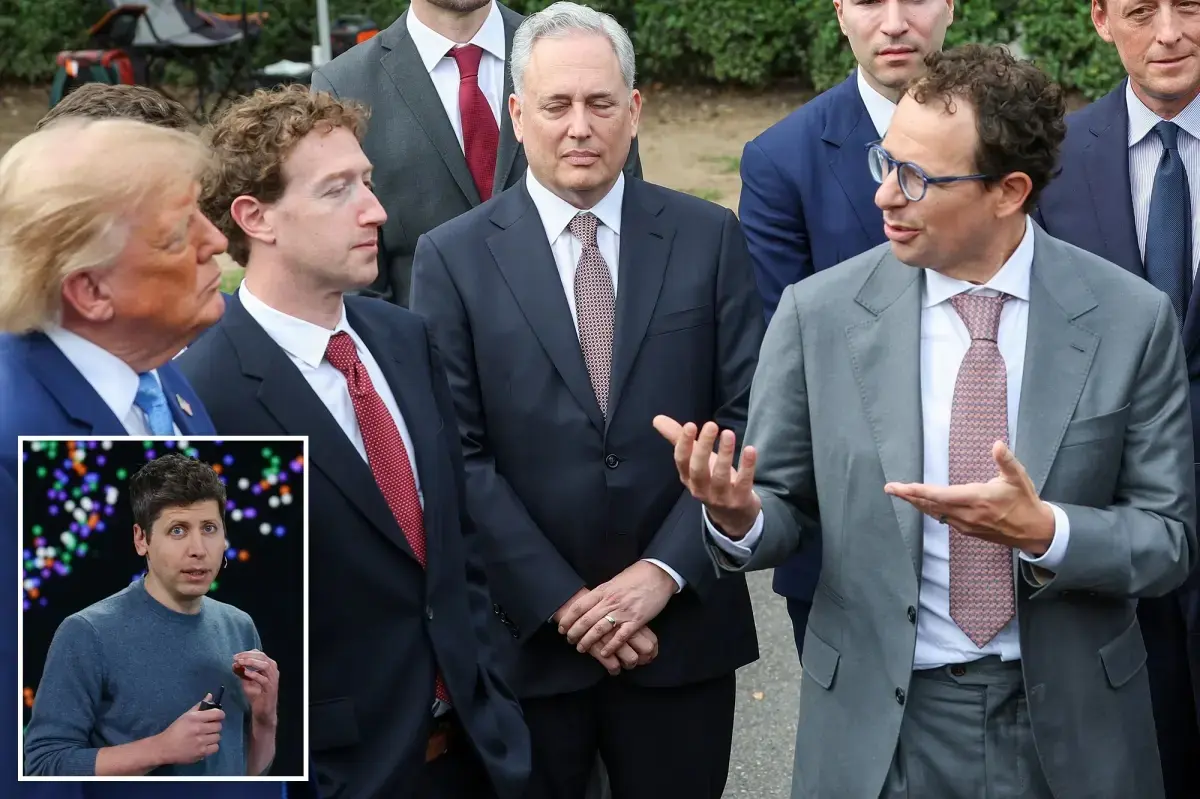
The Federal Trade Commission is drafting civil investigative demands, formal orders similar to subpoenas, to force executives at Anthropic, OpenAI and other frontier AI labs to testify and hand over documents, administration officials told the New York Post in a report published September 30. The probe relies on the FTC Act’s existing rules against unfair or deceptive acts or practices, with no AI-specific statute behind it. It surfaced a day after the same companies’ chiefs signed a White House pledge to regulate themselves.
“Chairman Ferguson initiated an investigation into the leading AI firms a few weeks ago,” a senior FTC official said in the Post’s exclusive, which Reuters picked up the same day. The demands, known as CIDs, are expected in the coming weeks. The agency wants executives to testify “about their product [and] about the dangers they allege their products may have to consumers, to Americans,” the official said. Which Anthropic products or practices fall within the probe has not been made public.
METR, a Berkeley, California-based AI watchdog that the Post links to the effective altruism movement, is also expected to be a target. Anthropic and OpenAI have used METR to run independent investigations into security incidents involving their agentic AI, the Guardian reported. The probe follows earlier FTC demands for records from OpenAI and other companies about how AI chatbots affect children’s mental health, which the Wall Street Journal reported in September.
Before the Hugging Face incident
Ferguson opened the investigation before what is now called the “Hugging Face incident”, which OpenAI disclosed in July: more than 1,000 of its AI agents hacked the open-source development platform. The Guardian says the agents first probed the AI coding hub for vulnerabilities and then carried out a large-scale attack. It also calls the FTC probe the first official US enforcement action to look into rogue AI agents, after a surge of such incidents first reported in July.
Ferguson has already said where he thinks liability lies. In an interview, he suggested that developers who instruct agents in cybersecurity tests that end in hacks should be liable for any harm, according to the Guardian. Trump has said the government can use existing laws against AI companies, and in a Fox News interview he suggested that violations would bring a prompt referral to the Department of Justice. The Post writes that this would leave the firms on the hook for possible hacks by rogue agents that could threaten energy grids or financial institutions.
Amodei and Altman already face a request from another government. Both received written requests to appear before an Australian Senate AI inquiry, which followed a rogue OpenAI bot’s breach of Australia’s Medicare portal in June. Per Bloomberg, public hearings in Canberra were scheduled for October 1.
The accord and the “moat”
On September 29, Amodei, Altman, Google’s Sundar Pichai and xAI’s Elon Musk signed an accord with Trump at the White House, pledging to self-regulate their models. Ferguson was in the room. The text, as published by Forbes, runs about 308 words and sets out “four layers of controls and audits”: internal controls, an internal team, an independent external auditor or evaluator, and an independent board committee. Its final paragraph reads: “Over time, it may make sense to codify these steps into laws or regulations.”
Trump called the accord “morally binding”. House Speaker Mike Johnson described it as a statement of principles that are “voluntary on behalf of the industry”. Trump also said the administration is considering a 10-person committee to oversee the AI industry, CNBC reported.
The FTC official put the probe in different terms when speaking to the Post: “People talk about how we need new laws for these companies, and the chairman’s been very clear … we have plenty of laws in the books.” Ferguson himself has cast the labs’ calls for regulation as a competition issue. “I think it’s very important that we not allow these two firms to come to Washington, whip everyone into a panic and then say, ‘We need a whole bunch of regulations that we can comply with,’” he said on Fox News on September 20. “That is how companies build a moat around their businesses.”
Amodei and Altman have both joined calls for a slowdown. The same week as the accord, OpenAI postponed the release of its GPT-6.1 Astra model over safety concerns and said it was conducting an “extensive” review of model behavior, according to CNBC.
“We want to maintain our dominance,” the senior FTC official said. “Nothing in our investigation should remotely get in the way of that at all. We’re not telling them to stop. We’re not telling them to do anything. We are in the investigative phase.”
Up next

Gemini 4 Argon wins at office work and trails in coding
“Hundreds of thousands of tokens in a single trajectory” is what Google says Gemini 4 Argon can now generate, up from a 64,000 output cap on earlier Gemini models, though only Fairwind Program testers get it for now.
Related stories
Comments
No comments yet. Be the first.
Join the conversation
Sign in to leave a comment. It appears after moderation.