
Gemini 4 Argon wins at office work and trails in coding
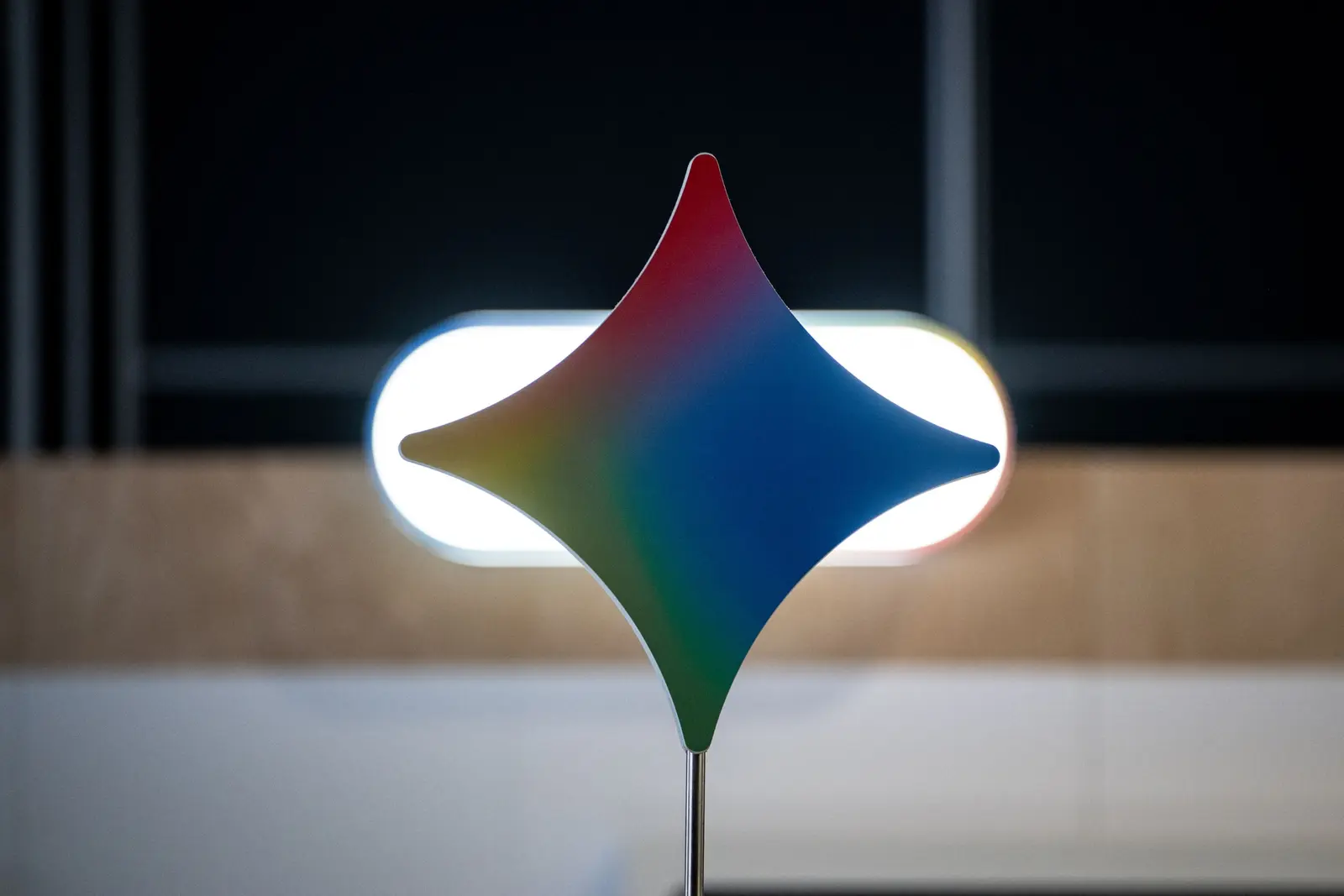
Google on September 30 announced Gemini 4 Argon, its new flagship model, and across the 18 benchmarks in Google’s comparison table it leads or ties in 13 against OpenAI’s GPT-6 Astra and Anthropic’s Claude Opus 5.5 and Claude Fable 5.1, by The New Stack’s count. Its widest margins are on legal, finance and workflow-automation agent tests and on inputs between 256K and 1M tokens, while coding splits into two wins and two last places. Outside Google itself, only cyber defenders in its Fairwind Program can run the model for now.
Fairwind opened on September 2 alongside Gemini 3.8 Flash Cyber to government agencies, critical infrastructure operators and tech firms responsible for “securing widespread software foundations,” and Google said it had more than 650 participants at launch, Snowflake, CrowdStrike and Datadog among them. Under Google DeepMind’s program terms, a member organization may give Argon only to its internal cybersecurity, incident response or penetration testing teams, which leaves out every other team at a member company. Paid API customers and Google AI Ultra subscribers are next in line, ahead of developers, enterprises and consumers at large, on a date Google has not given.
Where Argon pulls ahead
Argon’s 51.3% on Zapier’s AutomationBench is almost nine points ahead of Opus 5.5, and its 65.4% on Vals Finance Agent v2 tops the next-best Fable 5.1 at 58.9%. On GraphWalks BFS with inputs between 256K and 1M tokens, it scores 84.2% (F1), more than 12 points ahead of GPT-6 Astra. Its 19.6% on Harvey’s Legal Agent Benchmark is nearly triple Fable 5.1’s 6.7%, and at that score it fully completes about one task in five.
On the Vals Index, Vibe Code Bench, Agent’s Last Exam, Chartography and GraphWalks up to 128K tokens, Argon’s lead is under two points each, and it posts 91.7% on the long-video LVBench test. It trails on five tests: FrontierSWE v2, Terminal-Bench 4.0, PostTrainBench, Terminal-Bench Science 0.1, where GPT-6 Astra scores 68.1% to Argon’s 57.6%, and the offline subset of OSWorld-2.0. Outside Google’s table, Arena.ai placed Gemini 4 Argon (High) first in its Text Arena with 1525 points.
Coding comes out split
Google calls Argon’s 77.9% on DeepSWE v1.1, which tests long-horizon software engineering, a new state of the art; its own Gemini 3.8 Flash, announced the day Fairwind opened, scored 73.7% on the same test by Google’s numbers. On FrontierSWE v2 and Terminal-Bench 4.0, Argon finishes last of the four models, 10.5 points behind GPT-6 Astra on the first and nine behind Opus 5.5 on the second. Its other coding win, 91.9% on Vibe Code Bench, comes on a test where all four models score above 89%. Arena.ai, for its part, ranks Gemini 4 Argon (High) eighth in Code Arena: WebDev, with 1679 points.
Gemini 3.5 Pro, which Google announced at I/O in May and planned to launch in June, missed that date while Google shipped a run of Flash models, and The New Stack describes Argon as essentially its replacement. Bloomberg reported in mid-July that 3.5 Pro was months behind schedule as Google worked to improve its capabilities, particularly in coding; coding is still where the new flagship’s results split.
Google’s coding examples, as Testing Catalog reported them, come from inside the company: thousands of employees already use Argon for coding, research and writing, and Argon agents support C and C++ migrations to Rust, from core libraries of tens of thousands of lines to the Fuchsia Zircon kernel at more than 800K lines, with automated and manual auditing, emulation testing and review before production. In a Rust port of the libgav1 video decoder, Argon replaced 32K lines of SIMD code with safe Rust that ran 2.7 times faster with identical output. Google also says the model beat a published quantum algorithm optimization baseline by 40% within minutes and that a group of Argon agents found data-center memory optimizations that freed more than 300 TiB after rollout.
Price and the million-token cap
Argon costs $2 per million input tokens and $10 per million output tokens during an introductory period, the same pair Anthropic’s Sonnet 5.5 cost in September; afterward the rates rise to $4 and $20, and that output rate matches the $20 per million output tokens Anthropic charges for Opus 5.5. Cached input tokens get a 95% discount to the input rate, Testing Catalog reported, which comes to $0.10 per million at the introductory price. Artificial Analysis says that with discounted prices, Argon equals GPT-6 Astra on its Intelligence Index at 60% of the cost per task.
The output cap rises to one million tokens, from 64,000 on previous Gemini models. “When the model has the headroom to think deeply and generate hundreds of thousands of tokens in a single trajectory, it adds a new level of depth in reasoning to solve tough problems in one go,” Google writes. A single response that uses the full million costs $10 in output tokens at the introductory rate and $20 at the later one.
Cyber first
Google says it will gather feedback from early testers and iterate on Argon’s guardrails before opening the model beyond Fairwind, and that it has “actively engaged in the U.S. government’s voluntary process for pre-release model access while we gradually expand access.” Testing Catalog reported that the rollout stays phased while Google strengthens protections against cyber and CBRN misuse, indirect prompt injection and misaligned agent behavior, alongside hardened sandbox environments for high-risk training and evaluations.
Fairwind members and Google’s internal teams get Argon without cyber guardrails for defensive work: Google says it trained the model to autonomously find, validate and patch software vulnerabilities. It scores 85.8% on Google’s internal vulnerability discovery benchmark and 70.9% on Wiz’s penetration testing benchmark, figures Google sets only against its own Gemini 3.8 Flash Cyber, at 71.0% and 58.2%. On CWE-bench v1, Argon ties GPT-6 Astra and xAI’s Grok 4.7 at 68%, with Opus 5.5 at 67%; the OpenAI and Anthropic models run in their own agent harnesses, Codex and Claude Code, so that leaderboard scores each model together with its tooling, as The New Stack points out.
Wiz, which Google acquired for $32 billion in March, already uses Argon in its Scan for Good initiative, and Google says the model found a critical vulnerability exposing sensitive personal information in healthcare software used by hospitals worldwide, one that earlier frontier models had missed.
Up next
OpenAI’s MCP Extensions put plugins in the ChatGPT sidebar
OpenAI bolted four ChatGPT-specific extensions onto MCP, and they put third-party plugins in the sidebar, the file viewer and the message composer, where they’re meant to feel like native features.
Related stories
Comments
No comments yet. Be the first.
Join the conversation
Sign in to leave a comment. It appears after moderation.