
How Claude’s watermark works: it only changes the source of randomness
Anthropic said on August 14 that Claude models will now write text carrying a watermark, and it explained how the mark works. Claude’s word choices are still random, but the randomness now comes from a secret key where an ordinary random number generator used to sit. Nothing is added to the text: no hidden characters, no extra tokens, nothing a reader can see.
The reason is regulation. Since August 2, the EU has required AI providers serving its market to mark AI-generated content. In July 2026, Anthropic signed the EU Code of Practice on Transparency of AI-Generated Content, along with several other major model providers and around 190 signatories in total. Anthropic’s explainer says the other developers who signed will ship their own watermarks, so this is not a Claude-only feature.
Where the randomness comes from
A language model writes one word at a time, and at each step it picks from a list of candidates. Anthropic gives the example “The weather today was cold and…”. The next word is very unlikely to be “sugary”, but “overcast” and “grey” are both likely, and the sentence means much the same either way. Choices like that are settled by a random number.
The watermark lives in those low-stakes choices, which come up many times in any longer response. With watermarking on, the pick is settled by the key combined with the few words that come just before. To anyone without the key, the output looks exactly as random as before. Anyone who has the key can check whether a sequence of words matches the choices Claude would make with it, and if it does, assign a probability that Claude generated the text.
Anthropic makes two points about what this does not do. It does not tie Claude to one synonym: “overcast” can win in one sentence and “grey” in the next, depending on the context. And it does not push Claude toward words it would not have considered anyway. The company’s example is “nubilous”, an obscure synonym for overcast that Claude almost certainly would not use.
The method is a version of SynthID-Text, which Google DeepMind published in Nature in October 2024. It belongs to a family of approaches going back to a 2022 proposal by Scott Aaronson, and all of them change only where the randomness comes from. The SynthID-Text paper says the technique “does not affect LLM training and modifies only the sampling procedure”, and that detection runs “without using the underlying LLM”.
The open implementation shows what “a key” means in practice. Hugging Face shipped SynthID Text in Transformers v4.46.0, where the key is a list of integers, and it recommends 20 to 30 unique, randomly generated numbers to balance detectability against generation quality. In that library, the window of preceding words is a parameter called ngram_len, with a default of 5. Hugging Face says a larger value makes the watermark easier to detect but more brittle to edits, and it warns that each model’s configuration has to stay private, “otherwise your watermark may be replicable by others.”
Does it cost anything?
Anthropic says it does not. The watermark produces no extra tokens, so Claude costs the same to serve and to use, and the company calls the impact on speed negligible. In internal testing it saw no effect on the content, creativity or readability of Claude’s text.
The 2024 paper said text watermarking “has not been adopted in production systems owing to stringent quality, detectability and computational efficiency requirements.” To make it work at scale, its authors built an algorithm that combines watermarking with speculative sampling, “an efficiency technique frequently used in production systems”. In speculative sampling, a small draft model proposes tokens and the large model checks them.
For quality, Anthropic leans on DeepMind’s own evidence. Google served a watermarked model to part of its Gemini traffic and compared thumbs-up and thumbs-down ratings, finding no statistically significant difference. The paper’s abstract puts the size of that experiment at nearly 20 million Gemini responses. In a separate controlled study, human raters comparing watermarked and unwatermarked answers side by side saw no difference in quality.
The mark also carries nothing about the user. Anthropic says neither the watermark nor its key holds any information that could identify a person, an organization or a chat. It is tied to Claude and its outputs, and it does not change who owns an output or the user’s rights under Anthropic’s terms.
Thin on facts, code and proofreading
A watermark needs choices, and some text has none. In “Isaac Newton’s most famous work was called Principia…”, the next word has to be “Mathematica”, so the watermark has nothing to act on. After “2 + 2 =”, the answer is “4”, or “5” if Claude is writing about Nineteen Eighty-Four. Wherever a different word would make the text wrong or break the code, the watermark is not applied.
So code generally carries less watermarking than other kinds of text. Places where a choice really is arbitrary, such as comments, can carry the mark, but Anthropic says that by definition it has a negligible effect on the code itself.
Proofreading is the other weak case. The watermark only applies to words Claude chooses, and when Claude lightly edits someone else’s text, nearly every word is still the author’s. If you ask for grammar and punctuation fixes only, the mark can only live in a handful of corrections, which may be too few to register. Translation is the opposite case: every word is Claude’s choice, so a Claude translation carries the watermark.
Length matters across all of these. Detection works poorly on short samples, which hold fewer choices, and confidence that Claude was involved grows as a passage gets longer.
Why it’s on everywhere
The rule is European, but the watermark is global. Anthropic says it is applying it worldwide at launch because it does not yet have a durable way to limit it by region, and that it will keep evaluating other approaches. Models launched before August 2, 2026 fall under the law’s transition period, and Anthropic says it will add watermarking to them over the coming months.
Images and files get a different treatment. When Claude produces a supported file such as a .png, .jpg or .svg, it attaches a C2PA content credential: a small, cryptographically signed note in the file’s metadata saying the file was made or processed with Claude. Nothing inside the file changes, and any C2PA-aware tool can read the note. Anthropic says it will also provide its own tool where you can drop a file to check it.
For text, the check that matters to anyone outside Anthropic still isn’t available. A watermark detection API is coming “soon”, the company says, and it is still working out how that will be implemented.
What a positive check proves
Anthropic is explicit about the limits. With its key, the only question you can answer is “What is the likelihood this was partly written by Claude?” A negative result doesn’t show the text was written by a human, and it can’t tell you whether another AI wrote it, since another provider would use a different key and possibly a different method. A positive result can’t separate “Claude wrote this” from “Claude heavily edited this.”
That also sets the watermark apart from commercial AI detectors such as Pangram. Those services don’t have the key, so they look for stylistic tells instead. Anthropic names two: models seem fond of the construction “this isn’t [X], it’s [Y]”, and they use the word “quietly” a lot more than you might expect.
Editing gets around the watermark only partly. Light editing probably won’t remove it completely, while a full rewrite that replaces every word will. Anthropic’s comment on that case: “In the latter case, of course, it’s arguable whether the text can any longer be described as AI-generated.”
Up next
Skill Atlas cuts Claude Code’s skill overhead from 2,544 tokens to 338
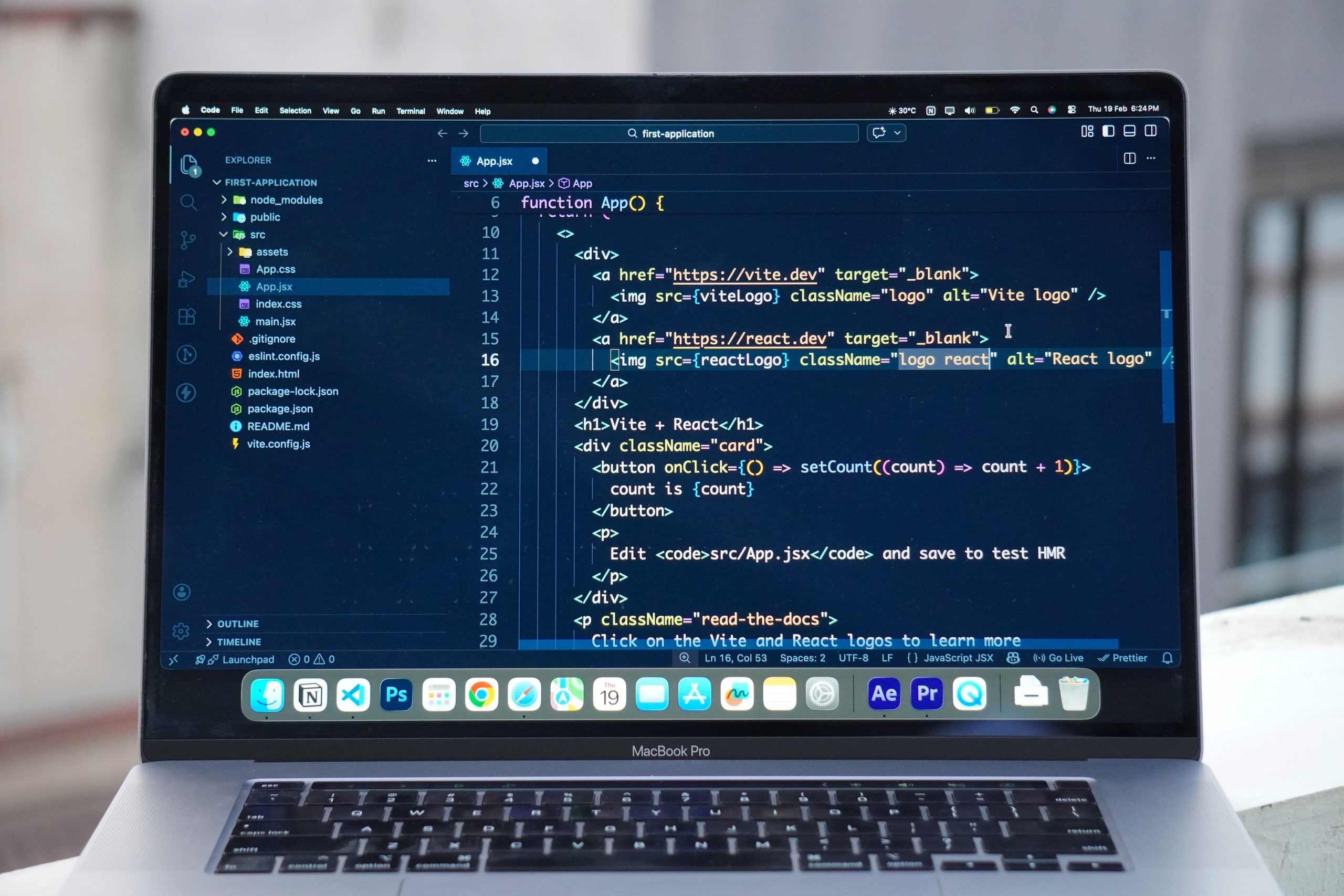
Skill Atlas, a Claude Code plugin, cut per-session skill overhead from 2,544 tokens to 338 on a 53-skill setup by making 47 of them dormant: descriptions stay out of context but remain searchable. The lookup costs about 2,400 tokens, and only when it’s called.
Related stories
- Four older Claude models get a watermark on November 16
- Claude’s text now carries an invisible watermark
- WMTrace won’t ship an Anthropic watermark detector
- Sparkle watermark gets an off switch in Gemini
- Anthropic’s $150M buys Claude time for federal scientists
- Suleyman wants consciousness talk out of Claude’s training
Comments
No comments yet. Be the first.
Join the conversation
Sign in to leave a comment. It appears after moderation.