
v2.1.238
Claude Code 2.1.238, published in the GitHub release notes on August 20, lets plugin marketplaces and self-hosted runners get their credentials from a command you supply. MCP servers already had this kind of helper, and the same release tightens where that one is allowed to run.
Headers from a command
A headersHelper can now sit on a url marketplace or on a single catalog entry. It runs a command that mints HTTP headers, such as a short-lived token, and Claude Code attaches them to catalog fetches and to archive downloads from the same origin.
The entry-level helper has more limits. A catalog entry’s helper runs only when you install or update that plugin, and only after its command has been shown to you. claude plugin install and claude plugin update ask a [y/N] question before going ahead, or you can pass -y.
The MCP side gets similar rules. A headersHelper defined in a project .mcp.json now runs only if that folder’s trust dialog has been accepted. The same requirement covers inline MCP servers declared in project agent files or in agent files from directories added with --add-dir, and it also applies under claude -p. Helpers from a project .mcp.json, a plugin or an agent file run without inherited credential environment variables. User, managed and claude.ai-scope helpers now run from the Claude config directory.
What changes for self-hosted runners
Self-hosted environments run Claude Code cloud sessions on infrastructure the organization operates, and they are in public beta for Team and Enterprise organizations. Anthropic’s documentation lays out the flow: a runner program on your hosts claims a session from the environment’s queue, clones the repository and starts a Claude Code process. Everything it sends to Anthropic, including queue polling, the session’s event stream and (by default) model inference, goes out as outbound HTTPS to api.anthropic.com. In the docs’ words, “Anthropic never connects into your network.”
The new proxy flags are for that outbound path. claude self-hosted-runner now accepts --proxy-authorization-command or --proxy-authorization-file for egress proxies that require a freshly issued Proxy-Authorization header on every connection. A proxy refusing a connection used to show up as a generic network error. Now the error names the proxy.
The second flag handles shutdown. With --defer-shutdown-max-min <minutes>, a runner that receives SIGTERM keeps serving the sessions attached to it. Once that many minutes have passed, it parks whatever is still open and exits. The docs describe two ways to run runners: start them by hand, or use an autoscaling orchestrator that starts them as sessions queue up.
The release also fixes a bug where the server could remove a runner after just one slow or lost poll request and hand its healthy session to another runner. Runners have been getting fixes for a while. In 2.1.228, sessions stopped crashing on every new runner when a checkout hook failed for a repo the session never writes to.
Remote Control copes better with network edges too. It now tolerates brief HTTP 403 refusals from a network edge, VPN or proxy for up to 3 minutes. If the block lasts longer, the message names whoever is refusing the connection.
Ctrl+W, memory and the rest
A new keybindingFlavor setting takes "readline", which makes Ctrl+W in the prompt delete back to the previous whitespace, as it does in Bash. The default, "classic", does not change.
Long sessions get two fixes. Memory used to grow without limit in long interactive sessions, and subagent tool results are now released once they leave the recent display window. Custom, project and plugin output styles also stop drifting back to the default voice partway through a session. On the MCP side, stdio servers no longer get a server/discover request before initialize. That request had forced lazy servers to start their backend every time a session opened. claude mcp list and claude mcp get now show disabled servers as ”⊘ Disabled” without connecting to them for a health check.
The rest of the notes, briefly:
- Remote Control: per-task Stop works on CLI-hosted sessions; a crashed session can be reused the next time you message it; messages sent from the web or Desktop mid-turn stay in the transcript; a model picked on a phone or the web now shows in the terminal; a brief network hiccup no longer disconnects you with “login expired”.
- Cross-session messaging: a session that refuses inbound messages now reports “refused” to the sender instead of a silent success, and a session whose inbox drops your messages because of a rate limit or a full queue tells your session about it.
ListAgentsandSendMessagereach Remote Control peers in server mode and in Desktop or IDE hosts, and they no longer show the pre-warmed idle worker until a task claims it.- Startup: bare
claudestarts sooner on macOS, and the automatic update check now runs about 10 seconds after launch. - Terminal fixes: no more leftover
/tmp/claude-*-cwdfiles, held Backspace works over slow SSH and mosh links, and permission-prompt diffs with emoji or tabs are no longer clipped. - The bundled claude-api skill now covers the Managed Agents August 19 release.
In fullscreen, Ctrl+L and Cmd+K now always just repaint the screen. The double-press /clear shortcut has been removed, and 1-row nvim terminals no longer set off automatic /clear loops.
Up next
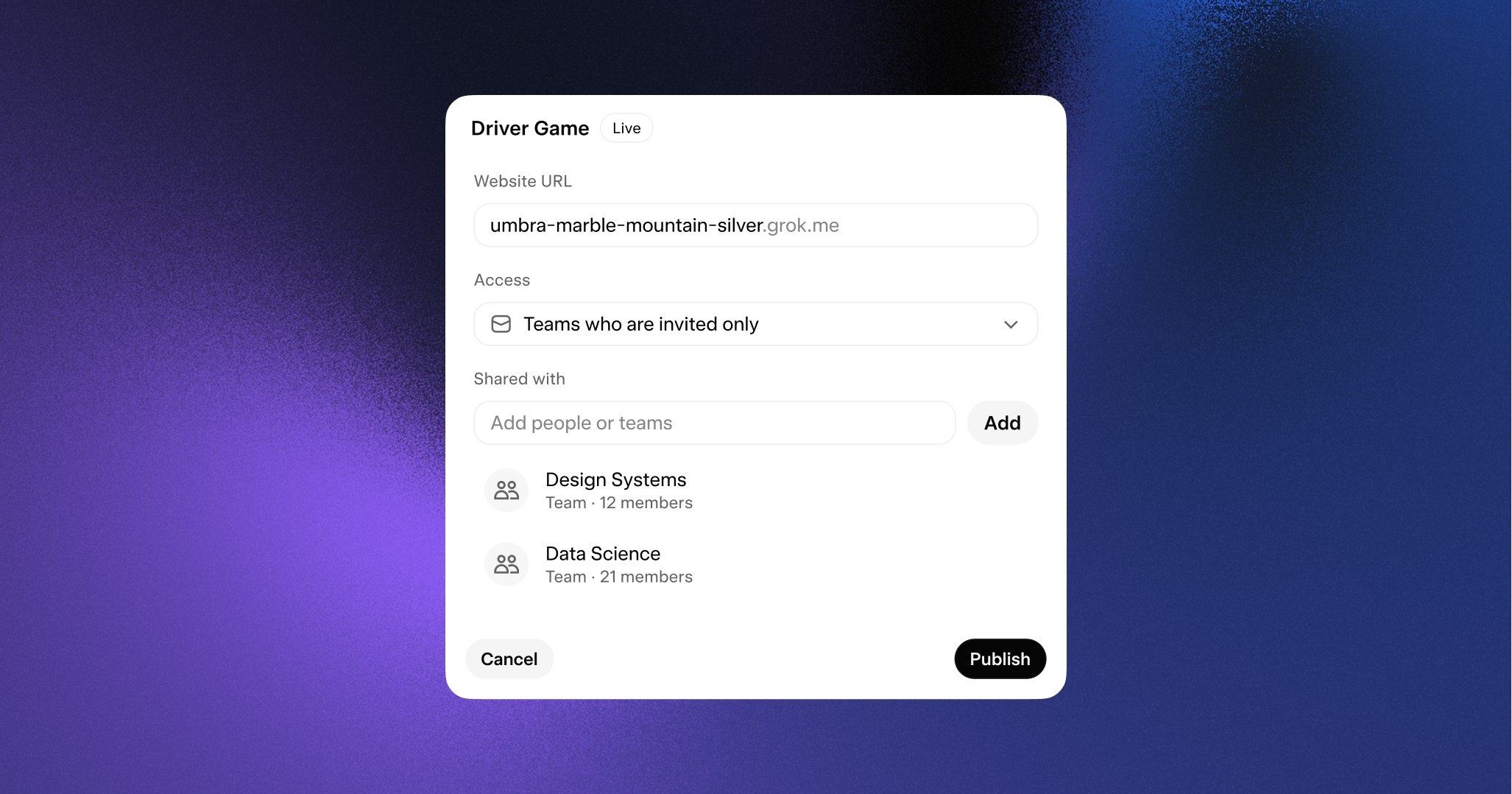
Grok Build beta reaches SuperGrok and X Premium+
Grok Build’s terminal coding agent reached SuperGrok ($30/mo) and X Premium+ ($40/mo) back in May, and Testing Catalog says apps shared from it now get access management on web, mobile and the CLI.
Related stories
- Claude Code 2.1.239 prices the data-residency premium
- Claude Code v2.1.237 adds a Concise output style
- Claude Code on desktop folds an iPhone Duo to test layouts
- Claude Code 2.1.318: login expiry warning, runner log change
- Claude Code 2.1.312 stops overwriting big CLAUDE.md files
- Claude Code 2.1.311 compacts past 200K instead of stopping
Comments
No comments yet. Be the first.
Join the conversation
Sign in to leave a comment. It appears after moderation.