
Avatars and a Customize tab head to Gemini desktop
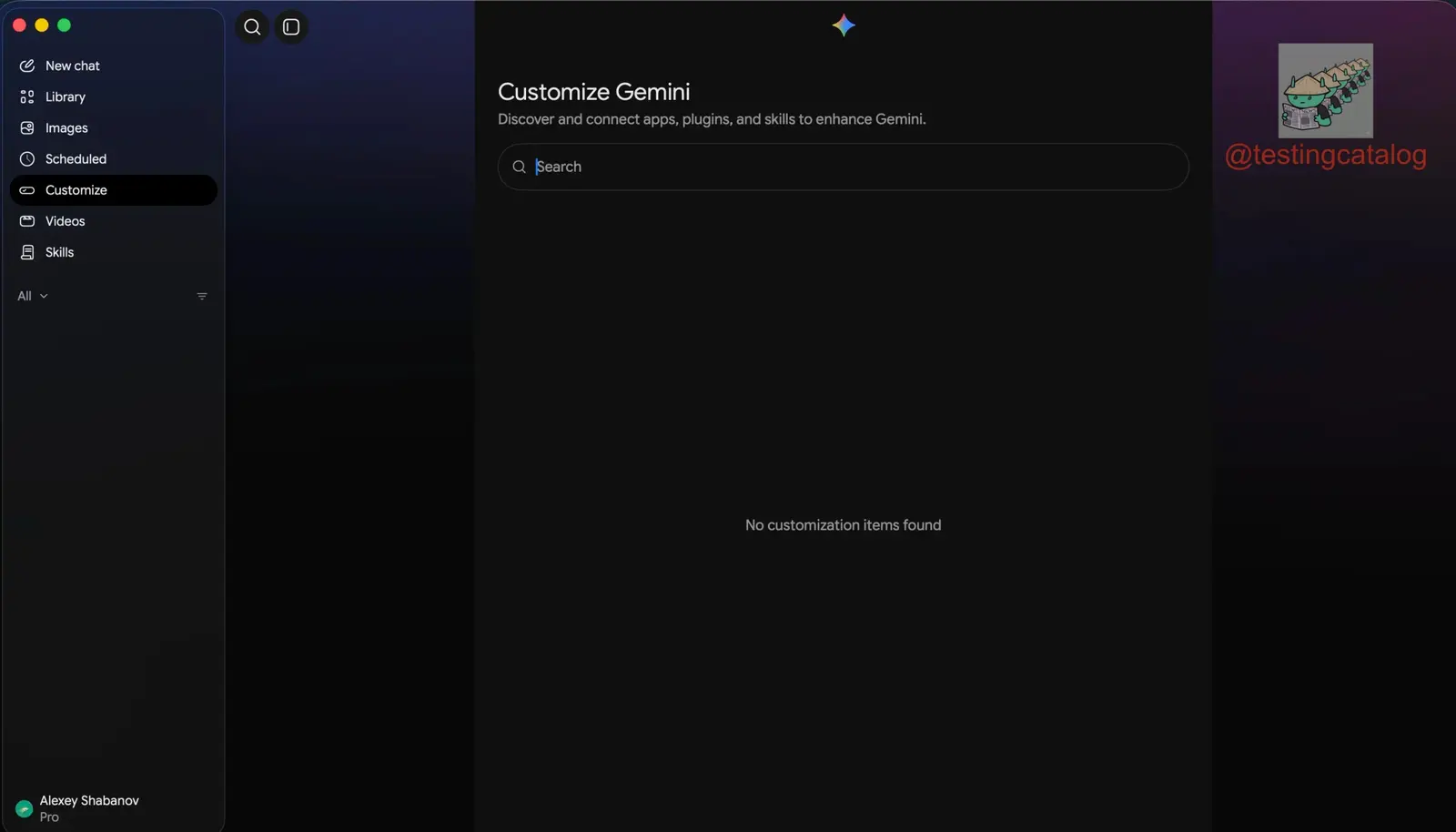
Testing Catalog reported on August 24 that the latest Gemini desktop build has a Settings section for avatars, where users create and manage them inside the app. The same build carries a “Customize” area that opens a discovery screen for apps, skills, and plugins. The outlet flagged the findings in a Threads post and laid them out in a full write-up.
Customize had already turned up on the web, and Testing Catalog says it is still hidden on desktop too. The outlet compares the direction to what Claude and Codex already do in their desktop apps and calls Google relatively late. The gap is in tooling. Broad connector and MCP support (MCP being the open protocol that lets a model call external tools and data sources) has yet to reach the consumer Gemini app. Gemini Business has connectors, though only a limited selection, and Spark was the first Google product with custom MCP support. Testing Catalog suggests Gemini models may need more model-level work before they can reliably handle a wider range of external tools.
The client is also being prepared for new response types, including Gmail and Calendar widgets. Testing Catalog reads that as groundwork for Gemini 4 capabilities. It arrives a week after the same app showed traces of computer use, which would let the agent operate other apps and files.
On the model itself, Testing Catalog says Google has started internal preparation for Gemini 4. The summer training cycle was originally expected to produce Gemini 3.5 Pro. With that release canceled, Google may go straight to Gemini 4, and on the roughly six-month cycles described earlier the outlet puts a possible arrival around December. Gemini 3 followed a similar path: Testing Catalog first detected traces of it in July last year, and early checkpoints showed up over the summer before the model shipped later in the year.
Bedros Pamboukian (@bedros_p) wrote on August 23 that mentions of Gemini 4 in an unnamed product had gone from 0 to more than 120 in about two to three days, and that another product had picked up 6 similar mentions in under 24 hours. “It is starting to propagate,” he wrote.
According to Testing Catalog, the desktop changes were still in development at the time of its report, and the model-related behaviour did not appear to be in testing outside Google. Later, on September 11, Google released the Gemini app for Windows 10 and 11. It described the release as the start of the app’s native desktop capabilities on Windows, with more features to follow over time.
Up next
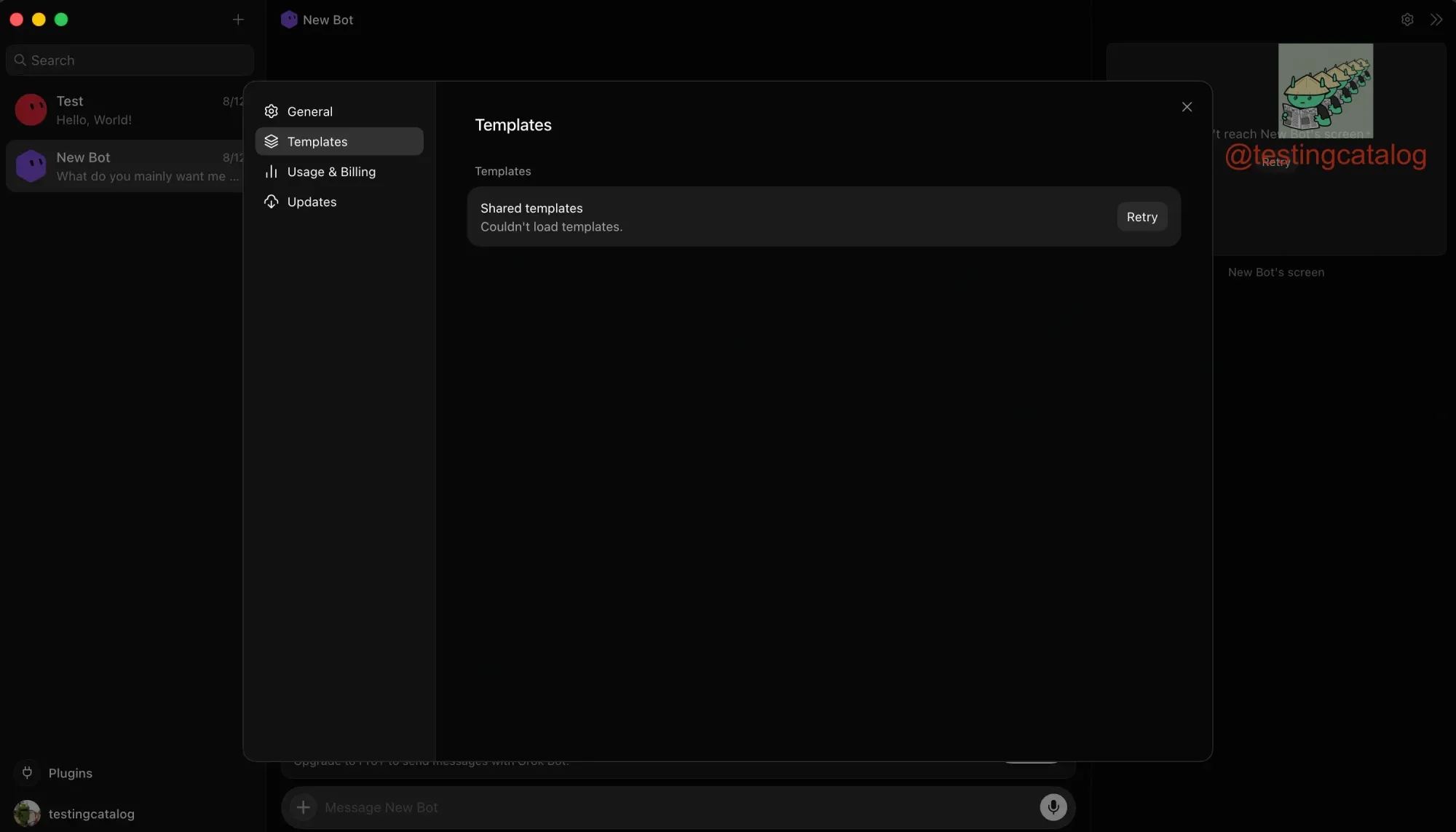
Leak: Grok Bot gains templates and Chrome profile import
Per TestingCatalog, a hidden setting in Grok Bot would import Chrome profiles with cookies, so the agent could open websites through sessions the user already signed into. It sits among settings still not live in the app.
Related stories
Comments
No comments yet. Be the first.
Join the conversation
Sign in to leave a comment. It appears after moderation.