
AWS’s decision models grow to 31B on Gemma 4

On Monday AWS released Strands Decider v2, a family of five open decision models that range from 2 billion to 31 billion parameters. They are built on Google’s Gemma 4 and come under the Apache 2.0 license, so anyone can download them and run them on their own hardware. The release came only seven weeks after the first Strands Decider, a single 2-billion-parameter model built on Alibaba’s Qwen3.5, The New Stack reports.
A decision model doesn’t write text. You give it a state, such as a support ticket or the log of an AI agent’s work, along with a question and a fixed list of possible answers. It returns a probability for each answer. Strands, the open-source agent toolkit from AWS behind the project, describes the trade-off this way: such models are faster and stronger for their size, and they always pick from the list. But they are much worse than reasoning models at complex problems and no use for coding, chatbots or summaries.
Who built it
The project was started by Marc Brooker, a vice president and distinguished engineer at AWS. According to TechCrunch, he got the idea from Jev, a decision model from TypeSafe AI that made this kind of model popular, and tried building his own version. Amazon engineers then cleaned it up and released it. For v2, Brooker told The New Stack, the team used better and larger training data and ended up with models that are “significantly better” in accuracy and calibration, “which are the things that really matter to customers in this space.”
How the models score
AWS says the 31B model averages 82.1 across six public text benchmarks, ahead of every rival it tested, including Google’s Gemini Decision 1 at 79.4. It still loses to rivals on three of the six benchmarks, two of them to Perplexity’s decision model. The smaller models also hold up: the 26B mixture-of-experts model averages 79.9.
Calibration measures how closely a model’s confidence matches how often it is actually right. That matters when software acts on a 90% “yes” without a human checking. The 31B model’s calibration error fell to 0.027, from 0.062 for v1. Only Gemini Decision 1 does better, at 0.025.
Brooker doesn’t put much weight on these tables. “I think with V1 we were benchmark leading for about eight hours,” he says. In his view the benchmarks are getting “a little bit saturated” and mostly help customers decide whether a small 4B model is good enough for their work.
The team also changed the design. Most language models read text in one direction, with each word seeing only the words before it, because that is how they write. A decision model never writes, so in v2 every part of the input can see all the rest. The input then only needs to be processed once, so asking 20 questions about the same agent log costs little more than asking one. Why it works better, Brooker says, “I’m not entirely sure.”
Where the savings are
Inside Amazon, engineers on an internal ticketing system replaced Claude Sonnet 4.6 with a v1 model to label tickets. The average time per call fell from 4,215 to 897 milliseconds, and AWS estimates the cost dropped from about $22,200 to about $500 per million tickets at list prices. The team hasn’t published accuracy figures. AWS also says v2 cut costs by deciding which requests go to Claude Haiku 5.5 and which to Sonnet 5.5. That moves spending away from Anthropic models AWS itself sells through Amazon Bedrock.
Brooker is most excited about mixed workflows: mostly fixed steps with a decider model making one choice, or mostly agentic ones where the easy routes go to a decider “to drive down cost and latency.”
Strands Decider isn’t available on Bedrock, AWS’s own service for running models, yet. AWS’s annual re:Invent conference starts a week from now.
Up next
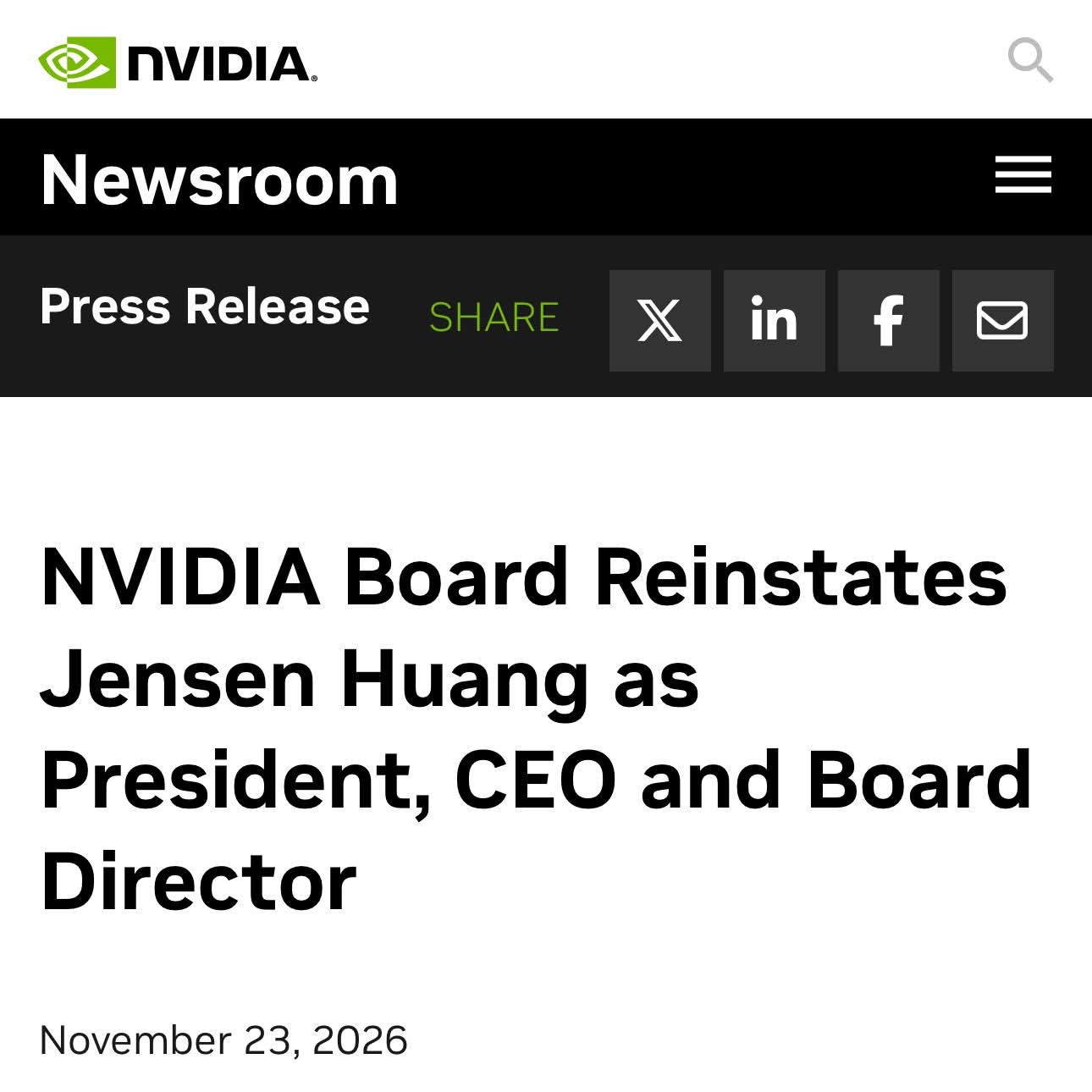
Nvidia brings Jensen Huang back as CEO
Jensen Huang is back as NVIDIA’s CEO by a unanimous board vote. NVIDIA says senior US government input left the board sure his return poses no national security risk. Should a chip company’s CEO need Washington’s blessing to return?
Related stories
- AWS’s Strands Decider 2B picks from your list, never writes
- Thinking Machines’ new open model fits on a laptop
- Kimi K3.1 Pro weights land on HuggingFace at 2.8T params
- Tencent ships Hy4 at Hy4 preview’s API price
- Nvidia’s open transcriber tops English ASR at 5.33% WER
- Mistral Large 4 weights are out, API now from $0.70 per 1M
Comments
No comments yet. Be the first.
Join the conversation
Sign in to leave a comment. It appears after moderation.