
GhostAction digs deleted API keys out of Git history

Between October 8 and 12, the GhostAction attackers used about 1,900 compromised GitHub accounts to push credential-stealing workflows into more than 30,000 repositories owned by roughly 3,000 users and organizations, GitGuardian said in an October 13 update to its research on the campaign. The injected jobs tried to pull 3,174 secrets out of public repositories’ CI. Almost all of the volume came in one batch on October 8 and 9.
The earlier waves were much smaller. From August 31 to September 30, the same workflow template went into 772 public repositories across 373 users and organizations. The original GhostAction campaign in September 2025 compromised 817 repositories across 327 users and exfiltrated at least 3,325 secrets.
One batch, 29,431 commits
GitGuardian sorted the October wave into batches using a label the attacker added as an HTTP parameter on the exfiltration endpoint. There are six labels, and they don’t map one-to-one onto payload versions:
- no tag, payload v1: October 8, 12:26, 1,713 commits
bling, v1: 13:18, 162 commitsblingnew, v1 and v2: 13:31, 11 and 101 commitsmonami, v3: 13:39, 159 commitsnew, v3: 14:07, 29,431 commitsmnsft, v3: October 10, 84 commits, not executedsecurity, v3: October 12, 65 commits, not executed
That adds up to 31,726 commits. Only 149 of them came in the two waves that started after GitHub began blocking the workflow.
Socket’s research team counted 346 repositories hit on October 8 in two automated sweeps that each lasted minutes. Two compromised maintainer accounts, kitao and henrywoo, pushed a security-audit.yml workflow into every repository they could write to, including kitao/pyxel (18,420 stars) and uber/athenadriver. Unlike the September wave, where most runs stalled awaiting approval, these runs executed, and Socket confirmed that secrets were exfiltrated.
What the job looks for
In the earlier waves the workflow was built for each target. The attacker read a repository’s legitimate workflows, copied the secret names they referenced into a job called “Github Actions Security”, and sent the values to their server in a single curl POST. The October workflow is called “Security Audit” and goes further. It runs on every push and on manual dispatch, and checks out the repository with fetch-depth: 0, which pulls the full commit history instead of only the latest snapshot. It then greps both the working tree and git log -p --all with 11 regexes.
Those patterns cover AWS key IDs, GitHub and GitLab personal access tokens, AI-related secrets and other cloud credentials. Per The New Stack, that includes Google and Firebase keys and API tokens from Anthropic, OpenAI and OpenRouter. As before, everything goes over plain HTTP to 193.32.204.199, including keys that have been deleted from the current code but are still in the history.
GitGuardian found three versions of the payload, and calls this wave “more experimental and manual” than the earlier ones:
- v1 added the history scan and went to about 1,800 repositories.
- v2 made matching case-insensitive and grabbed the two lines above and below every AKIA or ASIA key ID, so the matching secret access key came along with it. It went to about a hundred repositories that v1 had already hit.
- v3 applied the same context capture to history, reading up to 200,000 lines of
git log. It went to 160 previously hit victims first, then 20 minutes later to 28,000 new repositories over October 8 and 9.
GitGuardian takes the repository scan as a sign that the attacker planned to hit private repositories. On public ones, it says, adding that step “would have added no value.”
Where did GitHub step in?
GitHub started stopping the malicious workflow from running on October 9. The waves on October 10 and 12 used the same payload and extracted no secrets.
In the summer wave, GitHub held most runs for approval. GitGuardian collected 3,669 runs across 605 repositories, and only 499 of them executed, in 32 repositories. Of those, 336 completed and exfiltrated 26 secrets from 13 repositories. Most of those runs were triggered by legitimate pushes after the injection, since the workflow fires on every push. For October, GitGuardian confirmed some exfiltration but hasn’t determined how many distinct credentials reached the attackers, The New Stack reports.
No vulnerability in GitHub Actions was involved. The New Stack contrasts this with the tj-actions/changed-files compromise, which poisoned a shared Action used by thousands of repositories, while GhostAction used stolen developer credentials to modify workflows directly. How the attackers got those credentials is unclear. StepSecurity’s October 9 analysis points to personal access tokens taken from credential dumps as the likely source, but the initial compromise hasn’t been confirmed. In the summer wave, every commit was made with the victim’s own identity.
Old victims, old keys
GitGuardian’s data shows the campaign never really stopped between waves. In 92 cases during the summer, the attacker didn’t add a new workflow. They edited one planted in an earlier wave that was never removed, using the commit message Update Github Actions Security workflow, and pointed it at the new endpoint. Only 124 of the 772 summer repositories, 16%, had been cleaned in public history by October 5.
Some of the October victims had also been hit in the September 2025 and August 2026 waves. “The threat actors are likely relying in part on unrotated secrets compromised months or years ago and used in previous campaigns,” GitGuardian wrote.
Up next
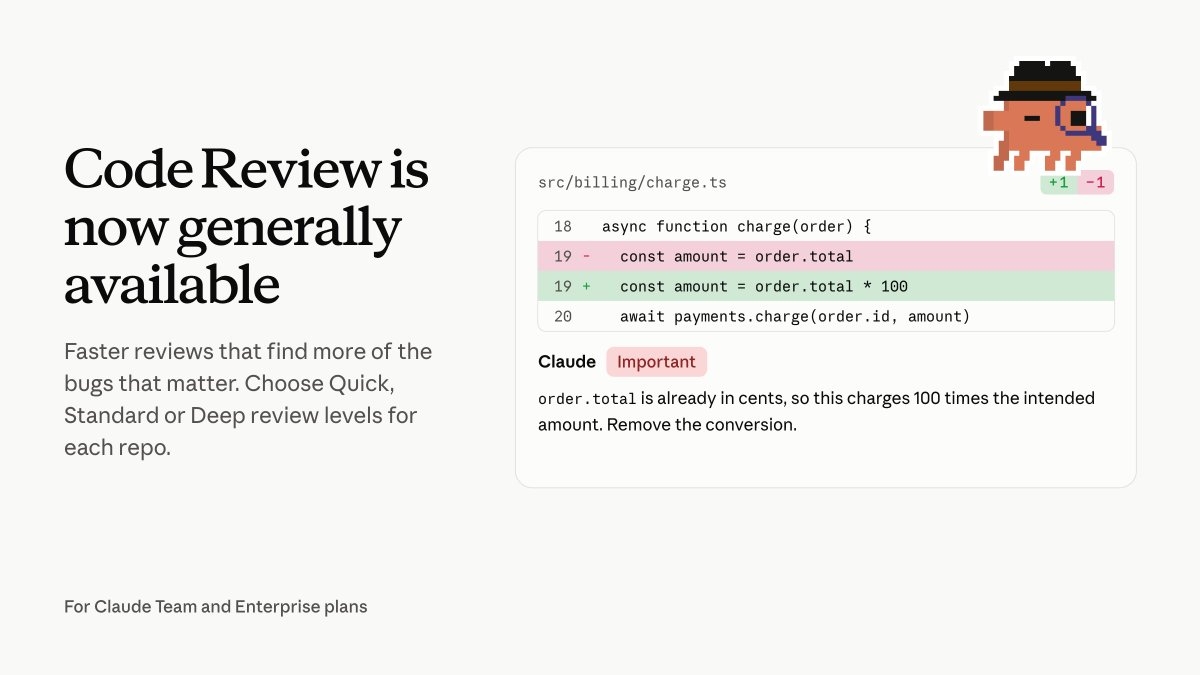
Claude Code Review exits preview and runs about 3x faster
Claude Code Review left research preview and cut most reviews from about 20 minutes to 6–10, with admins choosing Quick, Standard or Deep for each repo. Would you run Deep on every repo or save it for the critical ones?
Related stories
- libheif bugs reached OpenAI repos and GitHub Enterprise
- Backdoored Claude Code 2.1.313 hit up to 5,000 Cursor users
- Crafted Brotli data can run code on Node.js, Bun and Envoy
- OpenAI ships a Codex skill that checks sites for php2shell
- Distillation attack hit 1.4% of OpenCode Console users
- Anthropic’s free OSS Scanner skips human review on purpose
Comments
No comments yet. Be the first.
Join the conversation
Sign in to leave a comment. It appears after moderation.