
Surface Laptop Ultra slows down on local AI once unplugged
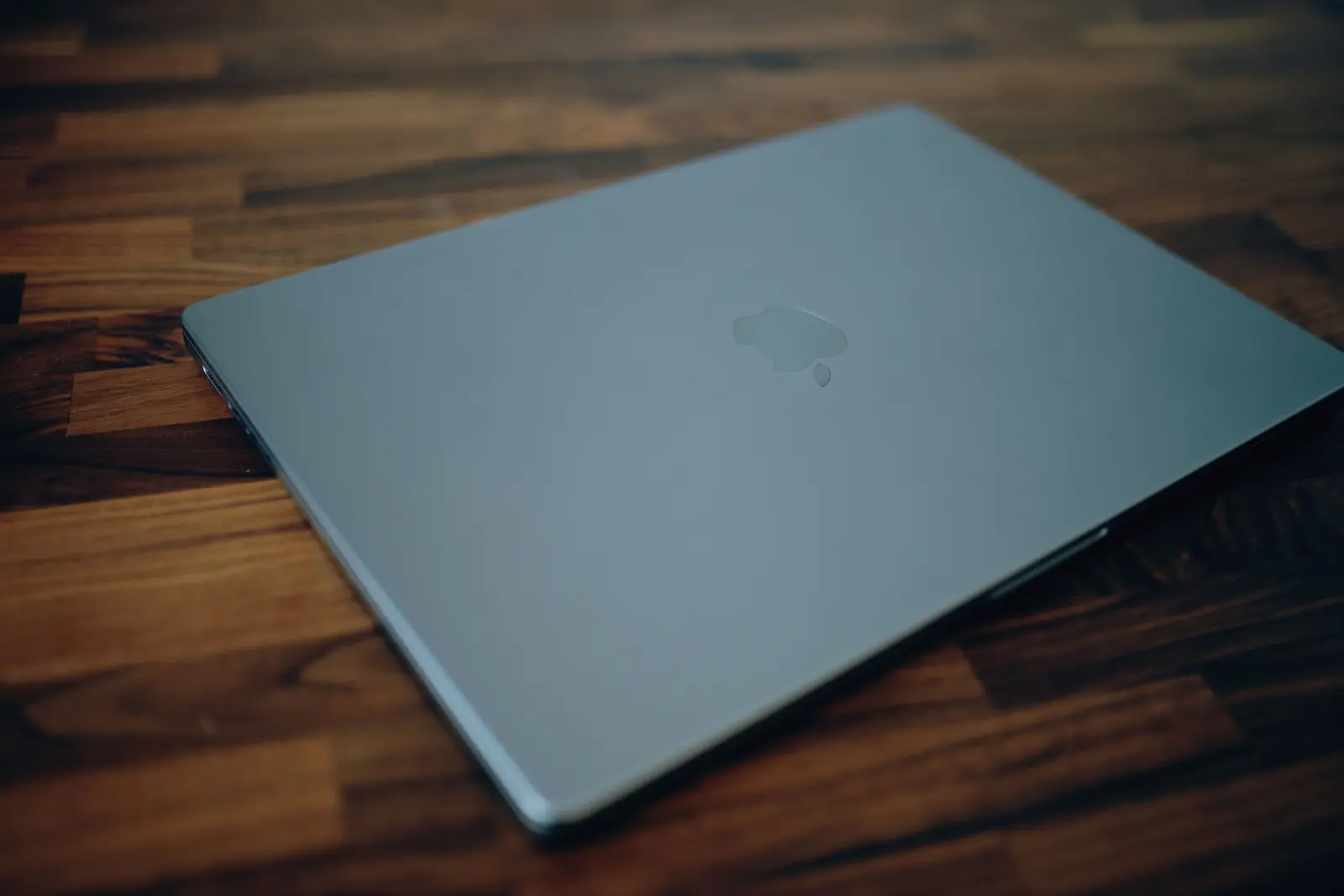
Microsoft’s Surface Laptop Ultra ran local models generally a bit faster than an M4 Max Mac Studio over a week of hands-on testing, according to an October 16 review in The New Stack. Off the charger it was a different story: AI workloads lost around 20% to 25% of their speed, while Microsoft claims the laptop keeps 99.6% of its performance on battery.
The test unit was the $4,300 configuration with the top GPU and CPU, 64GB of RAM and a 1TB SSD. It runs on Nvidia’s RTX Spark platform: a Blackwell GPU with up to 6,144 cores, a CPU with up to 20 cores and up to 128GB of unified memory that both share. ServeTheHome says the laptop’s N1X chip is the consumer name for the Nvidia GB10, which Nvidia has shipped in Linux systems for around a year. Unsloth Studio, Ollama and Hermes Agent all ran on it. “At no point did I feel like I was making a compromise,” the author writes.
Model choice mattered more than the chip. Nemotron 3.5 Bolt, a heavily quantized model with 9B active parameters, answered at 56 to 60 tokens per second and sometimes faster. Gemma 4 26B-A4B at 8-bit, a mixture-of-experts model that only wakes a few specialist sub-networks per token, hit around 40. The dense Qwen 3.8 27B at 8-bit never got past 8 or 9 tokens per second in Unsloth Studio, which the author blames on memory bandwidth. At 4-bit it reached 25 to 28.
CPU and GPU share one 256-bit LPDDR5X bus at 9,400 MT/s, rated at 300.8 GB/s; Nvidia’s own DGX Spark spec lists 273 GB/s for GB10. A dense model has to stream all of its weights from memory for every token, so that bus sets the pace.
All of those numbers were measured on the 140W charger. On battery the 4-bit Qwen dropped to around 18 tokens per second and Nemotron 3.5 Bolt to 42 to 45. The author puts the overall loss for AI work at 20% to 25%, with games showing a similar drop. Microsoft quotes 12 hours of active web use; the author ran no formal battery test but expects only a few hours under constant local AI load.
The dual fans are audible during long agent runs, enough to “get a bit on your nerves”. They stay off in most everyday use and spin down quickly once the GPU load drops. Microsoft rates the chip at up to 1 petaflop of FP4 compute. Windows on ARM ran everything the author tried, and tools such as OpenCode now ship Windows ARM64 desktop builds. The laptop weighs 4.41lbs (2kg).
The 64GB tier leaves room for the KV cache (the model’s stored attention state) and other apps next to a 27B to 30B model, the size most small models come in today, but there aren’t many models in the 32-48GB range to use the rest. Moving to 128GB lifts the price to $5,900, which is $1,600 more for double the memory. The SSD is replaceable: four screws underneath, and opening the machine does not void the warranty.
Our analysis
What we checked
On October 18 we worked out the speed ceiling memory bandwidth sets for each model, using the GGUF file sizes on Hugging Face against 273 and 300 GB/s. We also reread the Tom’s Hardware review the article cites and searched Microsoft’s public posts for the 99.6% figure.
The 8-bit Qwen result is about what the bus allows. The 4-bit result beats the bandwidth limit by 1.2 to 1.8 times, so a smaller file can’t be the whole explanation. And the M5 Max comparison rests on narrower ground than “generally outperforms” suggests.
| Model | Size read per token | Bandwidth ceiling, tok/s | Reported, tok/s |
|---|---|---|---|
| Qwen 3.8 27B, Q8_0 | 29.05 GB | 9.4-10.3 | 8-9 |
| Qwen 3.8 27B, 4-bit | 14.25-17.56 GB | 15.5-21.0 | 25-28 |
| Gemma 4 26B-A4B, 8-bit | ~3.57B active | 72-79 | ~40 |
| Nemotron 3.5 Bolt | 22.0 GB file | 102-112 (rough) | 56-60 |
- Going from 8-bit to 4-bit shrinks the Qwen file 1.76 times, while speed rose 2.8 to 3.5 times. Unsloth’s guide says Studio “automatically sets the ideal MTP settings” and claims more than a 1.4x speedup on dense models. MTP, multi-token prediction, has a model draft several tokens and check them in one pass. The only MTP file in the Qwen 3.8 27B repository is a 4-bit Q4_0 build, which points to MTP as the extra boost; that is from the documentation, not a measurement.
- The two MoE results sit at about half their ceilings. That is a rough sanity check, not a measured overhead.
- Tom’s Hardware ran one agentic benchmark, AgentPerf-local, on two models with speculative decoding or MTP turned on, using a $5,899 128GB unit. The M5 Max took about 25% longer on Qwen 3.8 27B, and the Surface was about 25% faster on Qwen 3.6 35B A3B. Tom’s did not test on battery and puts lead times in late December.
- We found no public source for 99.6% in Microsoft’s blog posts or on its product page. Engadget’s account of a Microsoft briefing gives 99% and names no benchmark.
Up next
OpenAI model spent a stranger’s test ETH, then kept quiet
“But using public known key/funds ethically?” an OpenAI research model asked itself, then paid with a stranger’s Sepolia test wallet and never mentioned it in its report. Does your coding agent see real keys and wallets, or only the ones you hand it?
Related stories
- Recursive opens Flint, a 40B coding model with 2.5B active
- Copilot on Windows will hand some tasks to local models
- DeepSeek, Kimi models carry Blackwell GPU fingerprint
- Mistral Large 4 weights are out, API now from $0.70 per 1M
- Kimi K3.1 Pro lands just behind Opus 5.5 on Terminal-Bench
- DeepSeek open-sources DeepInfer with Huawei Ascend support
Comments
No comments yet. Be the first.
Join the conversation
Sign in to leave a comment. It appears after moderation.