
Wet lab tested 1,320 Claude protein designs blind
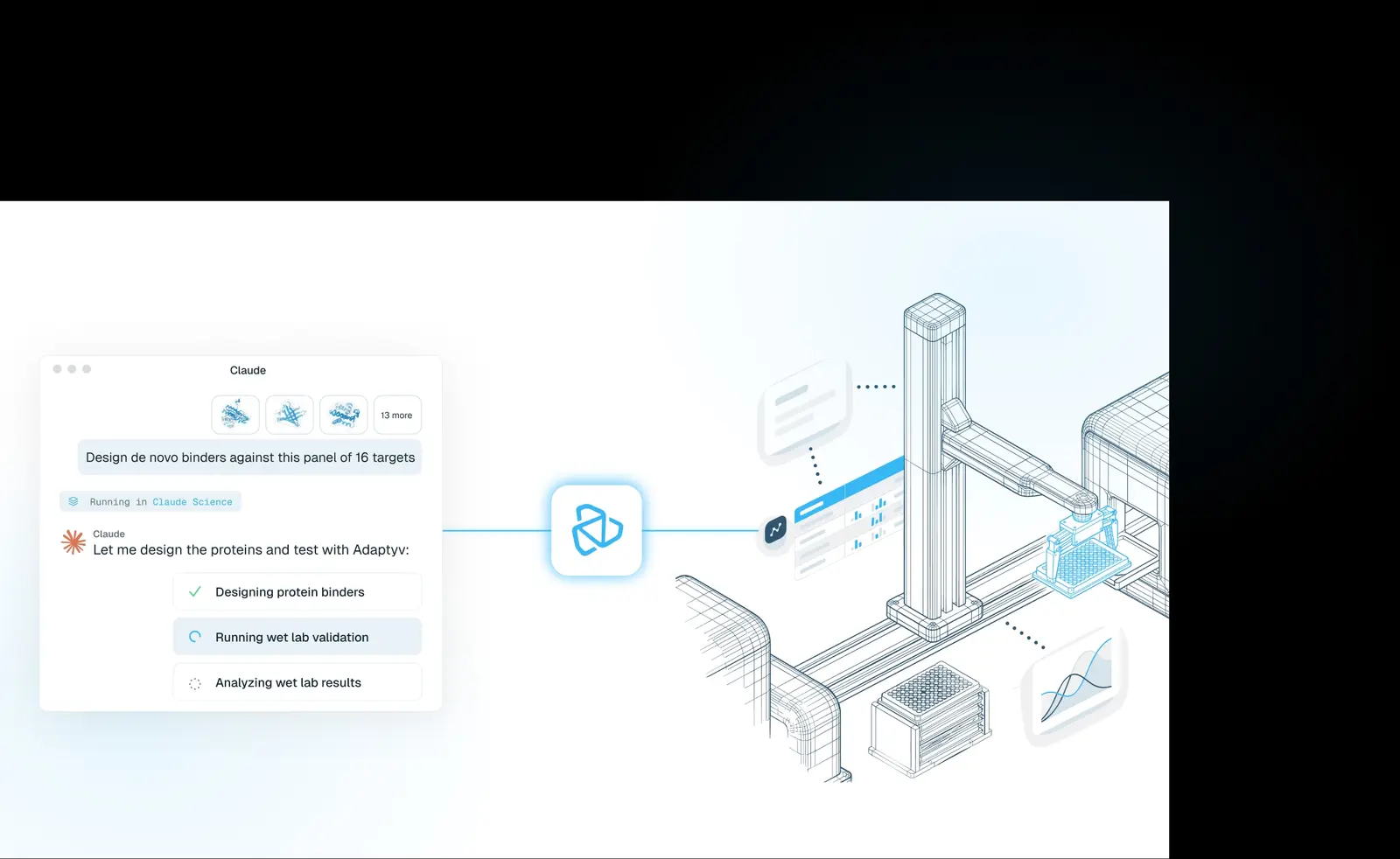
Adaptyv Bio received 1,320 protein sequences from Anthropic with the labels stripped off, so the lab did not know which of two Claude versions had designed which molecule. It built them all and measured them the same way, and Adaptyvbio published the results on August 19 together with Anthropic.
The designs came from Claude Mythos Preview and Opus 4.8 working inside Claude Science against 16 targets Anthropic picked from Adaptyv’s earlier public competitions, its hackathons and the BenchBB benchmark set. Both models got similar prompts and the same publicly available design tools. 354 of the 1,320 designs bound their target, a hit rate of 26.8%, and Adaptyv says the designs matched or exceeded human experts on many of the tasks.
Sequence to protein
A design leaves a model as text: a string of amino acids. Adaptyv’s platform reverse-translates that into DNA, and an internal pipeline optimizes the DNA for codon usage in cell-free systems, for mRNA secondary structure stability and for whether the sequence can be synthesized at all. The physical DNA molecule is then assembled building block by building block in the lab.
What happens next skips the cell entirely. Cell-free protein synthesis takes the machinery a cell normally uses to read DNA and build proteins - ribosomes, enzymes, amino acids, an energy supply - and runs it with no cell around it, handled by robots pipetting very small volumes very fast. Adaptyv built the process as automated workcells rather than scientists moving samples one tube at a time, and designers and agents reach the lab through a web platform and an API.
The molecules under test here are binders: proteins whose job is to stick to one target and nothing else. Most antibody cancer drugs are binders, as are the reagents in a pregnancy test and the capture molecules in most diagnostics. How tightly a binder holds its target is expressed as a K_D value, and a lower K_D means a tighter grip, which is usually what you want in a therapeutic. Adaptyv ran its Affinity Characterization assay on SPR, using five target concentrations with duplicate measurements.
95% expressed
95% of the designs expressed, meaning the lab got actual protein out of the sequence. Adaptyv notes that three years ago this number alone would have been an impressive headline; it matches the best expression rates from the company’s EGFR competition, which drew hundreds of expert protein designers, and surpasses other challenges including the RBX1 one.
Of the 16 targets, one was dropped before scoring. GDF-8 mature gave measurements Adaptyv calls low-quality in its setup, likely because the target was aggregating - binding to other copies of itself. That leaves 15 scored targets, and Claude designs bound 14 of them. The one that gave nothing was MBP, maltose-binding protein. Per-target hit rates otherwise vary widely.
On TREM2 the hit rate reached 80%, against the 38.3% Adaptyv reported in its own competition on that target. For the comparison the company subsetted each competition’s results down to binders designed from scratch, so that both sets describe the same kind of molecule. On 15-PGDH, a target Adaptyv describes as trickier, the success rate came out more than three times higher than what Proteinbase shows for it.
Against the winners
Hit rate says how often something sticks. Affinity says how well. Measured on the best binder per target, Claude’s designs came out tighter than the winning entry in five of six Adaptyv competitions.
On 15-PGDH the competition’s best binder sat at 1.7 µM and Claude’s best came in at 33.4 nM. On RBX1 the move was from 25.7 nM in the competition to 3.9 nM. The exception is the Nipah Virus competition, where the human winner’s binder still holds; Adaptyv calls that one surprising and leaves it there.
There is a structural pattern underneath the numbers. On GDF-8, RBX1 and Nipah, the designs spread across a wide range of epitopes - the specific patches on a target’s surface a binder can latch onto. On TREM2 they converged on a single well-defined epitope.
Where the data lives
The sequences Claude designed and the experimental data behind them are now on Proteinbase, the open protein data platform Adaptyv launched on October 6, 2025 with over 1,000 novel proteins live at the start. Everything on it comes from the Adaptyv lab under standardized protocols, including negative data, which usually never gets shared. Submissions run through a folding and annotation pipeline that gives each entry a structure from the Boltz-2 model plus design metrics and structural domain annotations, and every protein is linked to the method that produced it, from multi-step pipelines like BindCraft down to single models like EvoDiff. Each target gets a page with performance statistics across everything tested against it, which is where the 15-PGDH baseline comes from.
The accompanying dataset goes design by design. Each record names the tools that generated it - RFdiffusion3 or PXDesign backbones with SolubleMPNN sequence design, among others - and carries the outcome label, including the ones marked non_binder.
The loop Adaptyv wants
The company frames the exercise as a step toward what it calls an agentic science loop: a system that reasons over scientific knowledge, uses specialized tools to design thousands of molecules, sends those designs to an automated lab, and learns from the data that comes back. In its worked example, a researcher on a cancer therapeutic needs an assay that can tell two mutated receptor variants apart, hands Claude the sequencing results from their cell samples, and lets it find where in the genome the receptors are encoded, map the differences, generate 3D structures of both variants with a folding model such as Boltz, then produce binders with a design model such as BindCraft that attach to one variant and not the other. Thousands of computational designs get scored, the best go to the lab through the API, and results come back in a couple of weeks.
The second half of that example is what happens when the results disappoint: the strongest binders turn out to be too promiscuous and grab both variants, so a second campaign is aimed at cutting the cross-reactivity, with the first round’s data as input. On the broader question, Adaptyv answers itself in the post:
So can AI now solve all diseases? Well no, not yet.
What the case study shows, in the company’s framing, is at least expert-level skill at orchestrating protein design tools. Those tools are hard to use: before AI, Adaptyv writes, even setting up a protein structure prediction tool could take hours of debugging opaque conda errors.
Up next
18% quarterly growth disappoints OpenAI investors
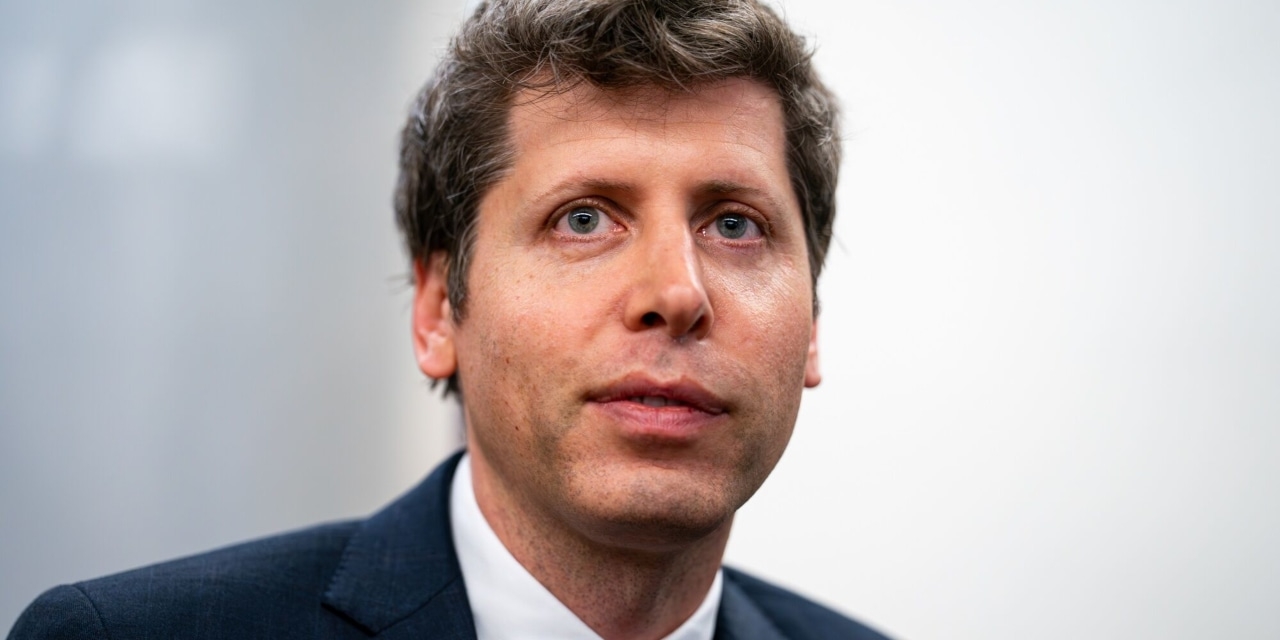
Per The Wall Street Journal, OpenAI’s revenue rose 18% to $6.7 billion in the second quarter, and that disappointed some shareholders who’d hoped to see faster progress catching up with Anthropic.
Related stories
- Claude’s protein binders hit 14 of 15 targets in wet lab
- Anthropic bought a biotech with one full-time employee
- Free Claude seats for 10,000 scientists, $15 premium
- Claude learned proteins, not just papers about them
- Claude Fable 5.2 hits 69% on PCB layout test, up from 25%
- METR clocks Anthropic benchmark gains at 1.9x old pace
Comments
No comments yet. Be the first.
Join the conversation
Sign in to leave a comment. It appears after moderation.