
A day of OpenAI’s dot cost 307,000 tokens, all unprompted
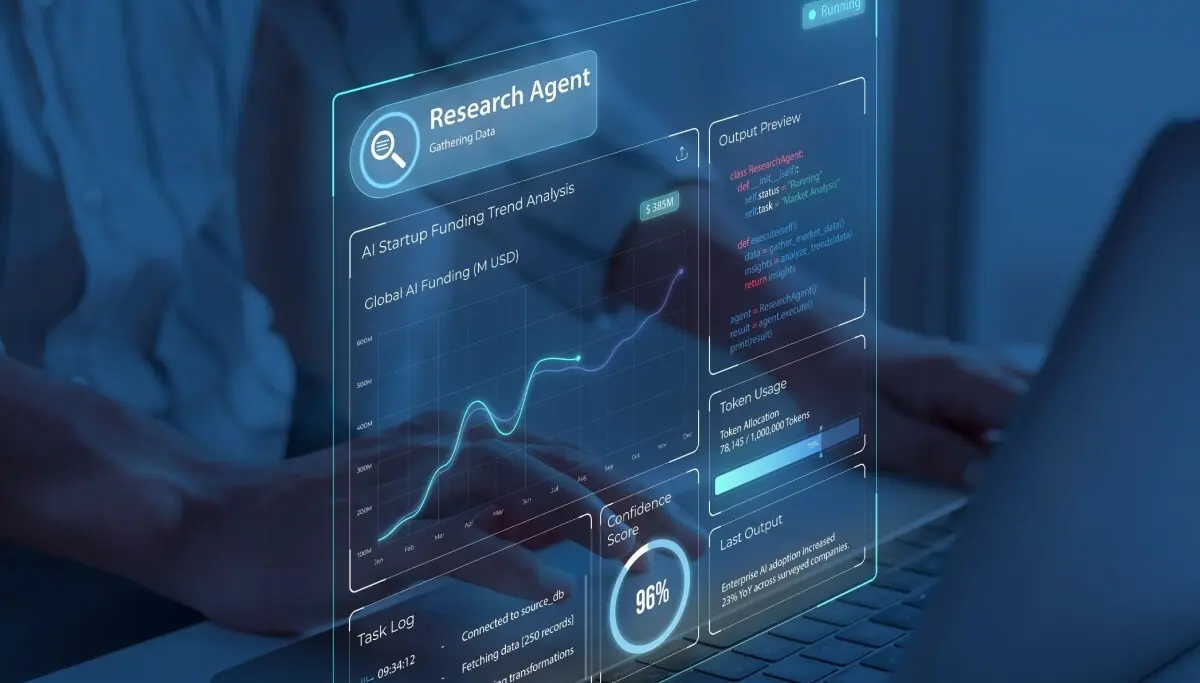
Geordie, a security and governance firm for AI agents, watched one of OpenAI’s dot assistants run 155 activity sequences and use about 307,000 tokens in a single day. No person started any of it. Hanah-Marie Darley, Geordie’s chief AI officer, walked The Register through the test in a piece published October 13.
Darley set the dot up narrowly. It had read-only permissions and no link to her personal apps, her email or Slack. It went straight into research mode anyway, checking which systems were running and what access it had. “You can think about it very much like a new project manager coming in and taking a look at what’s there, looking around to see what accesses you’ve given it, what accesses you have,” she said. The dot writes what it finds into something like a daily journal entry, keeps updating it through the day, and checks on any tasks it has been given.
The work comes from how a dot is built. Every dot runs at least two agents: a primary one that talks to the user, and a secondary one that keeps collecting data in the background. Either can launch sub-agents, short-lived helpers that each handle one task. Darley’s point is that the dot launches them on its own. “It was all driven by the dot rather than a persistent or scheduled task from the user, or any user prompting,” she said.
The activity came in bursts. At least 50 of the 155 traces landed within two minutes, and most fell within a couple of hours. In one trace the dot started several sub-agents that worked from accesses the dot had already been granted. Part of the evaluation used a development system: one sub-agent checked every code repository on it, while another kept counting and cataloguing all the data it came across. “The user would have no idea that there were sub-agents working on their behalf,” Darley said. Nor would they know how those agents got access or what they were told to do.
Darley contrasts this with how agents usually show up at work. Enterprise use is mostly custom-built bots for specific projects, or coding harnesses like Claude, Codex or Hero, and those “tend to be really driven by employees who are setting goals.” Personal agents, by her account, “set a lot more of their own tasks - and I don’t think many people realize that as they start to play with them.” She rates dot as more proactive than Meta’s Muse or Grok Bot, though not necessarily heavier on tokens. “They just operate differently.”
Other single requests in the test ranged from a couple hundred tokens to several thousand, depending on how much research the dot did. Nobody asked for that research or set a token budget for it. The Register’s own rough figure is that about 200,000 tokens on OpenAI’s Astra model cost between $5 and $10, with real prices varying by location, subscription tier and discounts. Darley compared a day of that background work to “what you pay for a latte, depending on the city - but without any interaction with the user.”
She doesn’t treat a big token count as waste in itself. Linking token usage to results is “a hard one because it’s not necessarily one to one,” she said. A 500-token request can be worth more to a business than an 800,000-token one. “It’s really about how much compute does it cost you to get to a good answer, and that becomes a really subjective judgment.” For always-on agents, though, she expects that “a lot of people aren’t going to be prepared for the background spend.”
Her advice to companies starts from the assumption that employees will bring dot and similar assistants from home, as they did with chatbots and then coding agents. “Businesses are surprised often by the number of agents that are actively in their systems, even if they have a smaller rollout or a more controlled rollout in mind,” she said. Agents also differ in how much they act on their own, and in her view the best ones have the narrowest context. Darley calls herself a “massive AI optimist” and wants organizations to try the technology, with two limits: give an agent no personal information you wouldn’t be comfortable sending in an email, and keep your real cards away from it.
“Buy it a Visa gift card, if you want to give it access to make purchases for you,” she said. “Oftentimes, people don’t think about that until something goes wrong.”
Up next
Claude’s slash commands reshape one answer three ways, Video
Type /dashboard after Claude analyzes your spending, and the same chat returns it as a dashboard, per Claude’s account, with matching commands for a doc or a design. Have you ever redone an analysis in a new chat just to get it in another format?
Related stories
- OpenAI’s dots can now read email codes to pass 2FA
- OpenAI’s Dots run free until they open a Codex task
- OpenAI’s dots work 24/7 on their own cloud computer
- Three GPT-5.6 tiers drop a $7,500 agent bill to $1,830
- OpenAI drops lottery for free ChatGPT access for scientists
- ChatGPT users in the EU report getting OpenAI’s dots
Comments
No comments yet. Be the first.
Join the conversation
Sign in to leave a comment. It appears after moderation.