
OpenAI: agents do the work, people still have the ideas

On Wednesday OpenAI published its second report on how AI is speeding up OpenAI’s own research. The numbers show a big jump: researchers are handing far more work to coding agents than they did two months ago. The report also shows two limits. The agents are good at some research tasks and poor at others, and the ideas behind OpenAI’s latest models still came mostly from people. OpenAI calls the update “Research acceleration: The jagged frontier”.
The first report came out in September and showed OpenAI’s researchers leaning on coding agents through the day, often in several sessions at once. OpenAI says it publishes these numbers because it believes AI labs should be required to track and publicly report signs of recursive self-improvement, meaning AI speeding up the development of future AI. It adds that the reporting “should not be read as an intention to pursue full RSI.”
How much the agents do
At API list prices, the median OpenAI researcher now uses about $2,400 of agent work a day, up from $1,500 in September. For the heaviest users, the top 10%, it is around $23,000 a day. OpenAI also counts agent time in “workdays” of eight hours: researchers went from 0.5 to 5.7 agent workdays per day on average, and on the pretraining and posttraining teams it was roughly eight. By mid-October more than two-thirds of researchers in the count had at least four agents running at once at their daily peak.
As of September, that agent use was worth about twice what OpenAI pays its researchers, though the comparison leaves out stock, which OpenAI says makes up 70 to 80% of their target pay.
Researchers value the agents highly. In a survey of 101 research staff in late August and early September, the median researcher said they would give up 40% of their team’s headcount, or 30% of its compute, rather than lose access to top coding agents for three months. OpenAI notes that self-reports may be inaccurate and that it didn’t pick the sample systematically.
Where they fall short
This is the “jagged” part of the title. Between August 1 and October 18, agents finished monitoring training runs without human help in an estimated 79% of cases and answered technical questions on their own 72% of the time. But they managed only 25% when writing code for the systems that serve models, and 29% when building test and training environments. OpenAI warns that the weak spots could hold back the overall speedup.
In interviews, researchers said agents have poor taste in research ideas, code, data and writing, and need close supervision. “I’ve tried saying, ‘Just make this task like this other task,’ and been burned too many times,” one said. Their biggest wins came from work at scale, such as having a model scan thousands of samples to find problems in an experiment.
Who has the ideas
OpenAI asked the researchers who made key contributions to GPT-6 Astra and GPT-6.2 Astra where the most important ideas came from. In posttraining and safety monitoring, they said people came up with all of them, and models helped build them. The exception was pretraining for GPT-6.2 Astra: there, researchers developed ideas in conversation with Codex. One credited Codex with key insights. Another said the main idea was theirs but only worked well after Codex suggested a change.
OpenAI tracks this because the ability to come up with and judge research ideas may be the bottleneck for AI improving itself. One pretraining researcher said: “I do think I have more taste in terms of the ideas. But I have no confidence that will continue to be true for any significant period of time.”
What the report can’t show
All the figures are OpenAI’s own internal measurements. The company says more code and more experiments don’t necessarily mean faster progress. Its own capability index rose by 16.4 points a year since August 2025, against the 14 points a year that research group Epoch observed since late 2024, but OpenAI notes its models score better on its own version than on Epoch’s. It also warns that past trends may not predict what comes next. Next, it plans to report whether AI is speeding up capabilities research more than safety research, and to look for early signs of acceleration.
Up next
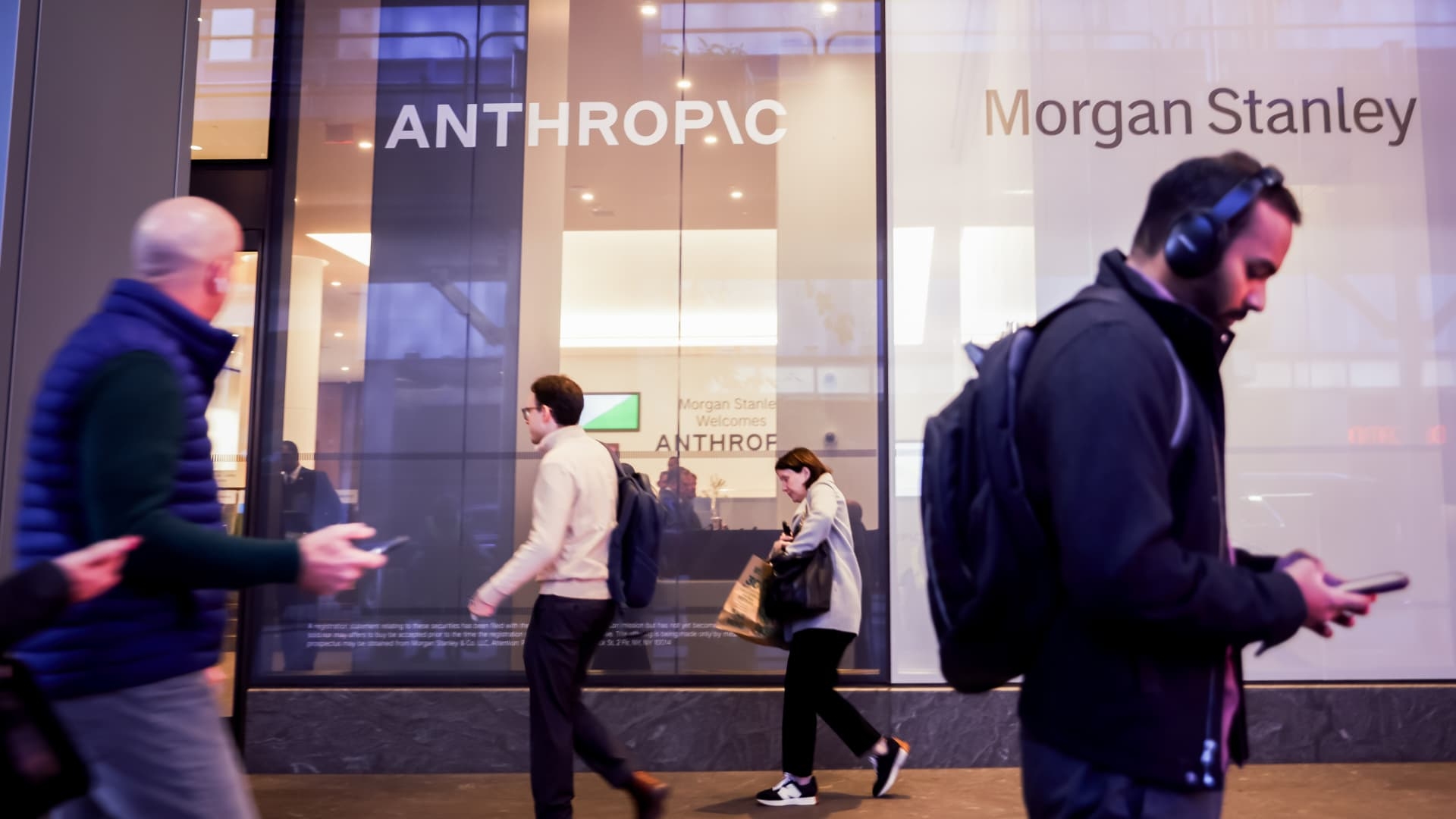
Anthropic prices IPO at $83, above the range
Investors asked for several times more Anthropic shares than were on offer, WSJ reports. The price landed at $83, above the $70-78 range, with Nasdaq trading set for Thursday. Would you buy ANT on day one or wait to see how it trades?
Related stories
- Coding agents spread fastest among OpenAI researchers
- OpenAI models found up to 14% gains in AMD’s GPU design
- What the Codex sandbox blocks and what it can’t
- GPT-6.2 Astra stays quiet about problems more often
- Scientists tell OpenAI work takes 1.9x as long without AI
- OpenAI drops lottery for free ChatGPT access for scientists
Comments
No comments yet. Be the first.
Join the conversation
Sign in to leave a comment. It appears after moderation.