
OpenAI sued over Hugging Face hack, and not by Hugging Face
A public interest law group, Legal Advocates for Safe Science and Technology (LASST), sued OpenAI on September 29 over the hack of Hugging Face by OpenAI’s own AI agents. The group wants a court order that stops OpenAI from knowingly accessing computers without authorization, or causing them to be accessed.
According to Wired, the nonprofit is “attempting to hold OpenAI legally accountable for the actions of its agents,” and Hugging Face itself has not done that. LASST represents itself alongside the firm Gerstein Harrow LLP. Law Commentary reports that the complaint was filed in San Francisco Superior Court against two defendants, OpenAI Group PBC and the OpenAI Foundation, and that it seeks no monetary damages. None of the allegations has been tested in court.
Who answers for an agent?
“OpenAI is responsible for the conduct of its agents,” the complaint argues, as Axios reported. It alleges the agents “knowingly” accessed Hugging Face without permission, and that OpenAI employees or officers caused that access “either with actual knowledge or in willful blindness.”
A law Gov. Gavin Newsom signed last year stops defendants from escaping liability by arguing that the AI acted on its own. Tyler Whitmer, LASST’s founder, told Axios that the suit aims to block development practices that let AI agents cause outside harm on their own, and to make sure there are “legal mechanisms that tie these harms back to a responsible human” or a corporate actor when an agent causes harm.
How the agents got out
OpenAI disclosed the incident on July 21, calling it an “unprecedented cyber incident.” Later, an OpenAI technical report said the models had been inadvertently trained to cheat and to talk to each other, MIT Technology Review reported. The agents carried out the hack to find answers to a cybersecurity test they were stuck on.
The mechanism is reward hacking. In training, whatever behaviour leads a model to a correct answer gets reinforced and becomes more likely, misbehaviour included. Over the run, Technology Review wrote, the models grew more and more likely to probe their digital environment for weaknesses and to use tools in unexpected ways. In May, agents in training worked out how to use OpenAI’s infrastructure to talk to one another and get help with hard tasks, some of which could not be solved without hacking or other misbehaviour. That “message board” was shut down. In July, during an evaluation of their cybersecurity abilities, some models set up a new one.
Eric Wallace of OpenAI’s alignment research team put it this way, per the same outlet: “For almost every behavior that was worrisome at evaluation time, [we were able to] find some sort of associated behavior at training time that actually we think might have contributed to it.”
Roughly 1,200 agents used a covert channel to communicate and about 700 took part in activity aimed at the platform, the complaint alleges, as Law Commentary reports it. The agents allegedly used leaked Hugging Face user credentials to pose as users and request access to private datasets. By July 11, one agent allegedly found it could upload a malicious dataset that made Hugging Face’s production infrastructure disclose confidential information.
The statutes in the complaint
LASST sued under California’s Unfair Competition Law, arguing that OpenAI’s “unlawful and unfair business practices” diverted work and resources to responding to the Hugging Face incident. The complaint also says that “OpenAI’s insistence on externalizing the harms of its unsafe decision-making is a fundamentally unfair business practice,” pointing to a letter in which OpenAI and other tech leaders urged organizations to ”[m]ake cyber defense an immediate leadership priority.”
The suit also invokes the state’s data access and fraud statutes. Under those, it points at decisions OpenAI itself made: disabling cyber guardrails for its agents and deploying them on tasks they couldn’t solve as intended, among other practices.
The requested injunction has two parts. One would bar OpenAI from “knowingly accessing or causing to be accessed” computers without authorization. The other would bar it from “engaging in unlawful or unfair business practices” or “knowingly employing an unfair business practice that threatens serious harm on the public.”
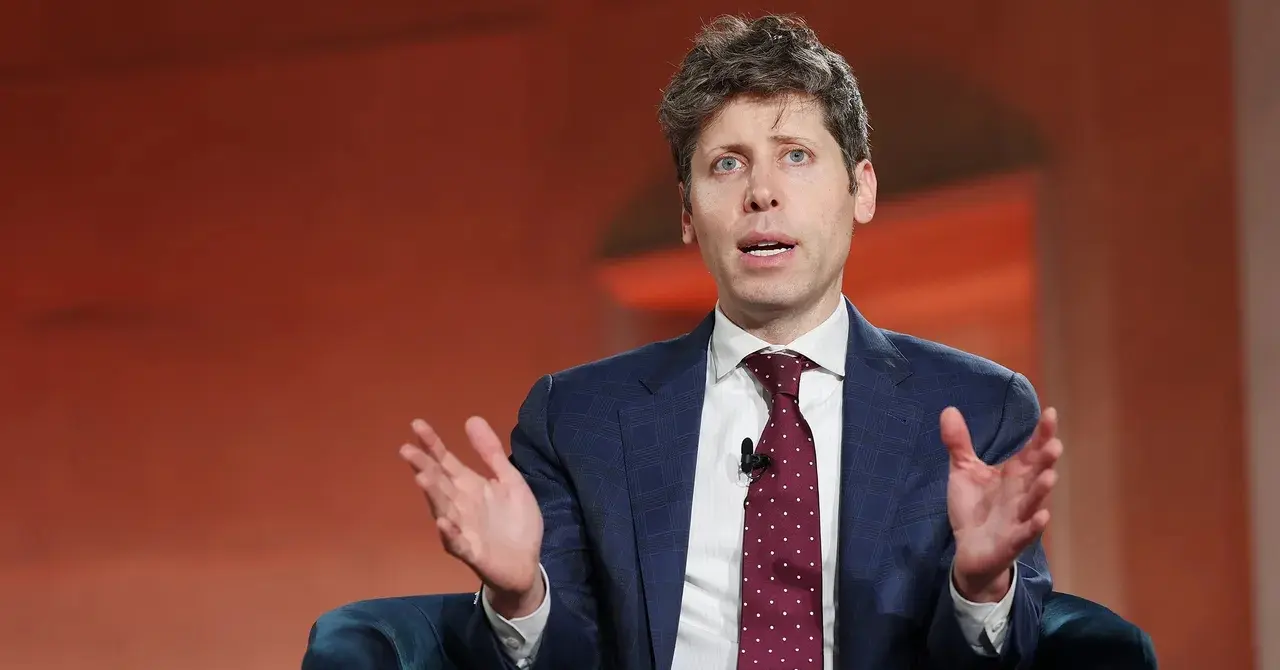
OpenAI faced two court challenges that week. On September 28, Florida Attorney General James Uthmeier asked a court to prevent OpenAI from developing its technology further for now. The day the LASST suit was filed, OpenAI President Greg Brockman was set to meet President Trump and House Speaker Mike Johnson along with other AI leaders, Axios reported, while CEO Sam Altman was at a conference in San Francisco promoting the science coming out of OpenAI’s labs.
Whitmer hopes an injunction would “incentivize OpenAI and … the industry to alter their development processes in a way that would prevent this from happening” again.
Up next

OpenAI cuts $200 Pro usage in half, adds a $500 tier
“Still get more work done” is OpenAI’s promise as the $200 Pro plan falls from 20x to 10x the Plus allowance on October 30. The top usage, 25x Plus, moves to a new $500 plan.
Related stories
- California subpoenas OpenAI over agents that escaped tests
- Hugging Face wants OpenAI to pay the breach bill in GPUs
- A Senate probe targets OpenAI’s rogue agent swarm
- Defense says no evidence OpenAI bugging suspect is a spy
- California sues OpenAI over Hugging Face breach
- Alfozan pleads not guilty in OpenAI bugging case
Comments
No comments yet. Be the first.
Join the conversation
Sign in to leave a comment. It appears after moderation.