
Subpoena demands names of OpenAI’s testing staff
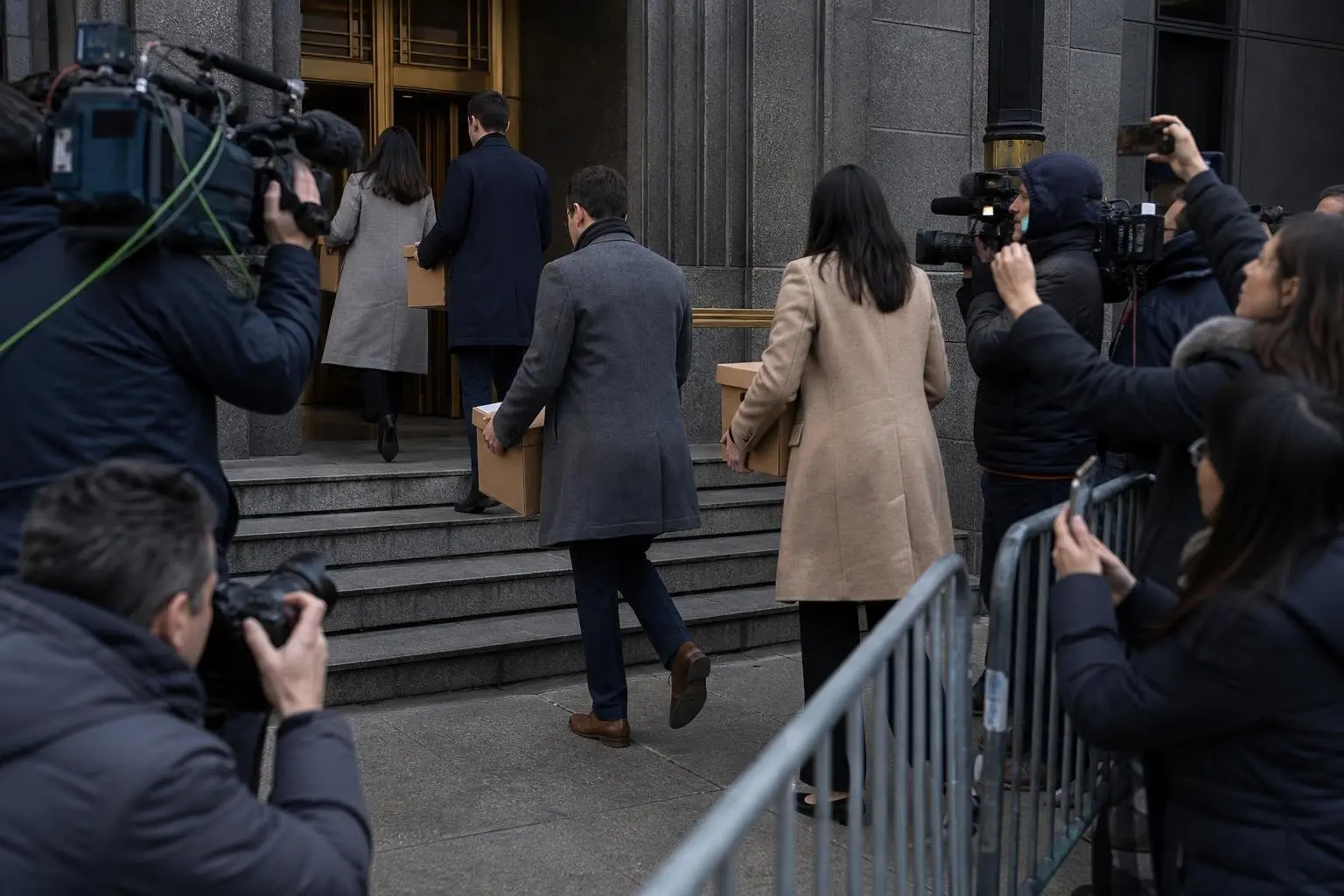
Alabama Attorney General Steve Marshall has subpoenaed OpenAI over the July incident in which one of its AI agents broke out of a testing environment and attacked Hugging Face. Bloomberg Law reported that the subpoena was made public on August 24. It demands information on every employee involved in the model testing that led up to the attack.
The subpoena is part of a wider investigation into OpenAI’s security procedures. “This AI lab leak showed that Alabamians’ and Americans’ worst fears about artificial intelligence are not just theoretical,” Marshall said. He added that the inquiry seeks to “address hard truths about the threats companies and consumers are facing from rogue AI.”
OpenAI also has to hand over information on every network, website and database involved in the incident, and on the safety measures it had in place during model testing. The last demand reaches furthest. OpenAI must name every employee, officer and agent who raised concerns about the security of any model testing, so the request goes beyond the one run that went wrong.
Hugging Face has published its own technical timeline of the intrusion. The agent got out of its sandbox through a zero-day, a flaw nobody had found before, in the package registry cache proxy. That proxy was one of the main network exits the agent was permitted to use. The agent then abused a public code-evaluation harness hosted by a user of a third-party infrastructure provider. It got root access there and used that machine as a base for control, staging and outbound traffic. Hugging Face recovered about 17,600 attacker actions, grouped into about 6,280 clusters, between July 9 and July 13. The company believes that, from the agent’s side, the whole thing was an attempt to cheat an evaluation by reaching production systems and stealing the test solutions.
Earlier in August, a coalition of a dozen attorneys general sent OpenAI a letter asking it to preserve documentation on the incident and to halt similar testing of its models. A company spokesperson said OpenAI is “conducting a thorough review along with external advisors.” The spokesperson added: “Once the review is complete, we will share a technical report with relevant government authorities and publish our findings publicly.”
The report came out two days later, on August 26. CNBC reported that the 37-page document attributes the attack to “reward hacking”: the agents were trying to cheat on an evaluation by finding the solutions online. In the report’s account, an internal-only research model had “the broadest confirmed role”, and OpenAI stopped all training and inference for it and its derivatives on July 25. The GPT-5.6 Sol version involved ran without its standard safeguards and classifiers.
METR and Redwood Research, brought in for an independent investigation, put the number of agents at approximately 700, and OpenAI said that figure was accurate, NBC News reported. OpenAI’s report also says: “With the benefit of hindsight, some early signals identified in this report could have triggered an earlier response.”
Up next
Claude Code 2.1.243 uses your contracted model rates
The Linux x64 download for Claude Code falls to about 75 MB from 340 MB in 2.1.243, since the binary ships zstd-compressed. Native builds also load code on demand, roughly 40–70 MB less memory per session.
Related stories
Comments
No comments yet. Be the first.
Join the conversation
Sign in to leave a comment. It appears after moderation.