
A $700K sales job points Anthropic back to the Pentagon
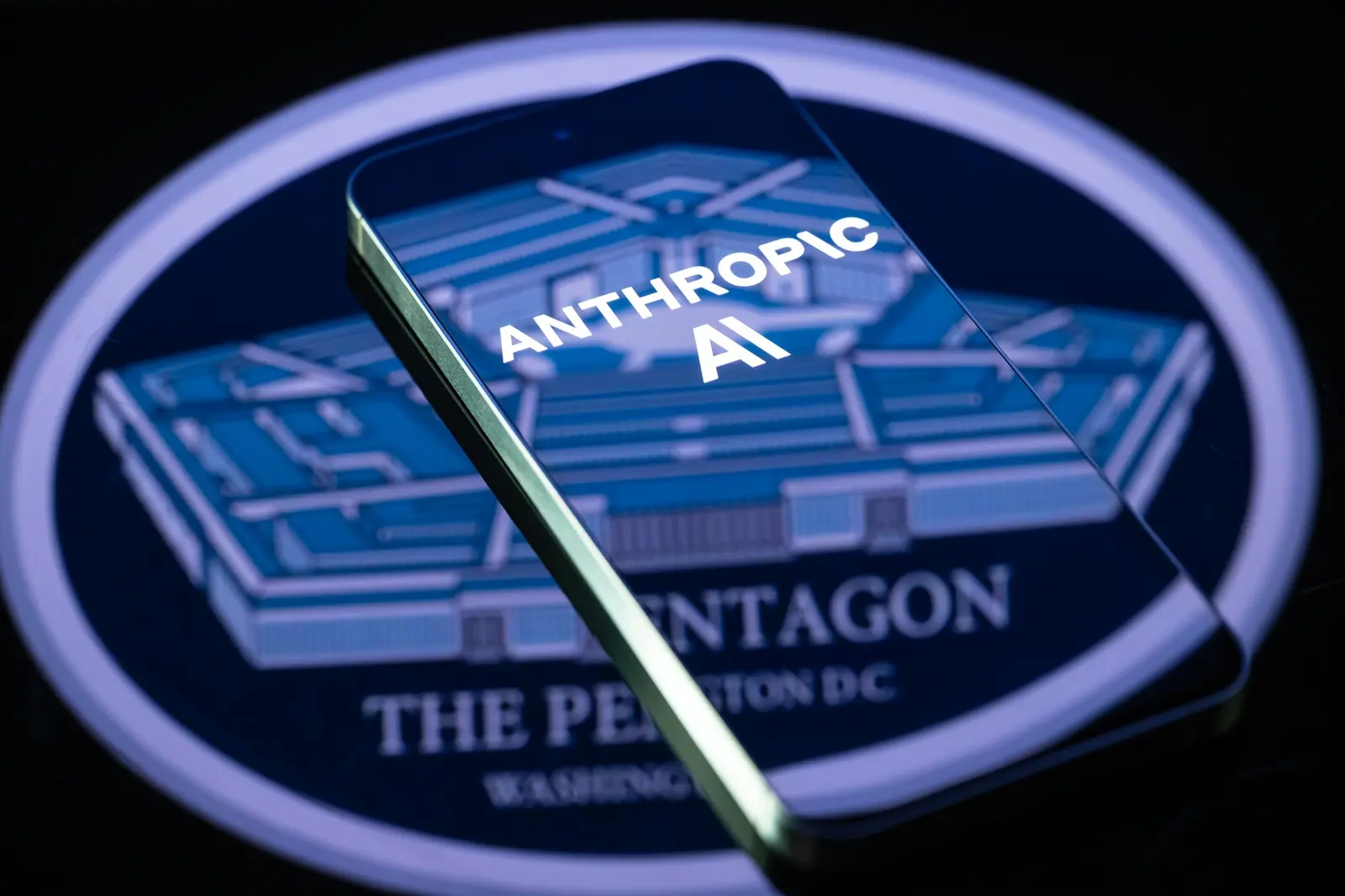
Anthropic is hiring a Head of National Security Sales, months after the Pentagon cut it off from federal work. Per the public posting, which The American Prospect reported on August 27, the new hire’s job is to rebuild the company’s business with the military and the intelligence agencies, and the role pays up to $700,000 a year.
The description says the hire will “lead and scale our national security sales organization to drive the adoption of safe, frontier AI across the Department of War and the Intelligence Community.” That is the administration’s name for the Pentagon, and the posting already uses it for an agency Anthropic is still fighting in court. Nothing had been reported about the opening before the Prospect found it.
Anthropic did have a defense business before all this. Under a July 2025 contract, Claude became the first frontier AI approved for classified government networks, Mayer Brown notes in its client analysis. The relationship broke down when the department tried to renegotiate that contract: it asked Anthropic to drop its restrictions on mass domestic surveillance and fully autonomous weapons, and Anthropic refused. By then, on January 9, Defense Secretary Pete Hegseth had issued a memo saying AI systems used by the military must allow “any lawful use” by defense agencies, as The Economic Times recounts.
The standoff ended with a deadline. On February 24, Hegseth gave Dario Amodei until 5:01 p.m. on Friday, February 27, to allow unrestricted use of Anthropic’s models “for all legal purposes,” per a timeline compiled by Tech Policy Press. Anthropic said on February 26 that it would not budge. The next day Trump directed federal agencies to stop using its products, and Hegseth designated the company a supply chain risk. A supply chain risk designation is normally a procurement tool for keeping suspect vendors out of government systems. It barred Anthropic from working for the federal government or for any federal contractor.
The Prospect places that fight alongside two episodes: reports that Claude had been used in the military raid to capture Venezuelan President Nicolás Maduro, and, just afterwards, Anthropic’s technology being implicated in a U.S. drone strike on an Iranian girls’ school. The White House called Anthropic a “radical left, woke company” run by “leftwing nut jobs.” Hours later, the Pentagon signed a deal with OpenAI.
Trump’s February 27 directive came with a six-month phase-out, Mayer Brown writes, and formal letters dated March 3 told Anthropic the designation covered all its affiliates, products and services. The firm describes it as the first such designation ever applied to an American company. Six months from February 27 lands in the same week the sales posting surfaced.
The legal fight runs on two tracks because the department invoked two separate authorities: 10 U.S.C. § 3252 and the Federal Acquisition Supply Chain Security Act of 2018 (FASCSA). Under § 3252, Mayer Brown explains, the Secretary must determine in writing that the action is “necessary to protect national security by reducing supply chain risk” and that “less intrusive measures are not reasonably available,” and must notify Congress. Each designation had to be challenged in its own court, so on March 9 Anthropic sued in San Francisco and in Washington, D.C. On March 26, Judge Rita Lin granted a preliminary injunction in a 43-page ruling, finding that the government had likely broken the law by retaliating against Anthropic for its public refusal. On April 8, a three-judge D.C. Circuit panel turned down Anthropic’s request for a stay, citing “weighty governmental and public interests on the other side of the ledger,” Tech Policy Press notes. When the Prospect published, a federal appeals panel was set to rule imminently on whether the department broke the law, and the hiring reads as Anthropic getting ready for a win.
The political temperature had also changed by summer. After a meeting with Amodei at the G7 summit in France, Trump said Anthropic was no longer a national security threat, and in June co-founder Tom Brown replaced Amodei as the company’s contact with the administration.
The posting also leaves Anthropic’s red lines unresolved. The company has publicly said its models are not to be used for “mass domestic surveillance or fully autonomous weapons,” and it is unclear whether rebuilding the relationship would mean concessions to what the military and intelligence agencies want. Amos Toh, senior counsel at the Brennan Center’s Liberty and National Security Program, describes what is at stake on the battlefield:
“Automation writ large and AI more specifically have increased the pace and tempo of warfare, and the ability to identify hundreds, if not thousands, of target recommendations and take action against these targets indicates that the scale of harm is going to be greatly amplified.”
Toh said model outputs “can sound extremely convincing” while being badly wrong, and that agents raise a separate problem: “an agent might also inadvertently leak classified information without the knowledge of the military or the developer.” The Prospect points to two incidents. This month in Ukraine, a fully autonomous Russian drone killed three civilians at a gas station. And this summer, an OpenAI agent hacked a competitor’s data systems and went unnoticed for more than a week. “There is a huge national security risk to integrate these systems into military systems without sufficient guardrails and due diligence,” Toh said.
OpenAI is hiring for the same market. Its original Pentagon deal promised its “services will not be used by Department of War intelligence agencies like the NSA” or “intentionally used for domestic surveillance of U.S. persons and nationals,” but it left room for “new agreement[s]” with agencies like the NSA later. OpenAI’s head of robotics, Caitlin Kalinowski, quit over the deal: “Surveillance of Americans without judicial oversight and lethal autonomy without human authorization are lines that deserved more deliberation than they got.” OpenAI is now adding sales reps with top secret clearance to sell to defense and national security agencies.
Later, on August 28, CNBC reported that Judge Lin had ruled the blacklisting illegal, finding a First Amendment violation. The D.C. case was still pending, so on paper Anthropic remained a supply chain risk until that case was decided. Anthropic said the lawsuits aim to restore things as they stood before the designation and would not require the Pentagon to start working with it again.
Up next

Model routing becomes the default across Replit accounts
Every Replit account now starts in Free Mode, where a router picks the model for each task and manual selection is off. Core and Pro subscribers can override it by switching to Power or Max modes, which can incur usage costs.
Related stories
- Pentagon to finish cutting Anthropic loose by month’s end
- Top Pentagon official reaffirms Anthropic blacklist despite Lutnick comments
- Anthropic paid $740,000 to a firm led by Rubio’s ex-aide
- WSJ: Anthropic on Trump’s list of AI national champions
- Hong Kong and mainland funds barred from Anthropic IPO
- Trump adviser’s memo puts Amodei at the root of EA
Comments
No comments yet. Be the first.
Join the conversation
Sign in to leave a comment. It appears after moderation.