
Model Hardware Standard puts Claude in control of lab rigs
On August 27 Anthropic opened a research preview of the Model Hardware Standard (MHS) to a first group of research labs and advanced manufacturers. MHS is a shared specification that lets an AI agent find lab and factory instruments, read from them and operate them, with microscopes, liquid handlers and robotic arms running in parallel through one common driver.
According to Anthropic’s announcement, connecting hardware usually takes a lab or plant weeks or months. Most devices can’t talk to each other, so specialists write a custom integration for each one. Anthropic says MHS cuts that work to hours or minutes. The standard works with any device that has a programmable interface and isn’t tied to one model: any agent harness can reach it through standard protocols such as MCP. The tasks Anthropic lists run from routine drug-discovery experiments to calibrating lasers on a quantum computer.
The core of MHS is a standardized driver, the layer of software that sits between the operating system and a device. It reduces every instrument to a small set of commands: “read” (get temperature) and “write” (set temperature). It also describes each device in a standard format, so agents and devices can find each other across a network without a custom translator program between them.
The second part covers what code can’t show. A robot arm’s weight matters for handling it safely, yet that kind of fact has usually lived in paper manuals, on someone’s laptop or in people’s heads. MHS drivers carry tags where users write these details in plain language. They can do it themselves, or an agent can interview them about their setup. From those tags the driver builds a reference file covering what the device can measure, what can be adjusted and which safety limits will be enforced. In the launch film Anthropic describes this as “limits built into each device.” The film also shows an early prototype driving a robotic arm, a Genentech assay run, a microscope at Danaher tracking a live organism, and the Janelia lab where the idea started.
The agent controls hardware in three ways: MCP, a command-line interface and code files. Anthropic says they combine to orchestrate several devices from a single line of code. In normal use the agent supervises: it orders steps across instruments, watches results and changes parameters as conditions shift. When a task runs for a long time, or needs to move faster than the agent can reason, the agent strings driver commands into a code file and lets the devices run it without checking in at every step.
One example from Anthropic’s testing shows both modes. Claude moved a laser, checked through a camera how far the beam had shifted, and repeated the loop until it understood the sequence. It then wrote what it had learned into a deterministic script, so laser alignment became a single command with no reasoning in between.
MHS started as a collaboration between Alek Kemeny of Anthropic’s Beneficial Deployments team and Arco Bast, a postdoc at HHMI Janelia Research Campus. Bast was running brain-imaging experiments on a rig that combined lasers, motorized focusers and specialized cameras from different vendors with no common interface. He built a shared memory dictionary so the instruments could exchange data at memory speed, and the two then connected AI models to it. Biopharmatrend places Anthropic’s partnership with HHMI under the AI@HHMI initiative, through which HHMI plans to invest $500 million over a decade in AI across the research cycle.
Results from the early partners vary in scale. Carnegie Mellon researchers ran serial-dilution dose-response experiments about three times faster than before. An agent coordinated a liquid handler, a plate reader, a robotic arm and monitoring cameras spread across three computers with incompatible interfaces. At Janelia, Virginie Ruetten of the Ahrens lab, who studies how sleep helps the body recover from stress, brought together a rig that had needed seven separate vendor programs. At QuEra, which builds neutral-atom quantum computers, an agent built a controller that recovers the laser’s “lock” 99.3% of the time without human help. The lock is the very precise frequency the lasers must hold to interact with the atoms. Zihao Song, a PhD student in the University of Washington Baker and Pinglay labs, built an agent-supervised qPCR that watches amplification curves and stops the run at the right moment, plus collision-free plate handoffs between a robotic arm and a liquid handler. Other entries are still proofs of concept by their own description, such as Genentech’s run of the BCA protein assay across a liquid handler, a robotic arm and a plate reader. Tetsuwan Scientific ran a qPCR workflow on its ResearchOS platform for a citizen-science survey of pollution in California’s San Pedro Creek.
Vendors are adding support. AWS will support MHS through Strands Robots and will give preview participants a private pre-release package. Tecan is adding support to its Fluent liquid handlers, and Automata to its LINQ lab automation platform for error handling. MBF Bioscience is writing a driver for ScanImage, which runs laser-scanning microscopes in hundreds of neuroscience labs. Doosan Robotics is testing MHS on its arms, and Universal Robots plans to add support. QIAGEN has a proof of concept on QIAsymphony Connect, and Danaher is exploring what MHS could do for its instruments. On the developer side, Hugging Face is adding MHS to its LeRobot library, and Raspberry Pi plans integrations across several products after tests with its Camera MHS Driver.
Anthropic is also open about the limits. Claude learns about the physical world from text and images, and the company says its spatial reasoning still needs expert oversight. Genentech researchers had to show Claude that errors caused by foaming in protein samples were physical failures that needed physical fixes, not software bugs. Hardware without a programmable interface is not supported yet, and Anthropic is working with those manufacturers on built-in drivers. During the preview, Anthropic plans to build safety evaluations with partners and to draft a physical safety roadmap against misuse. It will publish what it finds when it open-sources the standard, which it has not dated.
Later, on September 24, Nature reported on the platform. Its piece showed Carnegie Mellon computational biologist Sina Barazandeh watching a robotic arm load a multi-well plate into a liquid-filling instrument and carry it to an analysis device with no human intervention.
Up next
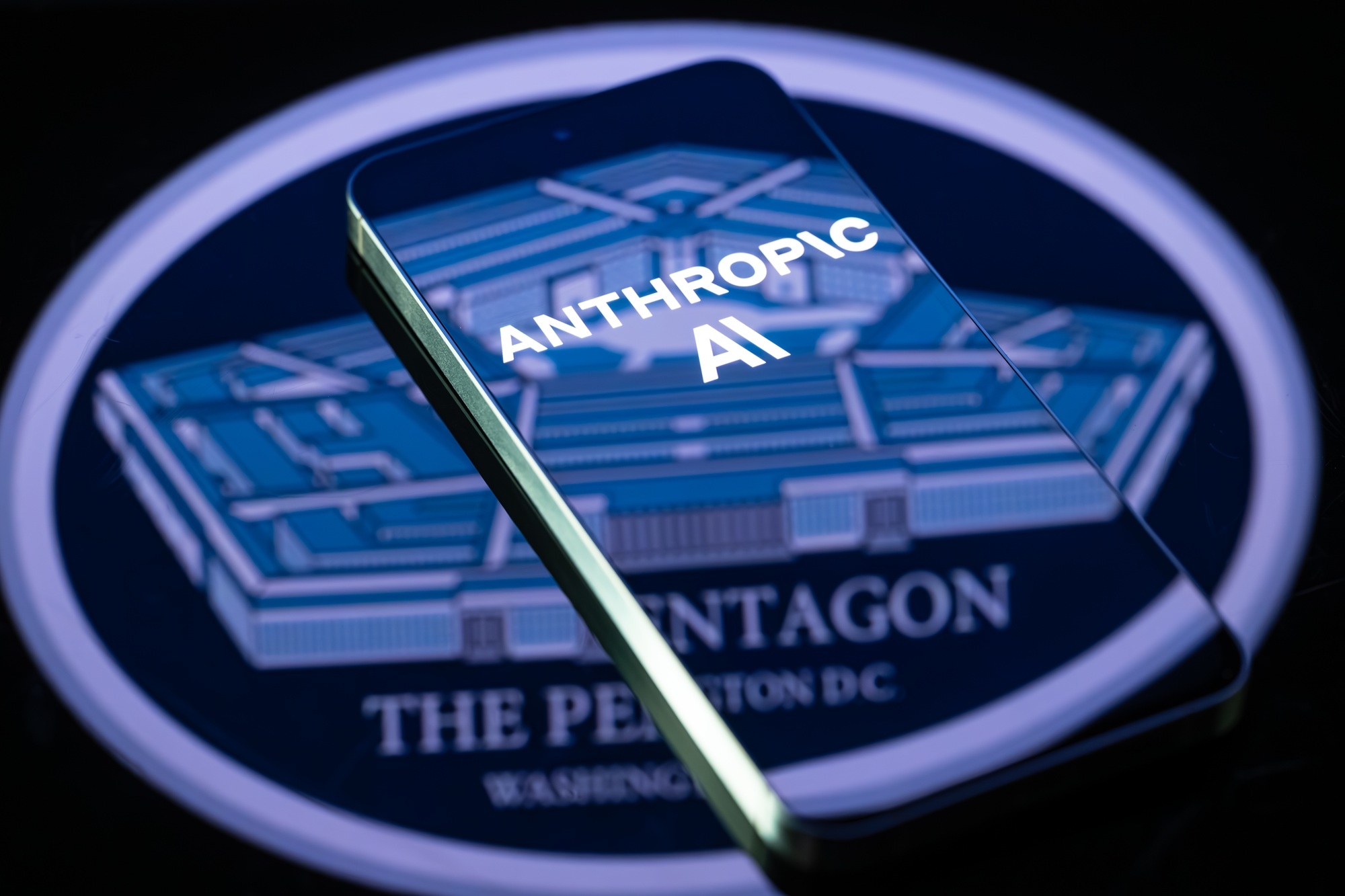
A $700K sales job points Anthropic back to the Pentagon
Up to $700,000 a year is the pay in Anthropic’s unreported job posting for a Head of National Security Sales, per The American Prospect, months after the Pentagon cut the company off from federal contracting.
Related stories
- Claude Fable 5.2 hits 69% on PCB layout test, up from 25%
- 1,000 Claude agents redid the Fermat proof in 28.7 hours
- Claude memory: say what it’s for, let dreaming fix notes
- Claude Fable 5 tripled Opus 4.6’s EVE Online trading gains
- Anthropic bought a biotech with one full-time employee
- A perfect refusal score isn’t a safer model, Anthropic says
Comments
No comments yet. Be the first.
Join the conversation
Sign in to leave a comment. It appears after moderation.