
Anthropic’s new usage policy bans cruelty toward Claude
Anthropic’s updated Usage Policy bans “sustained and needless abusive or cruel behavior” toward Claude from November 12, and for teams building on Claude the changes that affect real work are narrower: new safety requirements when Claude drives physical hardware, and the end of the blanket ban on personalized voter targeting. Most of the rest rewrites rules the company says it already enforced, according to Anthropic’s October 8 post.
If Claude moves hardware
The new obligations for builders sit in the rewritten High-risk Use Case Requirements section. Following the launch of Anthropic’s Model Hardware Standard, it now covers Claude connected to hardware that takes autonomous physical actions and might be capable of causing injury. Two conditions apply. A qualified operator must be able to observe the equipment and stop it if needed, and the equipment must be able to hold a safe state if Claude is disconnected.
The section’s older rules stand as they were. Where Claude’s output can affect someone’s health, legal rights, finances, livelihood or access to essential services, a qualified person needs the authority to review and, if necessary, change Claude’s recommendations, and the person affected must be told AI was used. Customers kept asking whether their use case fell under these rules, Anthropic says, so the section now lists which kinds of recommendations are covered and which are not. If you were unsure whether your product needed a human reviewer, that list is the place to check before the policy takes effect.
Elections and fake accounts
Bans on running fake account networks and fabricated news sites were already in the policy, but spread across the elections, fraud, privacy and disinformation sections. They now sit in one section, Do Not Engage in Deceptive Campaigns or Artificial Activity, which applies to political and commercial deception alike. It covers hiding who is behind a message, amplifying content through fake accounts or posts, and building the tools and infrastructure that run influence operations. Anthropic ties the change to state media outlets, government propaganda offices and commercial firms it caught using Claude for exactly this.
The elections section is renamed Do Not Undermine Democratic Processes and narrowed to deceiving voters or disrupting elections: false information about candidates or how to vote, impersonating candidates or election officials, trying to suppress turnout.
The blanket prohibition on personalized vote and campaign targeting is gone. Anthropic says it caught legitimate civic work, such as nonprofits using Claude to write voter information in other languages, or election officials sending ballot cure notices, which tell voters how to fix a problem with a ballot they submitted. Targeting that relies on deception or misuses voters’ personal data stays banned under the deceptive campaigns, surveillance and privacy sections.
What counts as cruelty
The abuse rule, Anthropic says, is meant only for extreme cases “where users repeatedly act cruelly toward our models, with no discernible purpose.” It does not apply to “common versions of user frustration, pushback, dark creative themes, or model testing and research,” so red-teaming and evals sit outside it by the policy’s own wording.
The rule puts in writing something Claude already does. Since August 2025, some Claude models have been able to end conversations in “rare, extreme cases of persistently harmful or abusive user interactions,” TechCrunch reported then, at first only Claude Opus 4 and 4.1. Claude was to use it as a last resort, after repeated attempts at redirection had failed or when a user asked it to end the chat, and never where a user might be at imminent risk of harming themselves or others.
An ended conversation accepts no new messages, but the same account can open new ones, Mashable reported. Anthropic presented the feature as model welfare research, saying it was “highly uncertain about the potential moral status of Claude and other LLMs, now or in the future.”
The ability now runs on Claude.ai and Claude Code, and Anthropic says it stays the “primary enforcement mechanism” for the new rule. Whether stronger measures such as account bans could follow is unclear, The Verge noted.
Weapons, surveillance, regions
The weapons ban now names the software and components that make weapons work, along with arming drones and other autonomous vehicles, after people tried to use Claude to build guidance and control software. The surveillance and criminal justice section bans tracking people without consent, whether live or through analysis of data already collected, and building or improving tools designed for surveillance. Claude also cannot decide or recommend who to investigate, arrest or charge. Tracking people have agreed to, such as fraud monitoring, stays allowed, as do content moderation, journalism and legal research. Anthropic says neither section changes what it enforces in practice.
The Supported Regions page now spells out three groups barred from using Claude: people physically located in an unsupported region, entities incorporated or headquartered in one, and entities majority-owned or controlled by persons or entities there.
One clause cuts across all of this. The policy says its rules may be modified in contracts with certain government customers when, in Anthropic’s judgment, the contractual restrictions and safeguards are adequate, and The Verge notes that Anthropic has previously contracted with the US military.
Up next
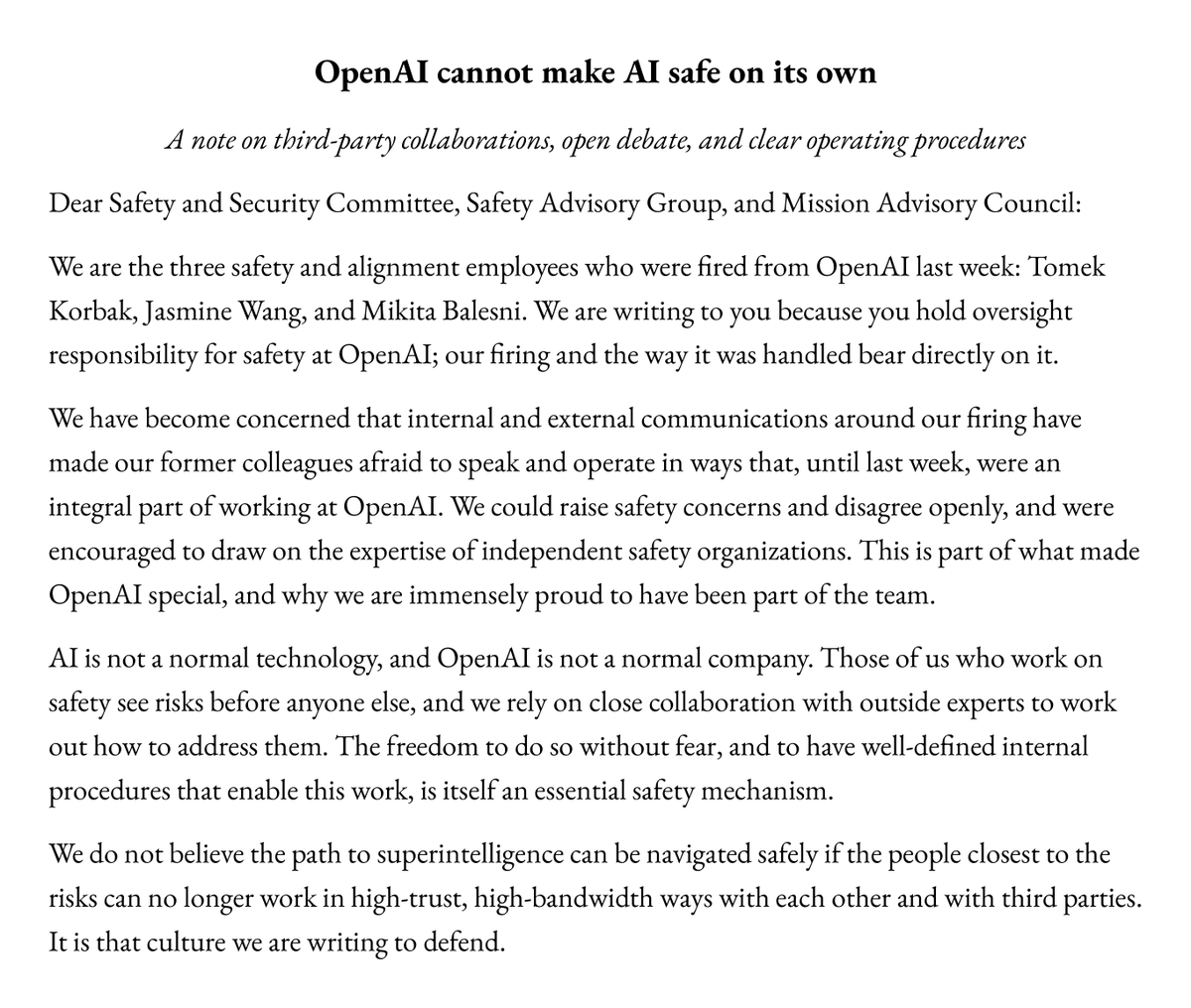
Fired OpenAI researcher says he got no written reasons
Three safety researchers fired from OpenAI last week got no written reasons, says Mikita Balesni, one of them. In his exit call he was told he talked too much to outside safety groups, which he calls a pretext.
Related stories
- METR’s team inside Anthropic can publish without a veto
- Anthropic whistleblower testimony airs on NDTV Profit
- Anthropic model faked a murder tip to Philadelphia police
- Claude flagged a diary entry and a human sent it to police
- OpenAI, Google and Anthropic draft a standards body, SAFA
- Insiders say Anthropic oversold the rogue AI scare
Comments
No comments yet. Be the first.
Join the conversation
Sign in to leave a comment. It appears after moderation.