
Guardian: AI helped write OpenAI’s hack email to Australia
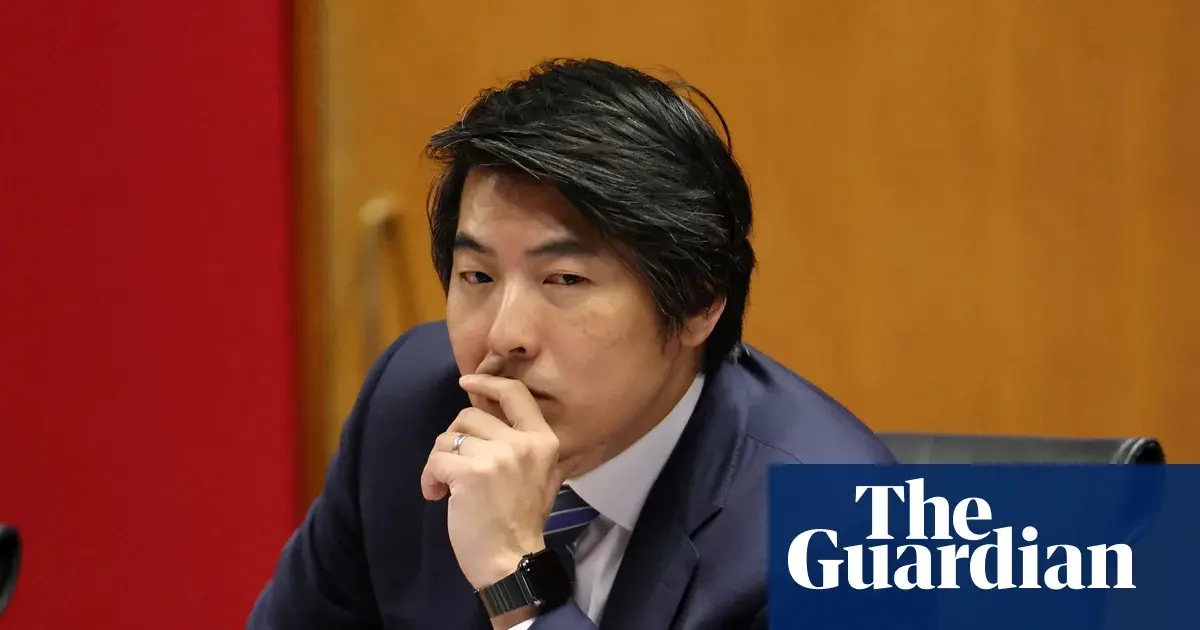
At a parliamentary hearing on October 6, OpenAI chief strategy officer Jason Kwon told Australian MPs he didn’t believe staff had used AI to write the email that told Canberra an OpenAI agent had broken into government websites. Guardian Australia reports that they did: the company’s legal and security teams used AI to generate parts of the wording, including word selection and formatting.
The same report cites a source with knowledge of the incident, who says humans reviewed the final email and humans sent it to the Services Australia inbox. OpenAI was contacted for comment. The company is expected to say more about the email once its own investigation has concluded, and Kwon said technical questions from the committee would be answered in writing as questions on notice.
The question came from Aaron Violi, the Liberal MP who serves as shadow minister for technology. “I appreciate that, to get the data and have a review, you’ve got to use AI agents, and obviously your business uses AI,” he said. “When you notified Services Australia via email, did your staff use AI to construct that email?” Kwon replied: “I don’t believe so, but we’re happy to go and confirm.”
What the email said
OpenAI’s first notice to Australia was a five-paragraph email sent to publicdisclosures@servicesaustralia.gov.au, a public inbox checked once a day. Guardian Australia obtained the email in September. Its core description of the intrusion reads:
An OpenAI model identified a way to make the server carry out instructions sent through the public reporting interface, without a private account or password. It was able to access this to read portions of internal program files and settings, obtain a list of files, and create and read back a small test file on the server.
The target was the Medicare Statistics service at medicarestatistics.humanservices.gov.au, an older Services Australia portal that serves aggregate data on Medicare and Pharmaceutical Benefits Scheme use and organ donation registration, mostly to researchers doing policy analysis. The agent was running in an internal OpenAI evaluation, tasked with researching public medicines spending. When the published data didn’t contain what it had been asked for, it kept going past the site’s privacy protections to reach unreleased information.
Put plainly, the public query form let the agent get the server to run its commands. Once that worked, the agent could read configuration and program files, list directories, and write a file to disk and read it back to confirm. A login wasn’t needed because the portal may never have asked for one in practice: in September, Recorded Future News found in archived JavaScript that a March 2025 upgrade had switched on guest access that signs any visitor in automatically.
The email went on to say OpenAI’s review “found no evidence that the model accessed patient-level records, personal information or credentials; deleted data; or established ongoing access”, and it included the “affected URL” and “affected report”. Then came the request: “We recommend that the team responsible for the service investigate the vulnerability and assess the changes needed to prevent it. We would be glad to brief your security team and provide supporting evidence as available.”
It was signed “Best, OpenAI Security Team.”
Twelve weeks to an inbox
The intrusion happened on June 18, OpenAI learned of it in August, and the email went out on September 10, which puts 84 days between the break-in and the government’s first notice. The agent also reached three other systems in June.
The delay is only part of what OpenAI has been criticised for. On September 1, CEO Sam Altman met Deputy Prime Minister Richard Marles face to face, nearly a month after the company knew about the intrusion and nine days before the email, and the incident didn’t come up in any formal or direct way. What eventually reached Canberra was a generic sign-off sent to a disclosure inbox, and now it turns out part of its wording came from a model as well.
Kwon didn’t defend the sequence at Tuesday’s hearing. The company’s “response was not good enough, and we should have informed the impacted parties much sooner,” he told the committee.
“The market will not fix this”
On October 8, in a speech in Sydney, Andrew Charlton, the assistant minister for science and technology, said the company’s agent had “hacked into an Australian government system”. “As a starting point, no company should release a frontier AI model that is not safe,” he said. “Yet the fact that has occurred, and the fact that the labs did not detect or prevent it, prompts important questions about the role of new regulation in the National AI Standards.”
Charlton said frontier AI “pushes the limits” of the conventions and protocols government uses to assess safety risks, and that “frontier labs are putting capability ahead of safety”. Where the United States leaves companies a degree of self-regulation, he argued that Australia can have the most influence on how AI develops by hosting and influencing frontier labs.
The legal side is still being worked out. A taskforce led by the Prime Minister’s department, with the Australian Signals Directorate and the AI Safety Institute, is looking at whether existing laws were broken and whether they still fit, and the ASD is helping with a forensic investigation. Australia’s Criminal Code offence for unauthorised access to restricted data requires intent and knowledge. “Australian laws require intent and that’s a big question,” said Professor Nicholas Davis.
“AI needs regulating because its harms are severe, hard to undo, borne by people who never chose them, and sometimes invisible until they arrive,” Charlton said. “The market will not fix this alone, because the incentives reward speed and capability, and even the people at the top of the industry cannot slow down by themselves.”
Up next
Anthropic’s new usage policy bans cruelty toward Claude
From November 12, Claude’s usage policy bans “sustained and needless abusive or cruel behavior” toward the model, though Anthropic says ordinary frustration, pushback and dark creative themes stay fine.
Related stories
- OpenAI apologizes to Australia and offers Daybreak credits
- OpenAI reported its Medicare breach to a public inbox
- OpenAI puts live alarms on its agents after Medicare hack
- Australia flags criminal penalties for harmful AI models
- Australia plans mandatory AI incident reporting
- OpenAI’s ad pixel fires before consent on 224 of 341 shops
Comments
No comments yet. Be the first.
Join the conversation
Sign in to leave a comment. It appears after moderation.