
Anthropic weighed a $7B buy of chip startup MatX
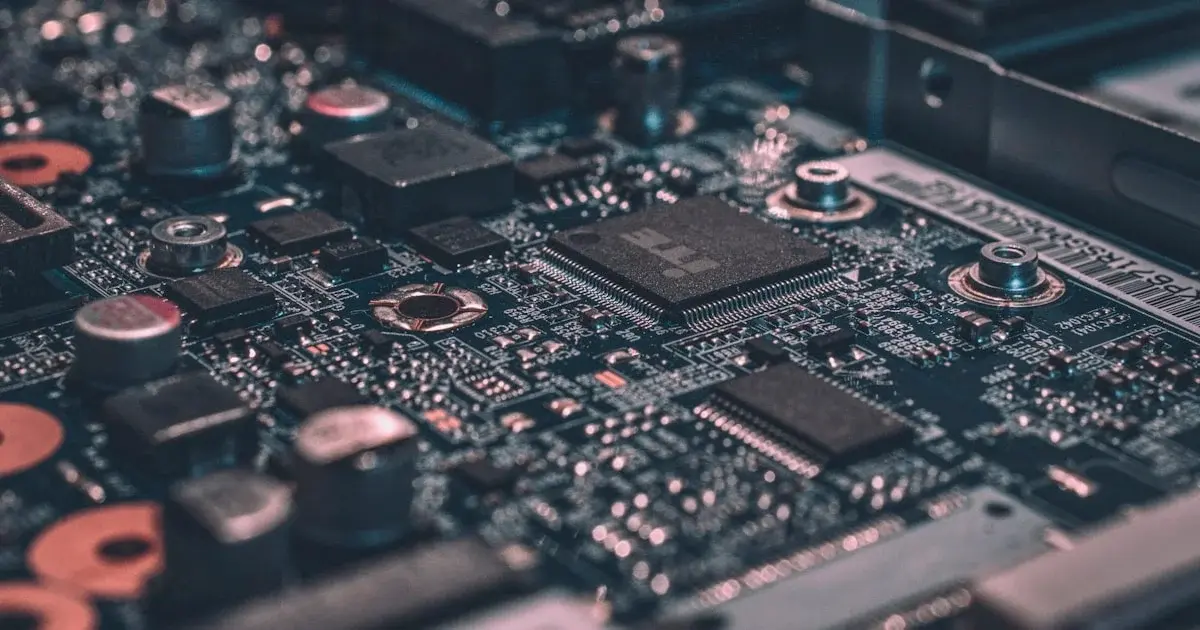
Anthropic discussed buying MatX, an AI chip startup founded by former Google TPU engineers, for roughly $7 billion. Two people briefed on the matter told Reuters, which published the story on August 27. A third person said the merger talks have since turned into a discussion about a partnership. The aim is to speed up Anthropic’s work on its own chips.
The details come from a Reuters report carried by The Star. Reuters could not learn why the acquisition talks are no longer active. One of the people said MatX is now trying to raise new capital at a valuation of about $4 billion. That puts the price Anthropic discussed roughly $3 billion above what the startup is asking from investors today, for a company whose chips are not due to ship until 2027.
MatX’s earlier rounds were much smaller. TechCrunch reported that a Series A of about $100 million, led by Spark Capital, valued the startup at more than $300 million in 2024. In February 2026 MatX raised a $500 million Series B led by Jane Street and Situational Awareness, the investment fund set up by former OpenAI researcher Leopold Aschenbrenner. Marvell Technology, Spark Capital and Stripe co-founders Patrick and John Collison also invested. MatX did not disclose its valuation at the time. The money was meant to get its chips made at TSMC. Co-founder Reiner Pope used to lead AI software development for Google’s TPUs, and co-founder Mike Gunter was a lead designer of the TPU hardware. The company’s stated goal is processors 10 times better than Nvidia’s GPUs at training LLMs.
Training is the part that sets MatX apart. It has been building a chip for training, the stage where a large model is built. Other chip startups, and OpenAI, are working on processors for inference, the work of generating a chatbot’s answers. Reuters’ sources say the MatX talks suggest Anthropic may want a training chip, though it could also decide to make an inference chip. OpenAI said at a conference the same week that its first custom chip, Jalapeno, outperformed a similar Nvidia processor, and its executives said it was more energy efficient on inference.
The people briefed on the talks said buying a company like MatX would bring design expertise in-house and could lower costs over the longer term. Building chips from scratch is slow and expensive: getting to viable hardware can take a year or more, and designing a single generation costs hundreds of millions of dollars. Anthropic says it is expanding an in-house silicon team to design custom chips that will make Claude models run faster and more efficiently. It will also keep its multi-chip approach, working with providers from Nvidia to Google. That matches what it said when it confirmed it was building a chip team.
MatX is not the only startup Anthropic has talked to. In recent weeks it has met a range of AI chip startups, which Reuters describes as an effort by its engineers and executives to understand the current approaches to chip design. It has not decided on an acquisition. It is also hiring: Google chip veteran Amir Salek joined the week of the report, and in June Anthropic hired Clive Chan, a former OpenAI chip engineer who worked on the chip OpenAI unveiled earlier this year.
For now Anthropic still mostly rents compute and buys chips from others. It plans to buy $36 billion worth of Google’s AI chips, signed a $45 billion deal with Nscale for cloud compute, and agreed to pay SpaceX $1.25 billion a month through May 2029 for capacity across its data center clusters. That SpaceX bill comes to $15 billion a year, so the roughly $7 billion discussed for MatX is less than six months of it. The SpaceX deal includes the Colossus 1 facility, which houses more than 220,000 Nvidia chips. All of this comes ahead of an IPO expected this year. Reuters reported earlier in August that Anthropic will seek a $2 trillion valuation, which depends on 2028 revenue of as much as $200 billion.
Supply is the other pressure. On a conference call on August 26, Nvidia said its processors would stay in short supply through 2027, the same year MatX plans to start shipping.
Up next
Claude Cowork gets its own browser, no Chrome needed
Chrome handles close to 70% of the world’s web traffic, per Statcounter, and Claude Cowork now runs its own browser inside the desktop app, on by default, with a settings toggle back to the Chrome extension.
Related stories
- Anthropic in talks to buy Decart for about $6 billion, per Bloomberg
- Anthropic Is Building Its Own Chip
- Mythos put Claude on AMD in about 3 days, not 6-12 months
- FT: Anthropic strikes $3.4B gas power deal for data centers
- Anthropic’s amended S-1 lists $895B in compute commitments
- Banks shelve bonds for Anthropic-tied Texas data center
Comments
No comments yet. Be the first.
Join the conversation
Sign in to leave a comment. It appears after moderation.