
Cheaper per token, Fable 5.2 cost $13.39 to Astra’s $3.99

In a head-to-head test published November 14, The New Stack ran up an estimated $13.39 in API costs on Claude Fable 5.2 against $3.99 on OpenAI’s GPT-6 Astra across three developer tasks, so Fable’s lower per-token rates did not produce the lower bill. If your work looks like the bug-fix and code-writing tasks, Astra matched Fable’s perfect scores on those two at about 41% of the estimated cost. Fable came out ahead only in code review, 49 to 45, and each model ran once at default settings.
On the price list, Fable 5.2, which Anthropic launched on November 9, charges $8 per million uncached input tokens and $40 per million output tokens. Astra, launched in September, charges $10 and $50. Both vendors have separate rates for cached input, and the costs in the test are estimates built on each vendor’s API pricing.
Where the tokens went
Both APIs bill reasoning tokens, the text a model generates while it works a problem through before answering, at the output rate. Across the three runs, The New Stack counted 4,400,139 input and 226,917 output tokens for Fable against 884,143 and 39,494 for Astra, about five times as many in total. Reasoning alone came to roughly 142,000 tokens for Fable and about 14,500 for Astra.
The bug fix shows the pattern most plainly. The tester planted 10 bugs in a 2,600-line billing codebase, wrote a support ticket with wrong guesses about their causes, left two of the codebase’s own tests wrong and hid one bug behind another. Both models fixed all 10 and passed all 50 hidden checks, in 12 turns each. Fable spent 17,387 reasoning tokens to Astra’s 819, took 326 seconds to Astra’s 122, and cost an estimated $2.51 to Astra’s 98 cents.
Code writing went the same way. Both models wrote VAT ID checks for 27 countries, IBAN checks for 34 countries, a payment calendar and long-date formatting from scratch, with no libraries, and both scored 50 of 50. Astra took 23 turns to Fable’s 24, yet in the publication’s run Fable cost 2.3 times as much ($4.83 against $2.06) and took 1.7 times as long.
“The price per task is what matters,” OpenAI President Greg Brockman said at Astra’s launch.
What did the code review buy?
The review is the one task where the scores split. The New Stack planted 45 defects in an EU invoicing package: VAT ID checks for 27 countries, IBAN rules, a European Central Bank payment calendar and date formats for 50 locales. A model had to prove each defect with an input the code gets wrong and give the correct answer, and false alarms cost points.
Fable proved 44 of the 45 defects and raised no false alarms across 71 findings, for 49 points. Astra proved 41, missed check-digit defects for Spain, Ireland and Luxembourg, and wrongly classified one Spanish ID as valid, for 45. Both missed the same Spanish defect: two swapped letters in a 23-letter lookup table.
Fable’s run cost an estimated $6.05 to Astra’s $0.95 and took 993 seconds to 227. The tester’s reading is that code handling invoices can justify the premium, since one missed validation rule can get real invoices rejected, while for a routine review Astra found 91% of the defects for 16% of the cost. The author also notes that with one run per model, a four-point gap could shift on another run.
Default effort, one run
Default settings matter for Fable. On the Claude API its default is High effort, and Anthropic’s launch benchmarks show the gap that leaves: on FrontierCode 2.0, Fable scored 49.1% at X high effort but 45.3% at High, against 42.8% for Astra. On FrontierSWE v2, Anthropic puts Fable at 69.9% and Astra at 65.5%. Those are the company’s own launch numbers, and benchmark leads don’t always carry over to real work.
Turning effort up has its own price. CloudZero says independent testing at maximum effort puts Fable 5.2’s cost per task at roughly double Fable 5.1’s, even though the price per token fell. And Anthropic itself recommends that most users start with Claude Opus 5.5 for most coding and knowledge tasks, positioning Fable for the most ambitious, open-ended technical work.
For teams already running Fable 5.2 where easy requests cost too much, Anthropic’s prompting guide points the other way on effort: instructions telling the model to answer directly didn’t stop Fable 5.2 from thinking at medium effort and above, and the guide’s fix is to remove those lines and lower the effort level for those turns.
Up next
OpenAIOpen modelsanalysis
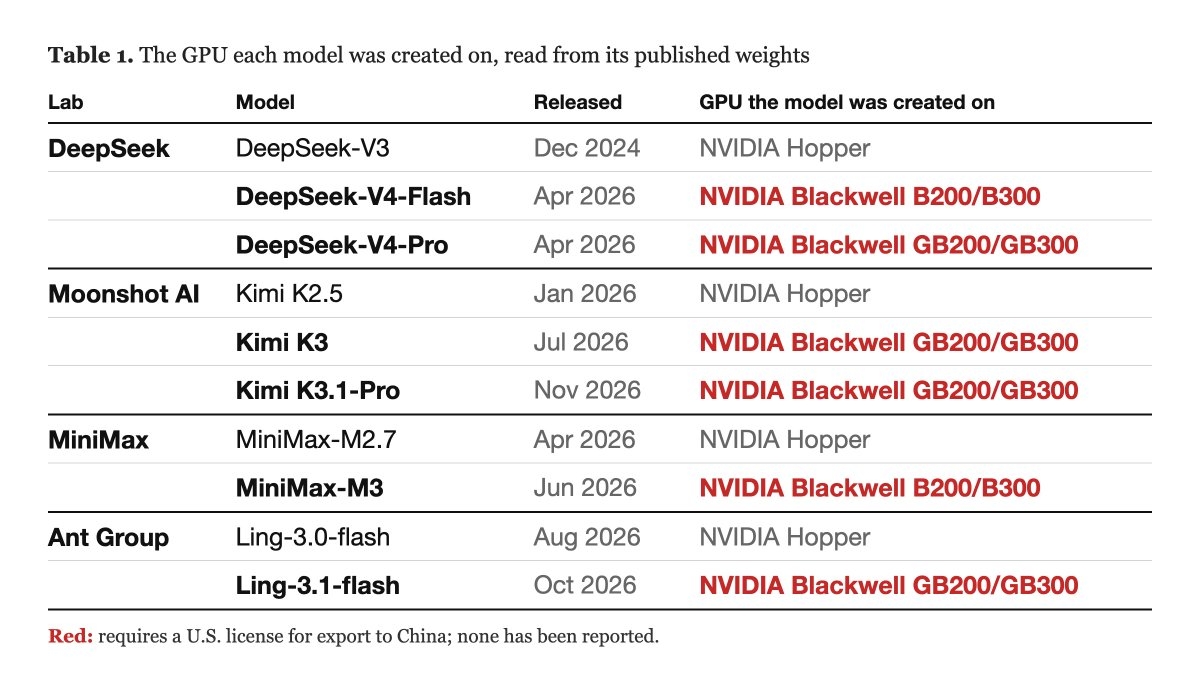
DeepSeek, Kimi models carry Blackwell GPU fingerprint
Per Unemployment Labs, anyone downloading Kimi K3 gets weights still laid out the way an NVIDIA Blackwell GPU set them, and that chip is barred from export to China. Would chip provenance change whether you run Kimi K3, or does only its quality count?
Related stories
- Claude Haiku 5.5 spotted a data leak GPT-6.1 Sol missed
- Andon Labs puts GPT-6 Astra ahead of Claude Fable 5.1
- Opus 5.5 aced a test suite at 3.4x GPT-6 Sol’s cost
- Fable 5.2 keeps thinking when told to answer directly
- Claude Fable 5.2 drops to $8/$40 and runs up to 30% faster
- Claude Fable 5.2 moves to usage credits after November 16
Comments
No comments yet. Be the first.
Join the conversation
Sign in to leave a comment. It appears after moderation.