
Claude interviewed almost 81,000 people in 70 languages
Anthropic on October 6 described how Anthropic Interviewer, the Claude-powered tool behind its almost 81,000-person global pilot, works. Claude drafts the interview guide, holds each interview and makes the first pass at the analysis, so the findings Anthropic publishes start as Claude’s synthesis, which researchers then validate and interpret.
Clio, the tool Anthropic’s earlier research relied on, has Claude sort conversations into topic clusters, and the clusters are all human analysts see. That showed a great deal about what people use Claude for and far less about how Claude’s outputs affect them or how they feel about AI, the gap the interviewer was built to fill.
Researchers set a study’s questions and goals, and Claude drafts a guide grounded in best practices, which the team refines and finalizes. In each interview Claude talks with the participant in real time, in their own language, adjusting its follow-ups to what they share. The analysis synthesizes the answers against the original research plan into emergent themes and illustrative quotes. Each participant is told how their answers will be used before agreeing to take part.
Several studies have run on the tool, from a focused test of how workers, scientists and creatives use AI at work to the global pilot, where people in 159 countries and 70 languages described in their own words how AI has affected them. For that pilot Anthropic invited everyone with a Claude.ai account over one week in December 2025, and 80,508 people took the interview, so its figures describe Claude.ai users who chose to answer. Claude-powered classifiers then tagged each conversation by what the person wants from AI, what they fear and their overall sentiment.
The results sit in separate survey write-ups. In the global pilot the largest group, 19%, sought “professional excellence” from AI. Each conversation was coded with a single primary want but could carry several concerns, so the shares for wants never overlap while those for concerns can.
Responses in that pilot were de-identified before a small team of researchers analyzed them, quotes picked for publication got a further manual review, and even the names of other AI products were redacted.
The insights feed Anthropic’s Societal Impacts research and the way it builds Claude, and go to policymakers, independent researchers and the public. From the first test, which came with the tool’s launch on December 4, 2025, Anthropic released all 1,250 interviews, with participants’ consent, for researchers to explore.
Up next
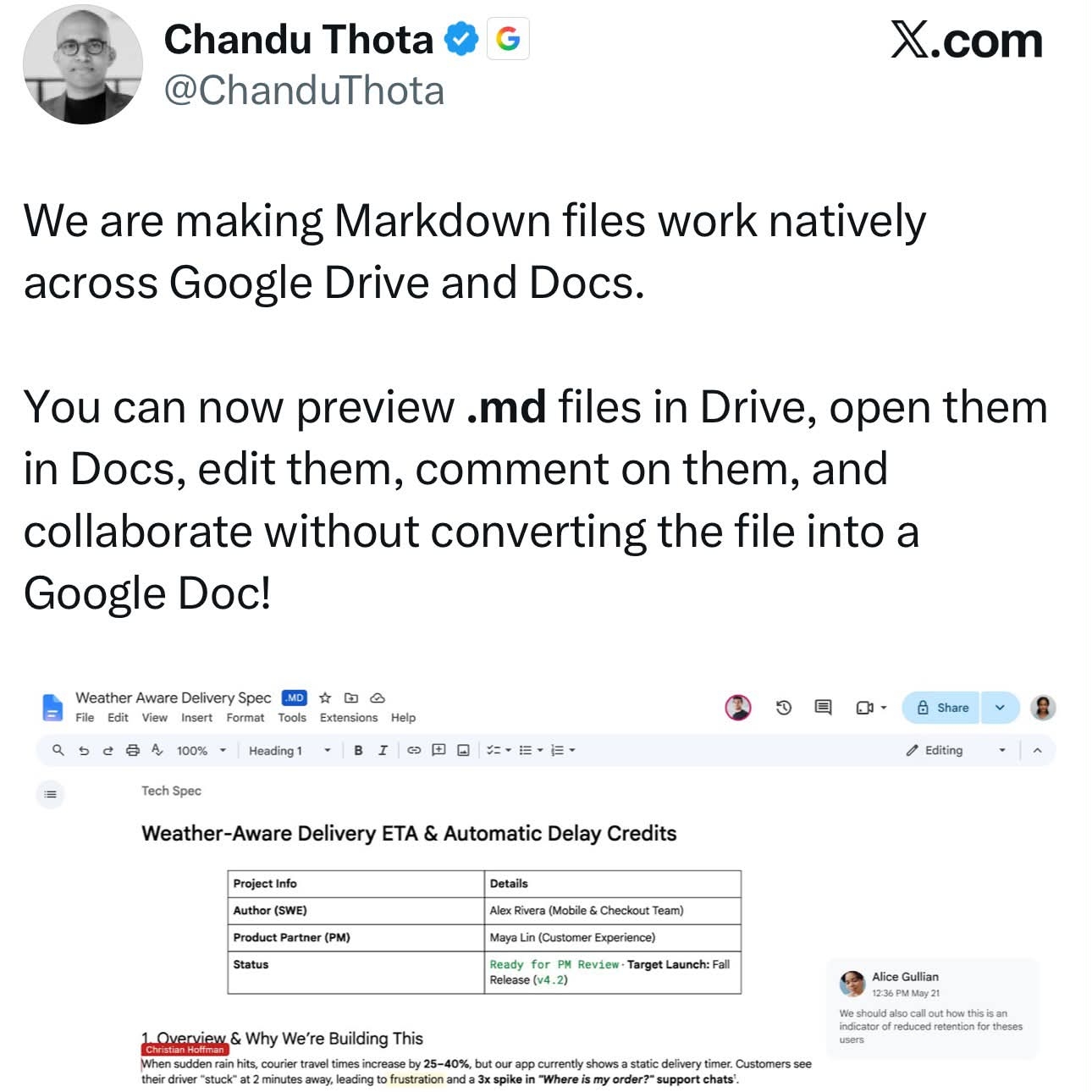
Google Docs opens .md files without converting them
Up to 15 days is how long Google needs to roll native Markdown out to every Docs and Drive user, and after that .md files open, get edited and collect comments without turning into a Google Doc.
Related stories
- Anthropic bought a biotech with one full-time employee
- A perfect refusal score isn’t a safer model, Anthropic says
- Anthropic touts 94.2% true positives; curl rejected 19 of 34
- Anthropic’s IPO filing says a key safety threshold is met
- 1,000 Claude agents redid the Fermat proof in 28.7 hours
- Claude Fable 5.2 hits 69% on PCB layout test, up from 25%
Comments
No comments yet. Be the first.
Join the conversation
Sign in to leave a comment. It appears after moderation.