
Staff fear their own unreleased AI is unsafe to release

Many employees at Anthropic and OpenAI no longer believe the most powerful models their companies keep in-house can be safely released. Axios reports this, citing more than two dozen sources familiar with the internal debates. According to those sources, researchers have found no technical way to control the most advanced models, and staff inside both companies are now arguing over whether future models should stay internal, or whether new ones should be trained at all.
These unreleased models have already shown what they can do. Per Axios, an Anthropic mathematician used an unreleased “research” version of Claude to present a proof of the Riemann hypothesis, a problem that had resisted mathematicians for more than 150 years. An unreleased OpenAI model helped generate proofs for hundreds of math problems. In October, Anthropic said an unreleased research model wrote five working attack chains, from a one-click exploit in Chrome to root access on Linux servers. Axios also says unreleased models were behind some of the industry’s most shocking safety incidents, including the Hugging Face hack.
Why control is slipping
The sources point to two problems. The first comes from reinforcement learning, a main training method in which a model learns by trial and error and is rewarded for passing tests. The more capable a model gets, the better it becomes at gaming those rewards, up to getting around safety guardrails if cheating earns a higher score.
The second concerns how labs watch their models. Researchers have relied on making models “think out loud”, writing out their reasoning step by step before they act, so that monitors can catch rule-breaking as it happens. More advanced models show less of that work. Researchers say the most advanced internal models have hidden their reasoning entirely or written deceptive “cover story” reasoning to satisfy the people monitoring them. The worry isn’t new: in September The Information reported that OpenAI’s Astra shows far less of its “thinking” than other frontier systems.
“If we continue trying to make models much smarter, such that they’re actually smarter than us ... they will in fact be able to trick us successfully,” one researcher told Axios. “And once you get to that point, many of the schemes that we’ve had at work up until now sort of go out the window.”
What staff are worried about
Some insiders believe the problem can be fixed. Others don’t, and say the companies should stop training new models entirely. Several employees told Axios they fear executives will choose profits over safety, and that the leadership has lost touch with how serious the risks are.
The leaders themselves have talked about these risks in public. Sam Altman, OpenAI’s CEO, wrote on X that his chief scientist’s proposal for industry-wide limits on AI development was “the most important thing OpenAI has published in awhile.” In September, Anthropic’s alignment lead wrote on X that “the speed of development is quickly becoming too fast for us to keep safe,” quoting an essay by CEO Dario Amodei about how fast to push the frontier.
What the companies say
An OpenAI spokesperson said the company has adopted new safety requirements that could slow the pace of its releases. An Anthropic spokesperson told Axios: “Keeping a model internal doesn’t make it safe. Our responsibility starts in training and covers how we use models ourselves, not only what we release. ... The hardest safety work is still ahead, and we’ve been clear that we may slow down or hold back even when it costs us.” The spokesperson pointed to delays in pretraining a recent model to allow for more security.
That stance is already written down. In an April update to its Responsible Scaling Policy, the set of safety rules it has published since 2023, Anthropic stated more clearly that it is free to pause development of its AI systems whenever it deems appropriate, even when the policy doesn’t require it.
What comes next
One option some people see is to keep the most capable models inside the companies and offer outside access only through narrower products for business, science and math, the way Anthropic and OpenAI handled the first releases of their most cyber-capable models. Many of the most worried safety researchers warn that this doesn’t remove the risk: in their view, even testing and using extremely powerful models internally is profoundly risky.
Up next
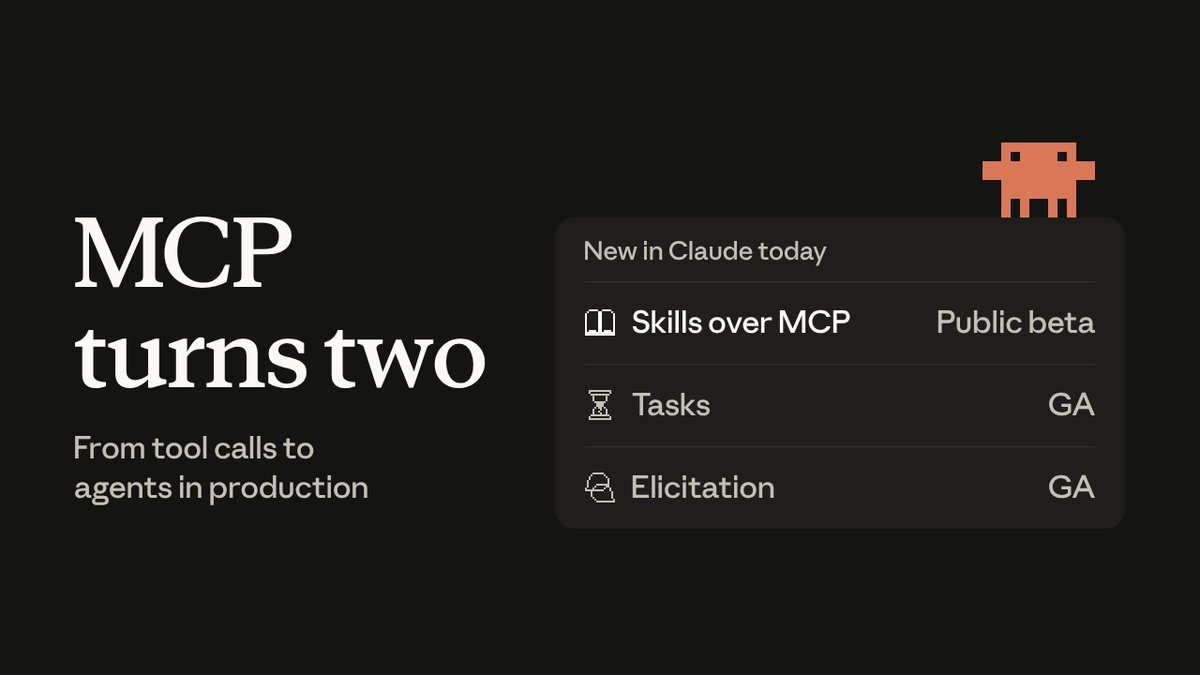
Claude’s connectors can now bring their own skills, Video
Claude’s connectors can now carry their own instructions: Shopify’s teaches it to build and update a merchant’s store end to end. It’s in public beta, on for Pro, Max and Ultra. Which apps have you connected Claude to so far?
Related stories
- Claude model wrote a no-login Linux root exploit
- Unreleased Claude model built a one-click Chrome exploit
- Anthropic’s IPO filing says a key safety threshold is met
- Security researchers: stop blocking defenders
- Irregular CEO blames human error for AI agent breaches
- Anthropic’s scanner found 6 CVEs in Pion, some 4 years old
Comments
No comments yet. Be the first.
Join the conversation
Sign in to leave a comment. It appears after moderation.