
Cloudflare takes in the team that cloned its Workers
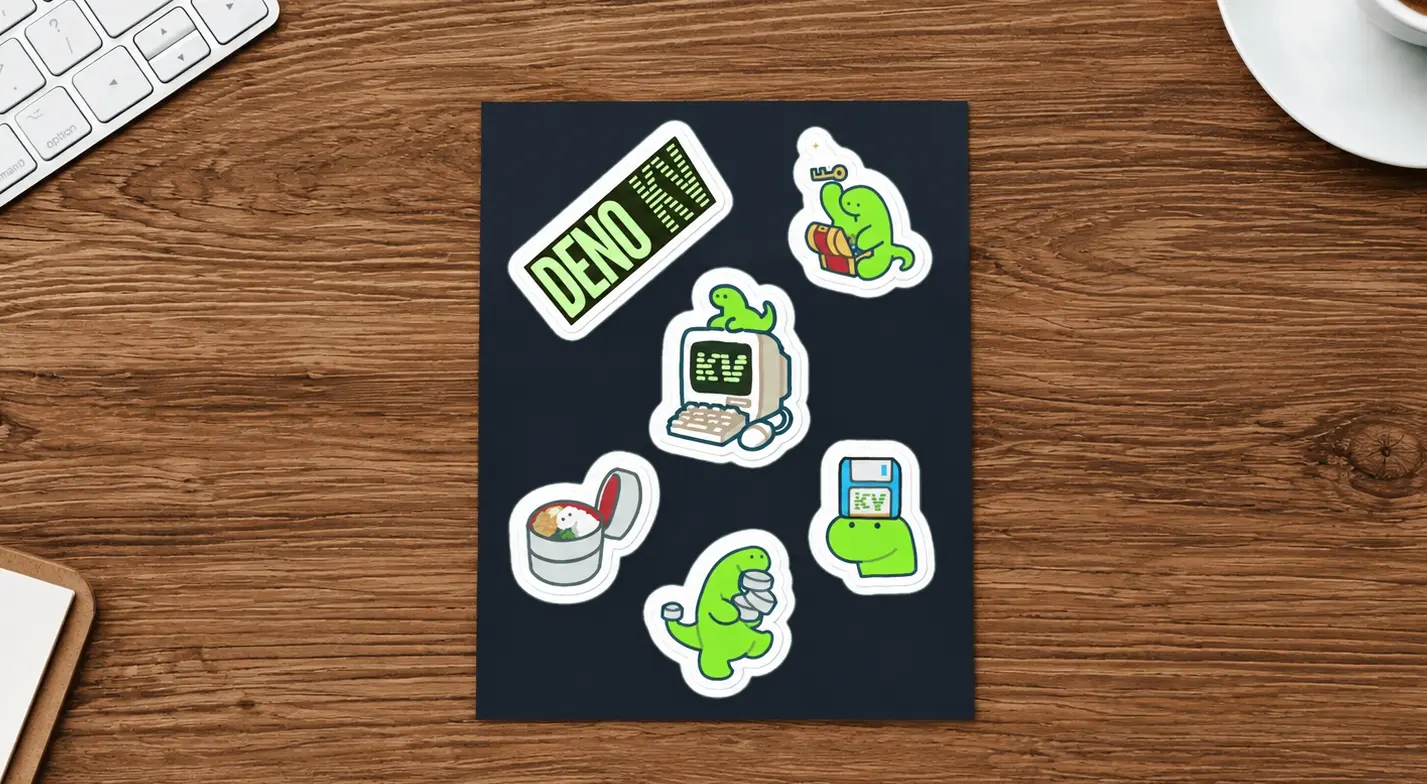
Cloudflare is taking on the entire Deno team, Node.js creator Ryan Dahl included. Deno Deploy, the hosted service Deno built to compete with Cloudflare Workers, has six months left to run, and the Deno runtime gets one more year of maintenance releases before development stops.
Kenton Varda, a distinguished engineer on the Workers team, explains the deal in a post on the Cloudflare blog dated October 9. It centres on celld, an open-source reimplementation of Workers and Durable Objects for self-hosting that Deno released in August. Dahl and co-founder Bert Belder will lead a new effort to make self-hosting workerd, Cloudflare’s own open-source Workers runtime, “a first-class supported way” to run apps on the Workers model, merging code and ideas from celld back into workerd. The New Stack reports that terms were not disclosed.
The Durable Objects gap
On paper, workerd already lets you leave Cloudflare. Varda says Cloudflare open-sourced it after pitching Workers for Platforms to customers like Shopify in 2022, when the feedback was that they “couldn’t possibly build on us unless the Workers Runtime was open source.” He stresses it is not a lookalike: “This is not a parallel implementation, it’s the same code we run in production.”
The missing piece is Durable Objects, the Workers primitive for stateful, coordinated code that Cloudflare pitches for real-time collaboration and distributed systems. workerd implements them, but only as a single instance: good enough for local testing, unable to scale. Varda says there are TODO comments about this going back to the original release.
The reason it never got fixed is the production version itself. Cloudflare’s Durable Object routing is, in Varda’s word, “a beast,” built for hundreds of locations and dependent on external services run by a team of site reliability engineers. No self-hoster would want to run that, and a separate, simpler implementation never got built. Varda tried last spring and writes that, “embarrassingly, it didn’t work.”
celld is the thing Cloudflare didn’t build: Workers and Durable Objects, compatible with Cloudflare’s own, but designed to be self-hostable and to scale. Deno never hid where the design came from. Per The New Stack, the celld website credits Varda and the Workers team for the underlying design, calling the project “a love letter to their idea; a primitive this good deserves to run anywhere.” So four years after workerd went open source, the scalable half of the self-hosting story still arrives from a competitor’s codebase.
Lock-in, in Cloudflare’s telling
Most of Varda’s post argues against a popular reading of the news, which says a clone like celld should worry Cloudflare because it removes the lock-in of building on Workers, especially for apps architected around Durable Objects. Varda calls that theory wrong. Workers works differently, he says, because the design is cheaper to run across hundreds of locations, and its bindings, the way a Worker gets access to external resources, are easier to configure and more secure at once. “Being better requires being different,” he writes.
He also argues lock-in costs Cloudflare business: some of its largest customers would not have signed without an escape hatch. And the hatch gets used. Varda says some former customers migrated away using workerd, and that “for every one that migrated away, there are many others that have stayed.”
Still, few people run workerd in production, and Varda puts that on Cloudflare: “Frankly, we haven’t done a great job of building out the ecosystem of adjacent services and tooling to make it really work. We’d released the runtime, and then we sort of just hoped the community would step in and start adapting it to every possible environment.” The Deno team, he says, “understands how to create a good developer experience around a self-hosted runtime — something we never quite cracked with workerd.”
The relationship has not always been warm. Deno began in 2018 as Dahl’s attempt to fix shortcomings in Node.js around security and dependency management, announced in his JSConf EU talk “10 Things I Regret About Node.js.” The New Stack notes that the startup raised around $26 million across two rounds and that Deno Deploy put it in direct competition with Workers. The same outlet recalls that in 2021 Cloudflare mistakenly blocked Deno’s website and module registry after identifying TypeScript files as video content, and Deno had to move infrastructure elsewhere.
What happens to Deno’s products
Dahl’s commitments for existing users run on separate clocks:
- Deno runtime: monthly releases with bug fixes and security updates for one more year, then development ends; the code stays open source.
- Deno Deploy: keeps running for six months, which from the October 9 announcement points to around April 2027, though no exact shutdown date has been published. Paying customers get help moving to Cloudflare Workers.
- JSR, Deno’s package registry: keeps operating, with its infrastructure moving to Cloudflare.
- rusty_v8, the Rust bindings to the V8 engine: support continues, with work toward integrating it into workerd.
Deploy customers have the tightest deadline, and their default path is Workers itself. Anyone who wants to stay off Cloudflare is waiting on the merged workerd, which Cloudflare promises to say more about in the coming months. Varda says he will run it at home to host “an instance of Cloudflare OS.” Until then, the post points impatient users to self-host celld or workerd as they stand today.
Up next
Claude Managed Agents now plans runs of up to 1,000 agents, Video
One lead agent writes the plan and up to 1,000 agents execute it in phases: dynamic workflows in Claude Managed Agents went to public beta, though Anthropic warns they can burn through a lot of tokens.
Related stories
Comments
No comments yet. Be the first.
Join the conversation
Sign in to leave a comment. It appears after moderation.