
Codex helped fix a 2007 Radeon video bug for Linux 7.5
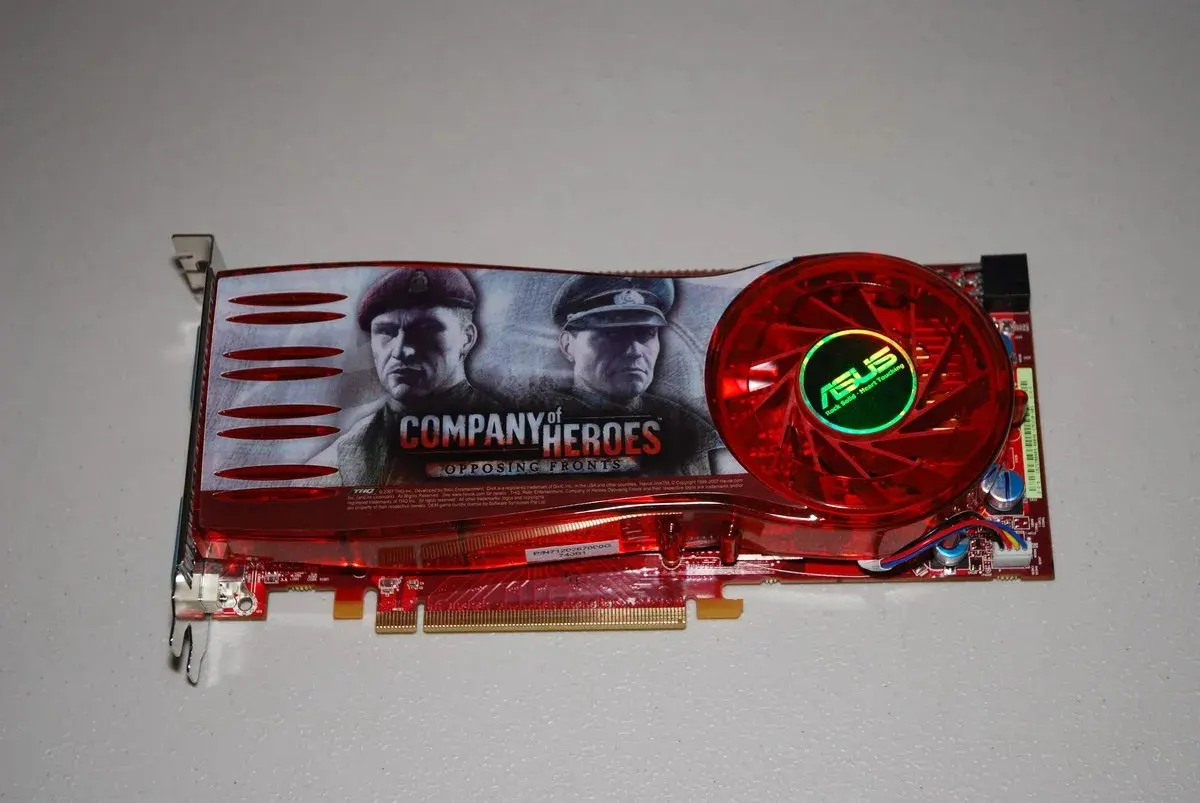
Ted Bullock, a new kernel contributor, used OpenAI’s Codex to trace garbled hardware-decoded video on AMD’s RV6xx GPUs, the chips behind the Radeon HD 2000 and HD 3000 series. His fix is in AMD’s November 12 graphics pull request for Linux 7.5, Phoronix reported. The commit carries no Cc: stable tag, the marker that asks for a backport, and was not in the stable queue as of November 14, so on our reading 7.3 and the LTS kernels get it only if stable maintainers pick it up after it reaches Linus’s tree; Bullock tested it on one chip, the RV610.
What broke
The machine was an iMac7,1 with an RV610-based mobile GPU (the M74, PCI ID 1002:94c8), Hardware Busters reported, and playback through UVD, the GPU’s dedicated video decoder, kept producing broken frames. Frames came out corrupted when UVD read compressed video from system memory while the GPU was drawing. With that input in VRAM, or with the graphics draws stopped, they decoded cleanly.
The radeon driver already forced UVD buffers into VRAM on AGP cards, since a 2013 fix, and on the RS780 and RS880 integrated chips, since the 2014 series that brought UVD to this generation. In the driver history, the 2014 commit for the integrated chips carries the note “v2: only necessary on RS[78]80”, which implies an earlier version covered more chips; we did not find that version. A patch in the same series calls the R6xx generation “really buggy”. Bullock’s patch adds RV610, RV620, RV630, RV635 and RV670 to the same check. With it, every chip family on first-generation UVD firmware has all its UVD buffers held in VRAM. RV770 and newer chips are unchanged, except on AGP.
Which cards it covers
Bullock’s commit message argues that the five chips share a decoder path and the legacy R600 firmware, “so I think they are likely to have the same hardware requirements”, and adds: “Someone with the other hardware would need to verify that.” The grouping holds in the driver source, where exactly these five families load R600_uvd.bin and share one ASIC table with UVD enabled. That confirms they run the same code. It does not show that the other four have the same fault.
We matched the chip families to card names in the PCI ID lists. Bullock’s chip is the Mobility Radeon HD 2400 XT. The desktop HD 2400 belongs to the same RV610 family, though only the mobile part was tested. The untested families are RV630 (HD 2600), RV620 (HD 3450/3470 class), RV635 (HD 3650) and RV670 (HD 3850/3870). The original R600, the HD 2900, has no UVD support in the driver, so the fix doesn’t touch it.
When it reaches a kernel
The pull request lists the patch as “R6xx UVD fix” under radeon, next to ATRM bounds checking. Per Hardware Busters, the rest of the batch is mostly amdgpu work on display, power management, GPU reset and SR-IOV, plus EDID parsing for HDMI 2.2 FRL rates, and the new GFX13 (RDNA 5) code is not in it. The outlet expects the 7.5 merge window to open around the end of the year and the fix to reach mainline in early 2027.
The last three kernel cycles each ran 63 days, and on that cadence we project 7.4 around December 20, the patch entering Linus’s tree in the merge window that follows (7.5-rc1 around January 3, 2027), and 7.5 final around February 21, 2027, or February 28 with one extra release candidate. Neither 7.4 fixes pull, on November 5 and November 12, carries the patch. The 2013 AGP version of the same workaround was tagged Cc: stable; this one is not.
Our analysis
What we checked
On November 15 we read the applied commit, the amd-gfx and dri-devel archives for October and November, the stable queue, the 156 commits in the pull’s range, and the radeon UVD code in Linux 3.17 and 3.18.
Bullock’s five-chip grouping matches how the driver itself sorts these GPUs. Hardware Busters wrote that the change went through the normal mailing-list route; on the lists we found an RFC that one maintainer acked and applied, with no test reports from the other four chip families. And the radeon code path behind the bug dates from 2014, while the hardware is from 2007.
The thread on both lists has two messages: Bullock’s [RFC PATCH] of October 29 and a reply from AMD’s Alex Deucher four days later, in full “Applied. Thanks!”. The commit gained only Deucher’s Acked-by, with no Reviewed-by or Tested-by; replies under another subject or off-list would not show in this check.
The bug has been billed as nearly 20 years old. UVD support for RV6xx entered radeon in Linux 3.18, tagged December 7, 2014, so the code path is about 12 years old. We did not check whether the corruption was present from 3.18 on, and the patch has no Fixes: tag that would say.
Bullock disclosed Codex in one line of free text: “I used Codex to help with the investigation, testing and patch.” The kernel’s coding-assistants document asks for an Assisted-by: trailer, and 9 of the pull’s 156 commits carry one. Bullock’s does not, so anyone counting that tag would miss the only commit in the range that mentions Codex.
Up next
ChatGPT users in the EU report getting OpenAI’s dots
Per a social post rounding up user reports, ChatGPT users in the EU are getting dots, OpenAI’s always-on agents. At launch, Pro users in the EEA were left out. Have dots shown up in your ChatGPT account, and in which country?
Related stories
- Linus Torvalds puts “with-llm” in a kernel branch name
- Prompt injection reached the official Codex npm pipeline
- OpenAI to buy Pierre, whose diff tools already run in Codex
- OpenAI’s Pando cut monorepo push latency nearly 5x
- ChatGPT and Codex will share one usage pool in December
- OpenAI opt-out skips personal Daybreak Blue sessions
Comments
No comments yet. Be the first.
Join the conversation
Sign in to leave a comment. It appears after moderation.