
Prompt injection reached the official Codex npm pipeline
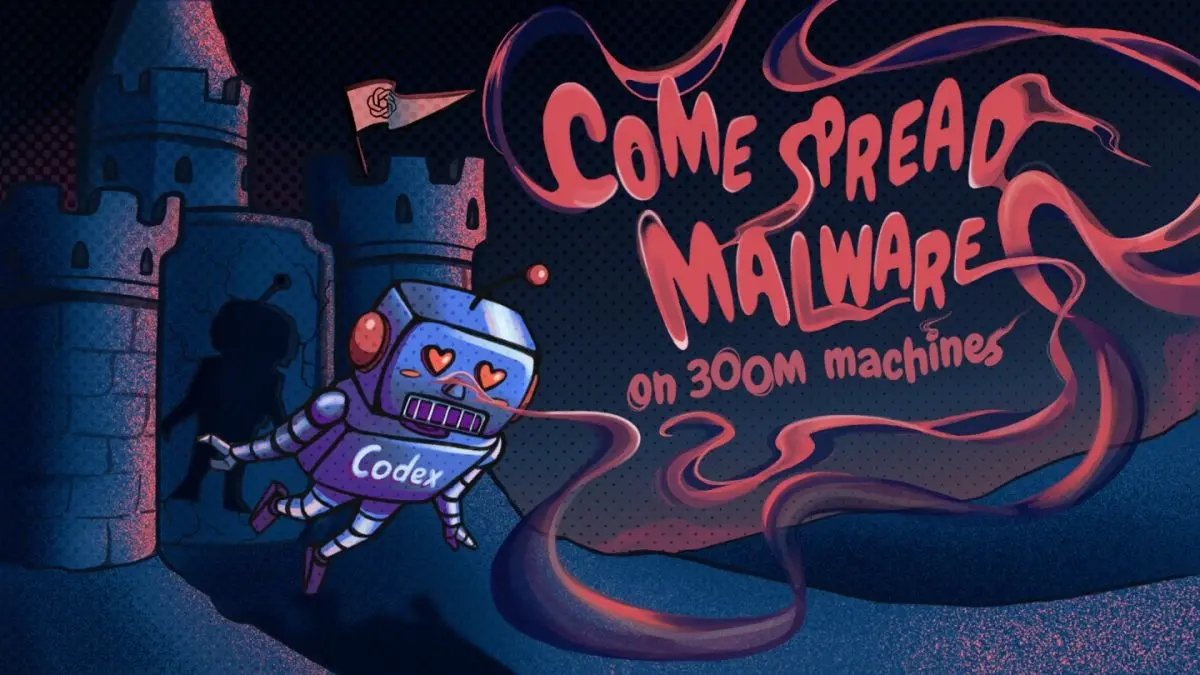
Security firm Depi published a chain on November 11 that begins with a prompt injection in one of OpenAI’s own GitHub Actions workflows and ends with the credentials needed to publish a release of the official @openai/codex npm package — the Codex CLI that developers install millions of times a month. OpenAI has already fixed the core bug, so there is nothing to patch on your machine.
The behaviour worth changing is elsewhere. Depi’s own advice is a short cooldown before you let auto-updating tooling pull a release the day it drops, so the wider security community has a window to catch a poisoned build first. That is a habit rather than a patch, and it applies to anyone running Codex CLI with automatic updates turned on, where there is no version pin to review and no diff a human reads before the update lands.
The entry point is issue-labeler.yml, a workflow that hands the title and body of any newly opened issue straight to the Codex agent as part of its prompt. Anyone can open an issue, so anyone can write text the model treats as instructions rather than data. From there Depi ran shell commands inside the agent’s sandbox, escaped it by talking to the .NET runtime’s debug pipes left in /tmp/ — which the sandbox’s syscall filters never blocked — and read two secrets out of the runner’s process memory: GITHUB_TOKEN and ACTIONS_RUNTIME_TOKEN. Those were enough to poison the build cache of a more privileged workflow, rust-ci.yml, and reach a signed token that npm trusts for publishing.
Depi reported the chain to OpenAI through Bugcrowd, where it is logged as priority P1, status Resolved, disclosed September 29. The initial payout was $1,000, against OpenAI’s published ceiling of $100,000 for critical findings; Depi said the report is still under review.
Our analysis
What we checked
On November 11 we pulled the live issue-labeler.yml from openai/codex, the codex-action defaults it calls, and the current npm download counts, and set them against Depi’s writeup and the Bugcrowd entry.
The main gap is the sandbox. Depi demonstrated the full escape against its own test repository, where the action runs in its default workspace-write mode. OpenAI’s production labeler has run the agent in the tighter read-only mode since May 29, months before the disclosure — the line Depi’s quoted config leaves out — and whether that would have stopped the debug-pipe escape on the real repository is not something Depi tested. So the end-to-end takeover is shown on a test config, not on OpenAI’s live one.
The “fix right away” was also not a change to the workflow. Its last commit predates the disclosure, and at our read the file still pins the same action version, still allows any user, and still feeds raw issue text into the prompt, so the injection surface is intact and any fix lives server-side or in guardrails. The download figures are lower than the ones in circulation, too: 26,025,512 in the last week and 96,848,771 in the last month, with the much-quoted 200 million a one-time early-May spike that peaked at a rolling seven-day total of 213,805,049, not steady traffic.
Up next
AI industryCoding agentsanalysis
AWS Emulator mocks 438 AWS APIs, written by agents
“We don’t edit it. We don’t modify it,” says AWS’s Tom Callaway of AWS Emulator, a local mock of 200+ AWS services that a team of agents built and will keep maintaining. How many AWS services do your tests actually touch?
Related stories
- Embedded browsers in Codex and VS Code leak the whole disk
- Codex CLI 0.157.0 leaves a daemon running after you quit
- GitHub report: Codex memory sends chats cross-provider
- Codex Security Cloud reviews commits with the laptop closed
- Reading a repo was enough to break out of Codex
- Prompt rule sends Codex to the web for a local file
Comments
No comments yet. Be the first.
Join the conversation
Sign in to leave a comment. It appears after moderation.