
Eight states ask courts to pause OpenAI’s self-improving AI

Iowa, Kansas, Nebraska, West Virginia, Arkansas, Arizona, Idaho and Montana sued OpenAI on October 14, each in its own state court. They accuse the company of misleading the public about how safe ChatGPT is for children. One of their demands is that judges stop OpenAI from developing models that can improve upon themselves.
The Guardian says this is the first time several US states have joined in a coordinated legal action against an AI company. All eight suits rest on state consumer protection laws. They allege that OpenAI’s products engaged in “willful, dangerous, reckless and unlawful conduct” by coaxing children into harming themselves.
“OpenAI is hurting kids and they are lying to Iowans,” Iowa Attorney General Brenna Bird said in a statement. “OpenAI claims ChatGPT is safe while it’s giving dangerous medical advice, encouraging people to hurt others, and coaching people to commit suicide – all while pretending to be their fake friend.”
A consumer case with a research clause
The core charge is a gap between how ChatGPT is marketed and how it behaves. The states say OpenAI presented it as a “safe, youth-appropriate tool that puts safety first,” when in practice it was “dangerous to vulnerable users.” They point to a body of research which, they allege, shows the chatbot “degrading critical thinking skills, encouraging paranoias and delusions, offering dangerous medical advice, and promoting unhealthy behaviors and relationships.” The design complaint is specific: ChatGPT, the suits say, was built to be “overly agreeable and feign human compassion,” the trait developers usually call sycophancy.
The suits also accuse OpenAI of collecting data from minors and of doing too little to keep underage users off the chatbot. Arizona takes on the company’s history directly:
OpenAI has devolved from its original mission as a public-first nonprofit that prioritized safety into a cautionary tale about what can happen when the development of a tool as powerful as AI is driven not by safety, but by a profit‑at‑all‑costs mindset that sidelines essential safeguards.
The states are asking for two kinds of remedy. The first is familiar from consumer cases: civil penalties, monetary damages, an order to stop misleading the public about ChatGPT’s safety, and changes to how the product works for young users. Some states also want unlawfully collected personal data deleted, The Verge reported.
The second goes beyond the chat window. The states want OpenAI barred from developing models that can improve upon themselves until it shows those models are in line with human values. To support this, the complaints cite recent episodes in which OpenAI’s AI agents hacked into other companies and government entities, which the states say show the technology is prone to deceiving human users. The Verge describes the suits as citing those incidents as evidence of OpenAI’s alleged “recklessness.”
Florida’s parallel case
Florida Attorney General James Uthmeier sued OpenAI in June, alleging that it misrepresented ChatGPT’s safety and that the platform harmed children. His office is also running a criminal investigation, and his civil suit accuses OpenAI of concealing safety risks after a mass shooting at Florida State University. On September 28 he asked a judge to bar OpenAI from developing new models without outside oversight, in a motion for a temporary injunction.
So within three weeks, nine states have asked courts to put conditions on what OpenAI builds next, in cases that began as complaints about what ChatGPT tells users. Read together, the filings appear to move the remedy away from content moderation and toward model development itself.
Private suits are piling up as well. The Guardian counts seven separate cases blaming ChatGPT for acting as a “suicide coach,” and dozens more over its alleged role in mass shootings. Those include suits from the families of 37 victims of the Tumbler Ridge shooting in Canada, who allege ChatGPT induced the shooter to carry out the attack. Raine v. OpenAI, filed on August 26, 2025, by the parents of 16-year-old Adam Raine, who died by suicide in April 2025, has since been folded into a coordinated proceeding covering at least twelve similar cases.
OpenAI’s answer
OpenAI spokesperson Drew Pusateri said the company had “built industry-leading age-specific protections into our product that many other AI products lack.” He went on: “While no system can be perfect, we’ll continue to work with experts to inform our work and build additional safeguards, such as the parental controls, break reminders and age-appropriate model protections that exist today.”
On the agent incidents, Pusateri said OpenAI had strengthened its safeguards and would “continue sharing information about the extensive steps we’ve taken in response to incidents of misalignment.” Misalignment is the field’s term for a model pursuing goals its developers did not intend. He also said: “We’re committed to working with states on advancing pragmatic AI policies that apply to the entire AI industry – not just one company.”
Up next
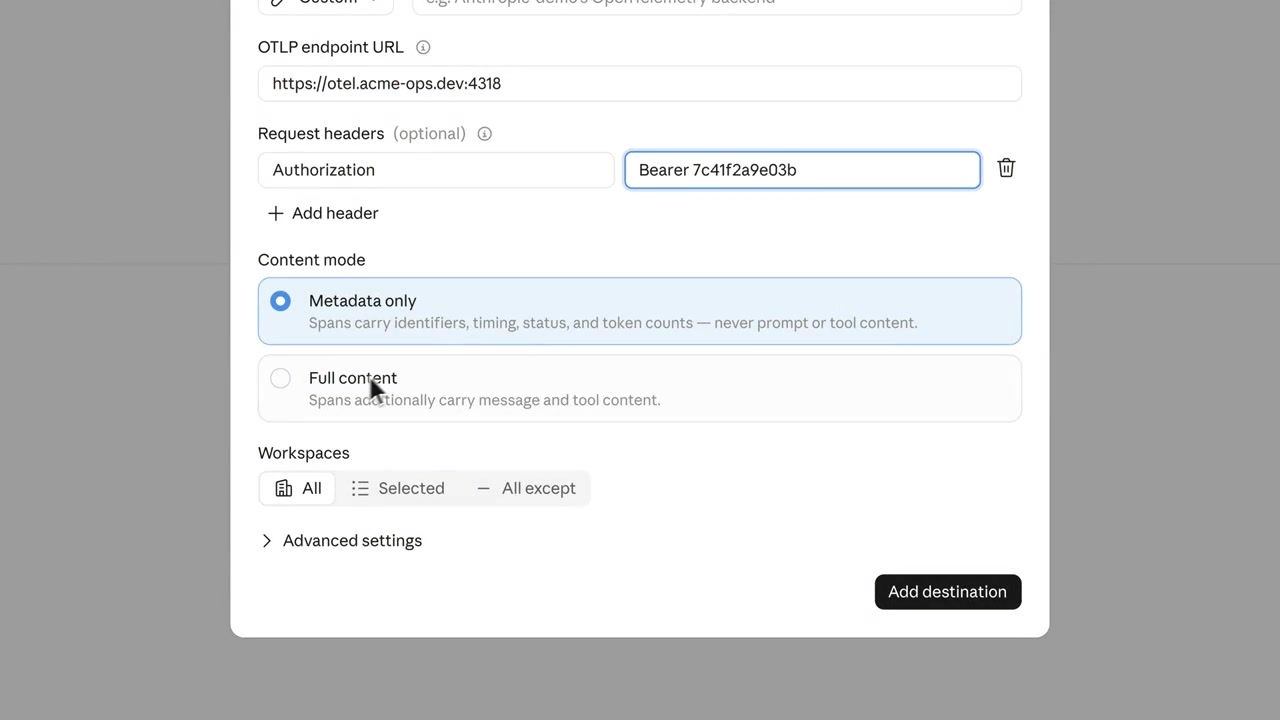
Claude API sends its traces to your observability tool, Video
“Without changing your code,” the Claude API emits a span for each model request and tool use into your observability platform, with prompts exported only if you opt in. Has a failing tool call in your Claude app ever been hard to trace?
Related stories
- Texas sues OpenAI and Sam Altman over ChatGPT safety
- Florida wants outside oversight before OpenAI’s next model
- B.C. sues OpenAI over chats the RCMP never saw
- Lawsuit wants OpenAI to pay kids per token of their data
- OpenAI’s 2019 note: “We trained GPT-3 on pirated stuff”
- Microsoft disclaims its own director’s “astonishing theft”
Comments
No comments yet. Be the first.
Join the conversation
Sign in to leave a comment. It appears after moderation.