
Judge orders ex-OpenAI engineer Alfozan held until trial
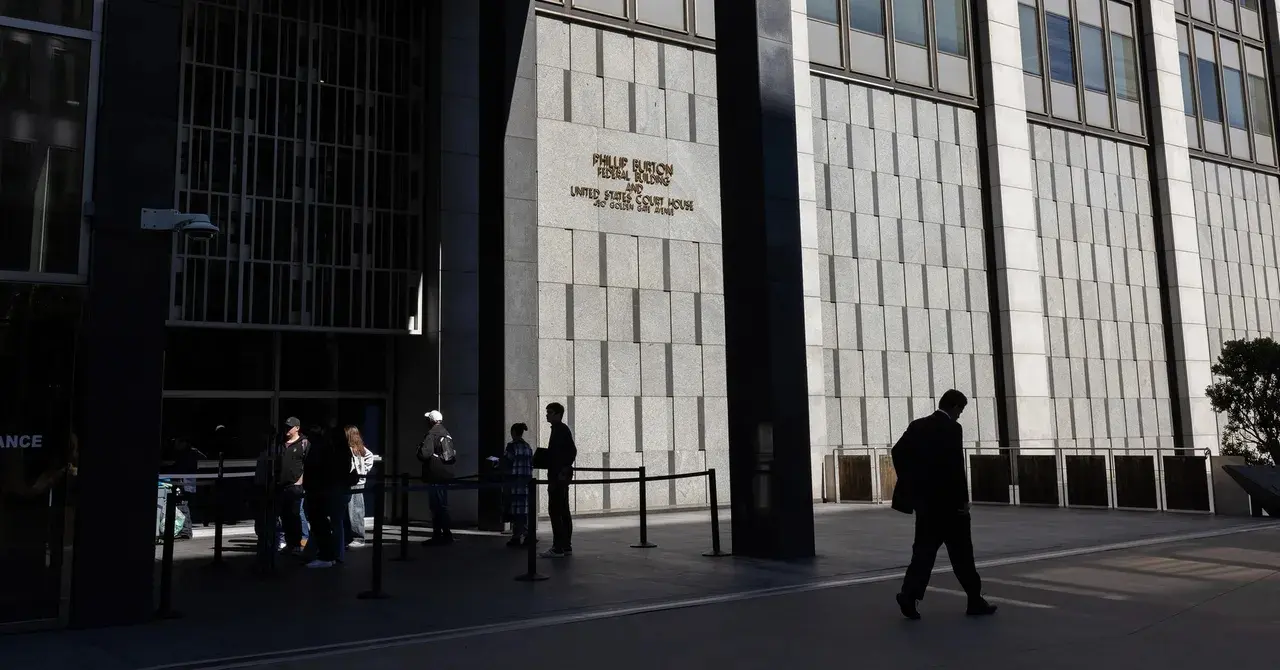
Magistrate Judge Alex G. Tse on October 19 refused to release Abdulrahman Alfozan, the former OpenAI engineer accused of bugging a conference room where executives met US government officials, keeping him detained while he mounts his defense. Prosecutors had argued that he would flee to Saudi Arabia with its government’s help, and their filing says the FBI found he had opened a folder called “Saudi Gov Docs” on his iPhone shortly before his arrest.
US attorney Craig Missakian set out that case in a detention memo from the US Attorney’s Office filed on October 18, describing Alfozan, a Saudi national and US permanent legal resident, as a flight risk with support from the Saudi government.
The “Saudi Gov Docs” folder
Alfozan accessed the folder on October 4, the FBI found. Prosecutors have not made public what it held; after opening it, they say, he asked OpenAI’s productivity agent:
who from OpenAI could be suitable to attend a high level informal meeting with ministers in Saudi Arabia? List 10 people and why each. Ideally high levels.
The phone also held WhatsApp logs in which “a member of the Saudi Royal Family” seemed to be recruiting him, running from 2025, the year he joined OpenAI, until October 5. In one exchange he replied “100” to a message urging that “Saudi needs you more then [sic] the US!” The government argues he was pursuing a permanent move back to Saudi Arabia during the country’s biggest AI push yet.
A second bug
OpenAI staff found the first device on or about September 30, plugged into a USB port on the back of a television in an executive conference room and concealed in toilet paper; its contents were encrypted. It had been in place for “at least multiple days,” the memo says, adding: “In the days surrounding the time period that the device was installed, OpenAI executives met with government officials in that very room.” OpenAI has said it used its own models to trace the device to a specific employee and has “no indications of this individual inappropriately accessing or exfiltrating model weights, source code, or customer data.”
The search of Alfozan’s home turned up recording devices similar to the ones planted at OpenAI. Photos on his iPhone showed “at least one additional concealed recording device” and what appear to be input/output panels on televisions and other electronics “in various locations in OpenAI buildings, including another conference room where sensitive meetings frequently occurred.”
Prosecutors say he used an OpenAI productivity agent to research which conference rooms could best be exploited, and logs suggest he used his wife’s personal ChatGPT account to look up how to make the devices record automatically when they detect speech and accept remote access controls. After his arrest, his wife confirmed she had seen her ChatGPT account open on his laptop. In the complaint, a chatbot account tied to his spouse and sharing identifiers with his own sent prompts about building a continuous audio recorder between September 24 and 30.
Who paid for the tickets?
Alfozan had booked a one-way ticket to Riyadh for himself, his wife and their baby, a ticket prosecutors say was “paid for by the Saudi government.” He planned to use two months of paid parental leave from OpenAI to help his wife, whose student visa had expired, move back to Saudi Arabia for good. The FBI arrested him days before the flight, and his wife and son left the US on an earlier one: “a member of the Saudi military booked and paid for yet another one-way ticket for the defendant’s wife and son, this one business class to Doha, Qatar,” the memo says. They “are now in Saudi Arabia and have no plans to return.”
His attorney, William Pernik, has said the trip was booked before Alfozan was under investigation and was for “family and immigration reasons,” Al Jazeera reported.
FBI agents seized his Saudi passport, but Missakian argued that nothing would stop Alfozan, if released, from obtaining travel documents and leaving “with or without the help of a foreign government that has previously assisted its citizens depart the United States under similar circumstances.” The memo points to Ali Alzabarah, a former Twitter employee charged with spying for the Saudi government, whose charges are still pending partly because “a Saudi foreign official” helped “coordinate a next-day flight to Saudi Arabia” shortly after Twitter confronted him.
OpenAI hired Alfozan in or around July 2025 at a base salary of $325,000, plus a $2,200,000 new-hire equity grant in profit participation units, and the government says he has at least two bank accounts in Saudi Arabia.
The charge and the defense
The memo allows that Alfozan may have acted on his own and suggests that it makes no difference: “Whether the defendant wanted to record OpenAI meetings to enrich himself by enhancing his own business prospects, or to provide aid [to] a foreign government, or both, his conduct is criminal.” The charge is still illegally recording OpenAI’s meetings, with a maximum sentence of five years, though the government expects it may bring more serious charges as evidence mounts.
Pernik had asked for Alfozan’s release with location monitoring and a surrendered passport, noting that he had applied to become a US citizen, Al Jazeera reported. In comments carried by The San Francisco Standard, Pernik said the allegations “appear wholly out of character” and that “Where someone was born is not evidence of anything.”
Up next
ClaudeClaude Codeanalysis
Claude Code 2.1.304 warns before a resume eats your limit
You go back to an idle Claude Code conversation, and resuming it would eat a noticeable share of your 5-hour limit. Version 2.1.304 warns you first on Pro and Max. Has resuming an old chat ever drained your Claude limit before you noticed?
Related stories
Comments
No comments yet. Be the first.
Join the conversation
Sign in to leave a comment. It appears after moderation.