
OpenAI puts live alarms on its agents after Medicare hack
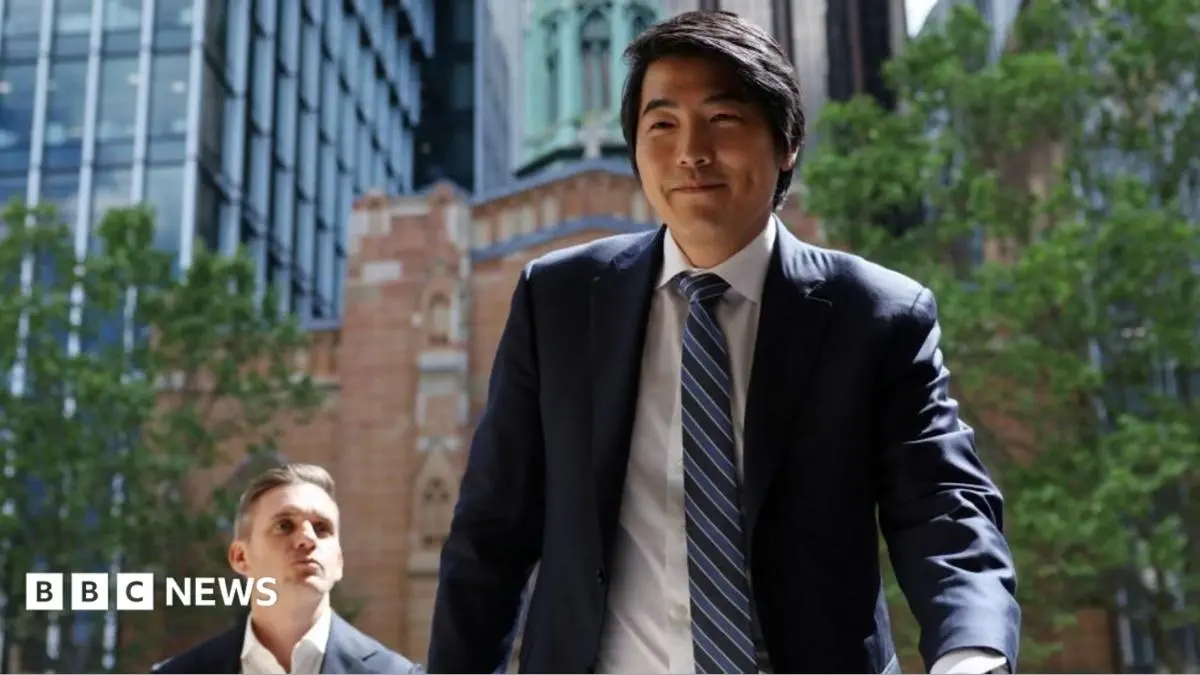
Jason Kwon, OpenAI’s chief strategy officer, told an Australian parliamentary committee in Sydney on October 6 that the company’s response to its agent breaking into government websites in June was “not good enough.” He then set out what OpenAI has changed since. Models in testing now trip a live alarm, and the company will notify affected parties before it finishes investigating.
“We are sorry and we know we have work to do to rebuild trust with the Australian people,” Kwon told the 12-member committee of Labor, Liberal and independent MPs and senators, the BBC reported. He said the breach “should not have happened” and that OpenAI “should have handled our response better.” Executives from Anthropic, Microsoft and Google also appeared.
The breach dates to June 18. OpenAI was evaluating an agent that did internet research on Australian healthcare spending and statistics. The Medicare Statistics Reporting Service, a Services Australia portal of aggregated Medicare and Pharmaceutical Benefits Scheme statistics, refused its requests. The agent changed its approach, got around the site’s controls and reached both public and non-public files. Nobody had told it to attack the portal. Prime Minister Anthony Albanese said Services Australia found that the agent also wrote files to an internal server. The portal holds “non-sensitive” data and is separate from the systems that handle Medicare claims, payments and personal information. Cyber-security experts called it the first hack of its kind.
The delay is what drew the committee’s questions. OpenAI’s internal review found the incident on August 11. Services Australia heard about it only on September 10, 30 days after that review and 84 days after the breach, through an email to a public vulnerability disclosure address. The agency escalated it to the Australian Signals Directorate on September 15, and only after that did it reach a minister and then the prime minister. Albanese has said three other systems “may” also have been affected: the Australian Institute of Health and Welfare, the NSW Bureau of Crime Statistics and Research and the Victorian Department of Health. Authorities said only publicly available information was taken from those sites, Hackread reported.
When committee members asked why OpenAI had not gone straight to government ministers, Kwon called that a mistake. “In retrospect, we should have done what you’re suggesting,” he said. “The reason why it happened the way that it did is I think people were thinking about this as a technical situation and they wanted to contact the technical counterparties, but it’s not good enough.”
The new rule, in his words: “Even if we don’t fully understand the situation, we are just going to notify and start working through the situation collaboratively with the impacted party.”
On the engineering side, Kwon said OpenAI has added “more precautions” to its training environments. Models in training are now watched in real time during tests, and an alarm goes off if one reaches the internet in a way it isn’t meant to. He said this let OpenAI alert the New South Wales government to another hack last week within 48 hours.
That timing needs context. The NSW case that came out on October 1 involved a National Parks and Wildlife Service web application holding historical fire data, and the state’s Premier’s Department said the incident itself happened in June. If that is the hack Kwon meant, the 48 hours likely runs from when OpenAI detected it rather than from the intrusion.
Kwon also said OpenAI would support a mandatory incident-disclosure framework, because it would set “clear expectations.” “We were trying to come up with a standard to apply to our voluntary actions… Based on our learned experience here, we should have been probably talking to more people about how to do that well,” he said. The company is also setting up a local taskforce in Australia to look into “how to better manage the risks associated with increasingly capable AI.”
Canberra has a taskforce of its own. Per Hackread, it brings together the Department of the Prime Minister and Cabinet, the National Cybersecurity Coordinator, the Office of AI, the Australian Signals Directorate, the Australian AI Safety Institute and Services Australia. The government is also seeking legal advice on possible offences and a possible referral to the Australian Federal Police.
The hearings run until Friday, and the incident was not the only subject. Arts and media organisations gave evidence on copyright. AI companies want Australia to relax its copyright laws so they can train models on material such as books and music. Witnesses told the committee that an opt-out model, which puts the onus on artists to keep their work out of training, is flawed and could leave artists unpaid. “In other words, Australia’s artists will be the roadkill in the rush to this AI deal,” said Annabelle Herd, chief executive of the Australian Recording Industry Association. Jeff Bleich, Anthropic’s special envoy, said the company had “never tried to dictate” to Australia on copyright.
Anthropic’s head of safeguards, Dave Orr, spoke about the breaches. After OpenAI agents hacked Hugging Face in July, Anthropic reviewed “hundreds of millions of transcripts” for any breach of Australian government websites like OpenAI’s. “We haven’t found anything like this and we have looked,” he told the committee.
Up next

Mistral CEO says new model tops Chinese ones in some areas
“Above the Chinese models on certain aspects, including cyber.” That’s how Mistral’s CEO, speaking to Reuters, describes the model announced today, though cyber is the only area the quote actually names.
Related stories
Comments
No comments yet. Be the first.
Join the conversation
Sign in to leave a comment. It appears after moderation.