
Claude stamps 2026 onto “best X” search queries
When Claude runs a web search for a “best X” or comparison question, it adds the current year to the search string itself. It leaves the year off how-to, local-service and cost questions. That is the finding of a research note from Canonry published April 30 under Arber Xhindoli’s byline. For anyone publishing content that Claude might cite, it suggests which pages should carry a year and which shouldn’t.
Canonry researcher Alejo Garcia led the study. The team sampled subqueries across categories and looked at the search strings Claude actually sent, not at what the user typed. On its GitHub page, Canonry describes itself as an agent-first, open-source AEO platform, with a CLI, MCP and an API, for tracking AI visibility over time. AEO, answer engine optimization, is SEO aimed at AI answers rather than search result pages. The note says the pattern was “consistent enough to act on.”
These queries had the year added:
- “best CRM for startups” went out as “best CRM for startups 2026”
- “best collaboration tools for remote teams” went out as “best collaboration tools for remote teams 2026”
- “best running shoes” went out as “best running shoes 2026”
These went out without a year: advice and decision queries (“how to choose a therapist”, “how to find a specialist doctor”), local service queries (“best plumber near me”, “home cleaning services near me”) and cost estimates (“home renovation cost estimate”). “Best plumber near me” starts with the same word as the shoe query, and it still got no year. Canonry’s rough rule: “if the answer is meant to be evergreen advice, no year. If the answer is a list that should be current, the year goes in.”
This is query rewriting. Claude doesn’t pass the user’s wording straight to the search engine. It writes its own query first. LLMs commonly do this in the first stage of retrieval, rewriting a query in natural language to get more accurate results, as Elastic describes in its write-up of LLM search pipelines. Canonry argues that content strategy hasn’t caught up: “The retrieval layer is doing more query rewriting than most content strategy assumes.”
Canonry’s FAQ limits the claim to its own sample. Claude doesn’t always add the year. In the queries the team ran, the year appeared mostly on commercial and “best X” comparison queries. It never appeared on how-to, advice, local service or cost-estimate queries.
The advice that follows splits by page type. Say you publish a “best X” or comparison page that mentions only last year, or no year at all. The search Claude actually runs contains “2026”, so a page with 2026 in its title, headings and structured data is the closer match. For those pages, Canonry recommends putting the current year in the H1, in section headings, and in dateModified on Article or BlogPosting JSON-LD, then refreshing on a real schedule so the date is honest.
For advice, how-to, local-service and cost-estimate pages, the recommendation is the reverse. Adding ”(2026)” to a how-to title does nothing for Claude’s search, since Claude doesn’t search those queries with a year, and Canonry warns it can make the page look dated to readers sooner than it needs to. Those pages should still use dateModified for trust signals, but the year stays out of the H1. Canonry’s FAQ says the same split applies to Claude “and similar retrieval layers”, and that year-stamping helps mostly on commercial comparison content.
The suggested workflow is to audit your pages by category and apply the year only where the retrieval layer actually searches with one. “The cheapest signal you can give it is matching the query it is actually running,” the note says.
The refresh rule cuts both ways. If a page says 2026 in the H1, Canonry says the body, the schema and dateModified should all reflect a recent update: “A title that claims ‘best X 2026’ on top of 2024 content is a worse match than a page that does not claim a year at all.”
Up next
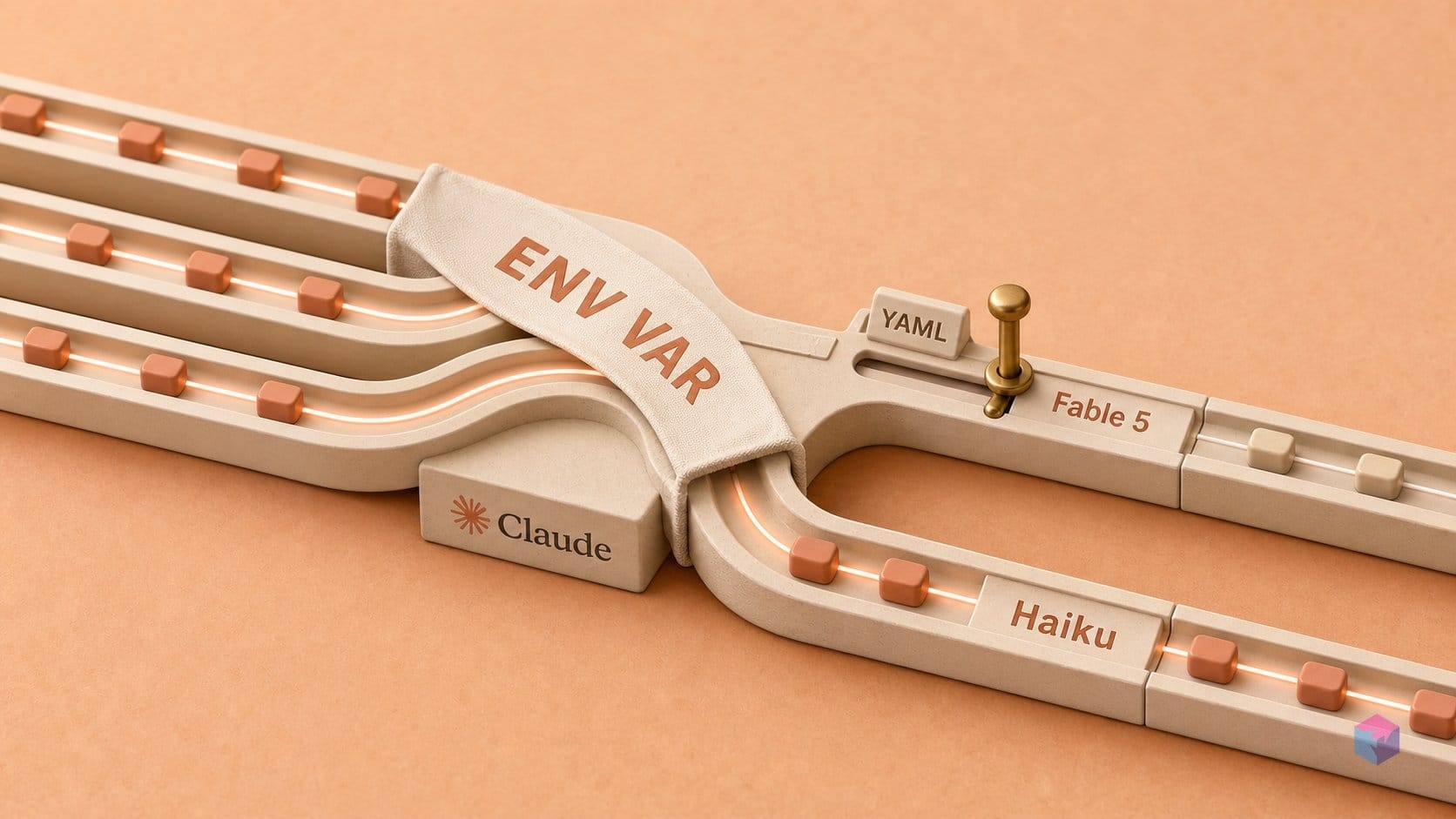
Pinned Claude Code subagents fall through to Fable
You dispatch a cheap log-digging subagent two hundred times a day and it quietly runs on Fable, because the frontmatter pin sits at rank 3 of Claude Code’s four model layers and has dropped out across releases.
Related stories
Comments
No comments yet. Be the first.
Join the conversation
Sign in to leave a comment. It appears after moderation.