
Forced rm detection tightened in Codex

OpenAI’s Codex team said on August 19 that changes rolled out over the previous couple of weeks have further reduced the risk of Codex performing destructive actions during its work. The team posted the summary in a recap on Twitter. The work started a few weeks earlier, when the team began investigating a small number of reports.
The recap doesn’t come out of nowhere. Earlier in the summer, users found GPT-5.6 Sol in Codex deleting real user files. A cleanup command meant for temporary working folders misused system variables such as $HOME, so it targeted the actual home directory instead of a temp path. The fix for that bug, as it was described at the time, had Codex verify deletion targets before running them, create fresh temporary folders, block full-access mode from being triggered by accident, and apply stricter checks to risky delete commands.
The change the team spells out in its GitHub post is stronger forced rm detection. It now picks up literal forced rm invocations inside control flow, substitutions, pipelines, traps and nested shells, as well as behind sudo or env wrappers. The detection is tied to the literal invocation, which leaves the wrapped and nested cases as the part that actually got wider.
OpenAI also says that most Codex Desktop token usage inside the company comes from Auto-review mode.
For users, OpenAI’s recommendation is to stay in a sandboxed mode and keep the app updated.
Up next
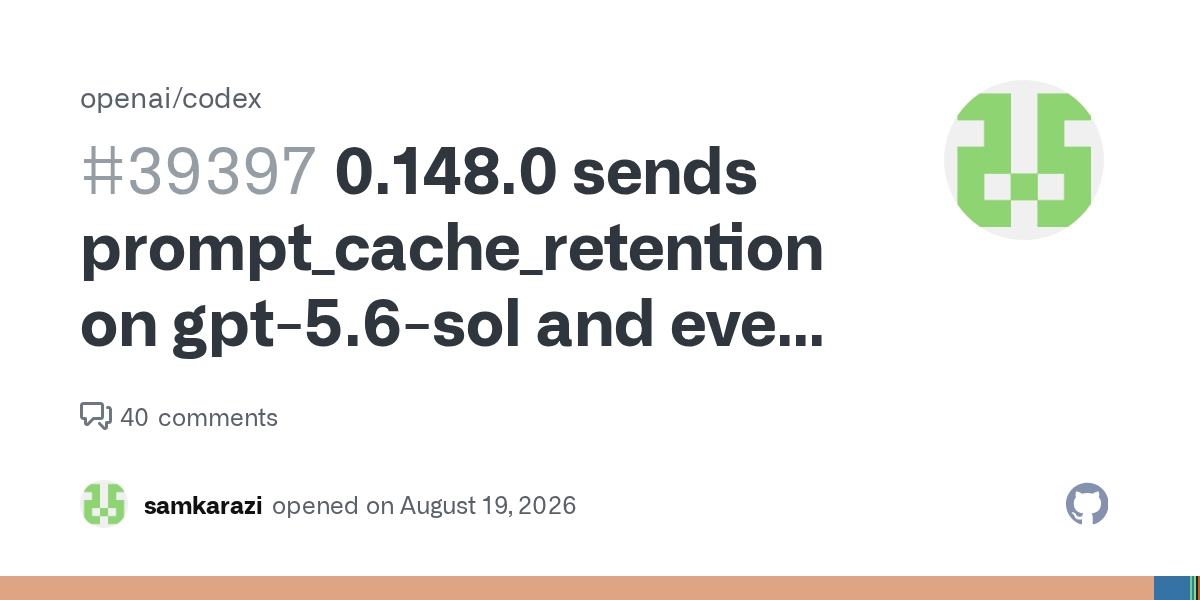
Every Codex turn fails on gpt-5.6 Sol after 0.148.0
Per a bug report, every turn in Codex CLI 0.148.0 fails on gpt-5.6-sol, because the client keeps sending prompt_cache_retention and the model rejects it. Turns that already started tool calls hang instead of erroring.
Related stories
- Prompt rule sends Codex to the web for a local file
- GitHub report: Codex memory sends chats cross-provider
- A dependency wrote AGENTS.md and Codex hid the edit
- Prompt injection reached the official Codex npm pipeline
- Embedded browsers in Codex and VS Code leak the whole disk
- Codex CLI 0.157.0 leaves a daemon running after you quit
Comments
No comments yet. Be the first.
Join the conversation
Sign in to leave a comment. It appears after moderation.