
openai
Instant Cloud shuts down in 2027 as team joins OpenAI
Promtime
 openai
The Instant team is joining OpenAI, and the hosted Instant Cloud service will shut down on August 31, 2027, leaving existing users 12 months to migrate their apps off the platform. New signups are already closed, according to the announcement published by Instantdb, which also sets out refunds and a backup retention date.
At a glance
- Any subscription started after July 31, 2026 will be refunded in full, and existing customers are being asked to move their workloads off the hosted service within the next 12 months.
- Instant counted more than 17,000 users who built 400,000 apps, and those apps processed about 2.5 billion transactions over the life of the hosted service.
- All of Instant is open source, and the team published a migration guide for self-hosting, so teams can keep running the database themselves after cloud backups disappear on August 31, 2028.
Acquihires of small infrastructure teams usually leave the hosted product behind, and Instant is no exception: the practical outcome for anyone running production apps on Instant Cloud is a migration project with a hard deadline. The open-source codebase softens that, since self-hosting is a real option rather than a rewrite. The stated pull toward agent-driven usage also reads as a signal about where database tooling is being consumed from.
New signups are closed and Instant Cloud apps stop running on August 31, 2027
The wind-down runs on a schedule that is already in motion. New signups are closed, existing users are asked to move off Instant Cloud within the next 12 months, and any subscription started after July 31, 2026 will be refunded in full. All cloud apps stop running on August 31, 2027.
Backups outlive the apps by a year and remain available until August 31, 2028. The team published a guide covering how to self-host Instant and migrate existing apps, and says it worked to make that process as seamless as possible. All of Instant is open source and can be run outside the cloud service.
More than 17,000 users built 400,000 apps on Instant
More than 17,000 users tried Instant in the years since the first public version. They built 400,000 apps between them, and those apps processed about 2.5 billion transactions, according to the figures published with the announcement. The team told customers it had been an honor to build for them over that period.
Instant says most of its users had come to the database through agents, and that it is joining OpenAI to bring intelligence to as many people as possible. The team started Instant to make it easy to build delightful apps, and says agents are still early in what they can do.
Instant started as a 2021 blog post about a database in the browser
The idea dates to 2021, when the founders published a blog post about a database running in the browser. Instant joined Y Combinator in 2022, built a prototype and shipped a version zero, then spent years turning that prototype into production software.
Daniel Woelfel joined early and worked on the hardest problems in the sync technology. As the community grew and more contributors arrived, the project was formally open sourced, after which the team describes a stretch of heavy user feedback. Drew Harris joined later to make the TypeScript SDKs more ergonomic.
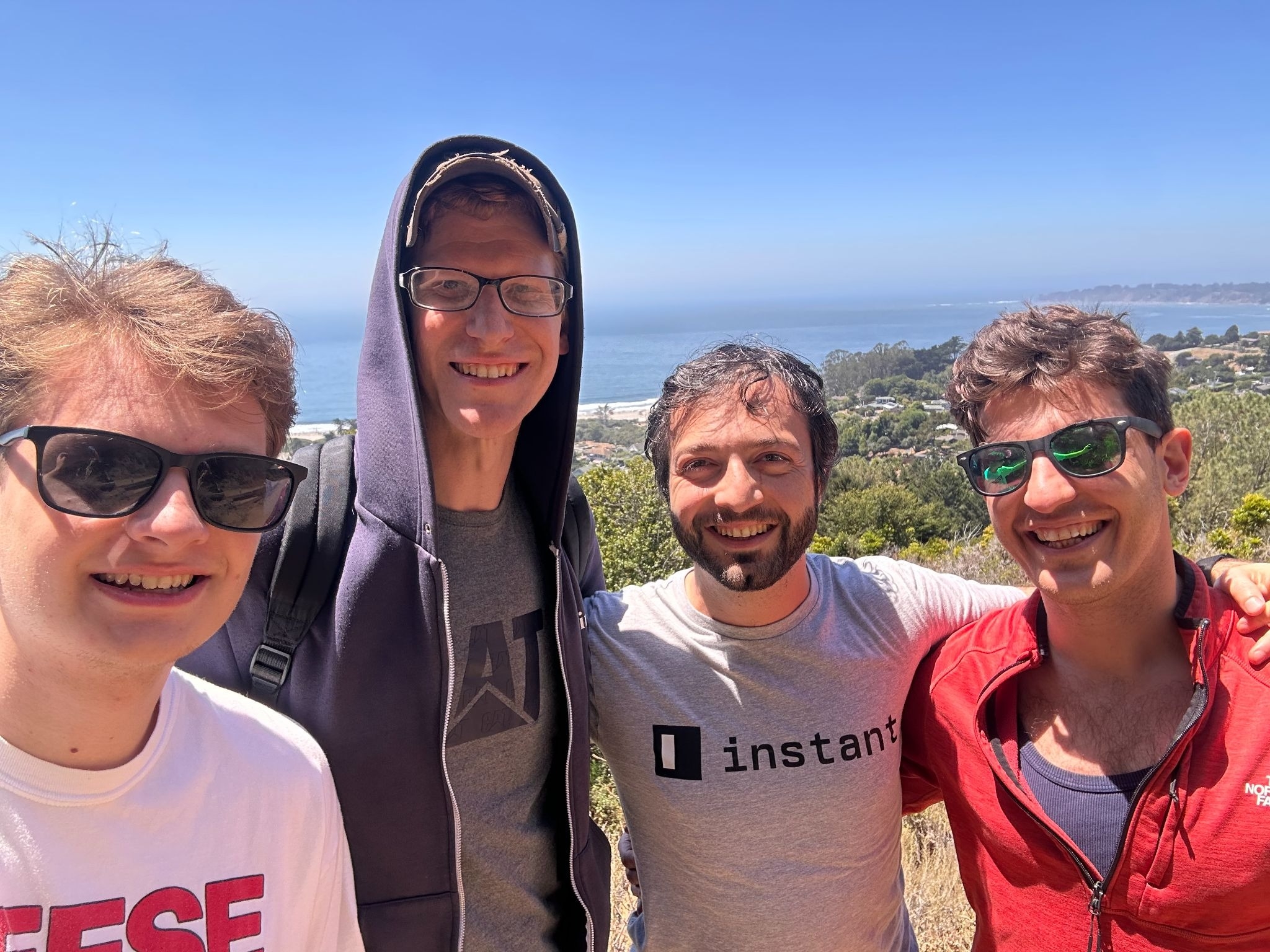
The team is Joe Averbukh, Stepan Parunashvili, Daniel Woelfel and Drew Harris. Instant credits outside contributions from Mark Shlick, Nikita Prokopov and Alex Reichert. One early milestone the team singles out is a post on X showing colors syncing in React Native, which it says went viral.
The 12-month migration window
Two dates govern what is left: cloud apps stop on August 31, 2027, and backups disappear on August 31, 2028, which leaves a year to pull data out after the apps go dark. The announcement does not say what the four team members will work on at OpenAI, and it gives no terms for the deal or plans for maintaining the open-source project.
Comments
No comments yet. Be the first.
Join the conversation
Sign in with Google to leave a comment. Your name and avatar come from your Google profile, and the comment appears after moderation.
We only use your name and avatar from Google. We never store your email address.