
Muse Spark Open fits on two Mac Studios with a terabyte
Meta released the weights of Muse Spark Open, its 816B-parameter model, on October 15 and said two Apple M5 Ultra Mac Studios can run it. That holds only for the 4-bit NVFP4 checkpoint, because the BF16 weights Meta published come to 1.64 TB. Apple measured that two-Mac setup a day later and got about 25 tokens per second.
Meta’s announcement describes a natively multimodal mixture-of-experts model, a design where each token runs through only part of the network. Muse Spark Open has 816B total parameters, 42B of them active per token, and a 1M-token context window. It is built for coding, long-horizon agent tasks and multi-step reasoning, and Meta calls it “the most capable US open-weight model to date.” Mark Zuckerberg wrote on X that it “runs great on new Mac Studios thanks to work with @johnternus and Apple.”
The Mac pitch rests on memory and bandwidth. Each M5 Ultra’s integrated GPU can address up to 512 GB of unified memory, and the chip reads it at 1.2 TB/s, which Meta says is fast enough to fetch the small slice of weights each token needs. In Meta’s words, two machines behave “like one supercomputer with a terabyte of unified memory.” Meta’s on-device tests used Muse Code, its terminal coding agent, running on Muse Spark Open. The agent shipped bug fixes, new features and a full build for Ice Cubes, an open-source Mastodon client. It also drove DaVinci Resolve end to end, reviewing footage frame by frame to pick the strongest moments and crop them vertically. Meta gave no speed figures for those runs.
Hosted access comes through Baseten, Fireworks AI, Groq, Modal, Nebius, OpenRouter and Together AI. The weights are on Amazon SageMaker AI, Google Cloud Model Garden, Hugging Face and Microsoft Foundry Models. Meta says the model runs on SGLang, vLLM, TensorRT-LLM, Transformers, MLX, llama.cpp and Unsloth. We checked those projects on October 18. Support had been merged in llama.cpp, Transformers, mlx-lm 0.32.0 and Unsloth Studio’s GGUF path. vLLM’s pull request was still a draft waiting on a FlashInfer change. SGLang had merged three of the five parts of its launch-day support, and the last two, AMD ROCm support and the Helion megakernels, were still open and not yet passing CI.
Meta’s speed claims are tied to those Helion kernels, which are custom GPU kernels that tune themselves to the hardware. Meta reports 1.03-3.95x speedups at kernel level on NVIDIA and AMD GPUs, but only 3% end to end on AMD MI350. Meta’s blog is the only place we found those numbers.
Meta calls the license’s commercial terms “limited”, and the Muse Model License sets out three conditions. Every product that uses the model or a derivative must display “Built with Muse Spark Open”. A company that sells the model as an API and has more than $20 million in gross revenue in any 12 months must notify Meta and sign a separate agreement, though internal use and features inside its own products are exempt. Derivatives include models trained or distilled on the model’s outputs. The usage policy bans military and ITAR work, critical-infrastructure and weapons uses, and presenting outputs as written by a human. Meta claims no ownership of outputs.
Meta’s own benchmark table in the model card puts the model behind Kimi K3 on all three coding rows: 76.4 vs 85.0 on Terminal-Bench 2.1, 60 vs 68 on DeepSWE 1.1 and 58 vs 66 on SWE-Atlas-QnA. It comes out ahead on agentic and knowledge rows, including MCP-Atlas (89.2 vs 82.3) and JobBench (61.8 vs 54.3).
How the Spark line got open weights
The first Muse Spark was closed. It was free on meta.ai and in the Meta AI app, its API was in private preview, and no weights were released.
- April 2026: Meta Superintelligence Labs introduces Muse Spark, the first model in the Muse family.
- July 9: Muse Spark 1.1 launches, built for agentic tasks, with a 1M-token context and a public preview of the Meta Model API.
- August: Muse Spark 1.2 ships, and Muse Glimmer arrives as a 30B open-weight model under Apache 2.0, aimed at a single consumer GPU.
- September: Muse Spark 1.3 follows, with an open-weight version described as coming soon. Meta created the official Hugging Face repo on September 15.
- October: Muse Wonder arrives.
- October 15: the Muse Spark Open weights are released. On October 16, Apple publishes its benchmark tables for the model on Mac Studio.
Muse Spark Open is the first Spark model you can download, and it is 27 times the size of Glimmer. Glimmer ships under Apache 2.0, while Muse Spark Open has its own custom license.
Our analysis
What we checked
On October 18 we added up the file sizes in the official Hugging Face repo and its mirrors, and read the model card, the license and Apple’s machine learning research post on distributed MLX inference. We also estimated memory and bandwidth limits from the model’s config.
Meta’s blog says two Mac Studios hold the entire model, and it gives no speed figures for the Macs. What actually fits on two 512 GB machines is the 4-bit NVFP4 checkpoint, which is 533 GB on disk; the model card warns that quantized inference “may show minor quality differences”. The card puts BF16 at 2 TB, and Apple had published Mac speeds by October 16.
- Apple puts the NVFP4 footprint at about 493 GB, too large for one machine. Its decode speeds, in tokens per second, were measured over 128 generated tokens:
| Setup | 8,192-token context | 65,536-token context |
|---|---|---|
| 2 Macs, pipeline | 15.74 | 14.37 |
| 2 Macs, tensor parallel | 24.99 | 23.84 |
| 4 Macs | 36.73 | 34.66 |
- On two Macs in tensor-parallel mode, the first token arrives after 8.2 s at 8K of context and 70.3 s at 64K. Four Macs cut that to 4.8 s and 40.6 s.
- By our approximate estimate, bandwidth caps two chips at about 88 tokens per second, so Apple’s 25 is roughly 28% of that ceiling. The estimate ignores compute and the link between the Macs.
- A full 1M-token KV cache, the attention state kept for every token in context, comes to about 66 GB in bf16 by our count. That puts 4-bit weights plus maximum context at about 599 GB before activations and the OS, which fits in the 1 TB pool.
Fewer Macs, or smaller ones
Meta’s developer page lists four Mac Studios with 256 GB each as another way to hold the NVFP4 version. For a single machine you have to drop to 2 bits. ggml-org’s Q2_K GGUF is 304 GB, and its card says it “Fits in 512 GB of unified memory”. Unsloth says its 2-bit build fits in 256 GB of RAM, while its 8-bit build needs 900 GB. For the two-Mac route, mlx-lm 0.32.0 added the NVFP4 checkpoint on launch day, and MLX pulls the weights directly from Hugging Face. Meta’s official repo requires manual approval before you can download; the mlx-community, unsloth and ggml-org mirrors do not.
Up next
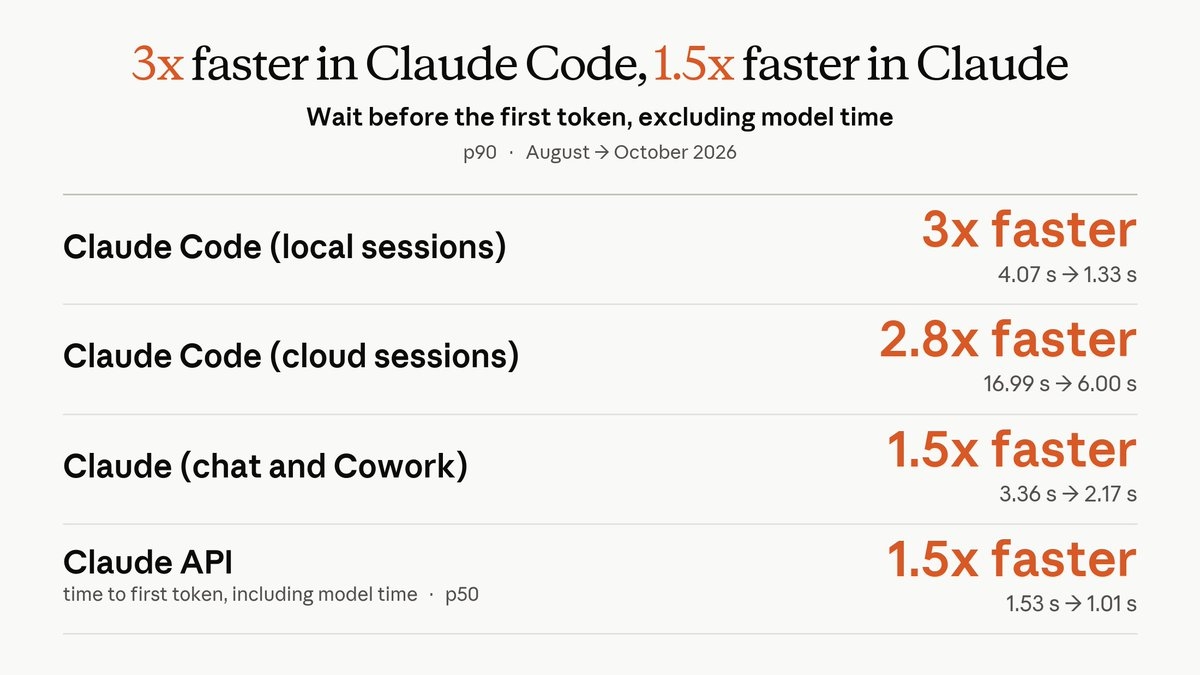
Claude Code gzips every turn so replies start sooner
Claude Code started gzipping the full conversation it ships to the model on every turn, which is why replies begin sooner, per Anthropic’s ClaudeDevs account. Where does your Claude Code lag more, the first reply or deep into long chats?
Related stories
- Meta’s open-weight Muse Spark Open lags Kimi K3 at coding
- DeepSeek, Kimi models carry Blackwell GPU fingerprint
- DeepSeek open-sources DeepInfer with Huawei Ascend support
- Surface Laptop Ultra slows down on local AI once unplugged
- Perplexity runs its agent locally on Windows RTX cards
- Nvidia pledges an open Hugging Face
Comments
No comments yet. Be the first.
Join the conversation
Sign in to leave a comment. It appears after moderation.