
A Millennium Prize problem falls to a group of agents
OpenAI said on September 8 that a group of AI agents has produced a solution to the Navier–Stokes Millennium Prize Problem. The Wall Street Journal counts it as the second of the seven problems set in 2000 to be solved, and the first solved by AI.
The announcement on OpenAI’s site comes with a writeup and a formal proof in Lean, a proof assistant that checks every step of an argument mechanically. “The proof was produced by a group of agents, using an OpenAI next-generation model significantly more capable than GPT-6 Astra,” the company wrote.
Charles Fefferman wrote the official problem statement for the Clay Mathematics Institute’s 2000 list. It asks whether the three-dimensional incompressible Navier–Stokes equations always have smooth solutions for all time, or whether a smooth solution can break down. The equations describe how fluids like water and air behave, and Wired puts their age at 200 years.
Only one Millennium Prize Problem had been solved before this, and each carries a $1 million prize, the Journal noted. The result follows a year in which “increasingly powerful AI systems have cracked conjectures that had long stumped humans,” the paper wrote, and it called OpenAI’s result “the most significant advance yet.”
Anthropic’s machine-checked proof of Fermat’s Last Theorem, written by Claude, was also delivered in Lean. But that project formalized a theorem humans had already proved, while OpenAI is claiming new mathematics on an open problem. A Lean check shows that the proof establishes the formal statement it was written for. Whether that statement matches Clay’s official wording is something mathematicians have to judge from the writeup.
Wired reported on the day of the announcement that some academics are “crying foul,” and that the announcement has been “overshadowed by accusations of impropriety.”
Up next
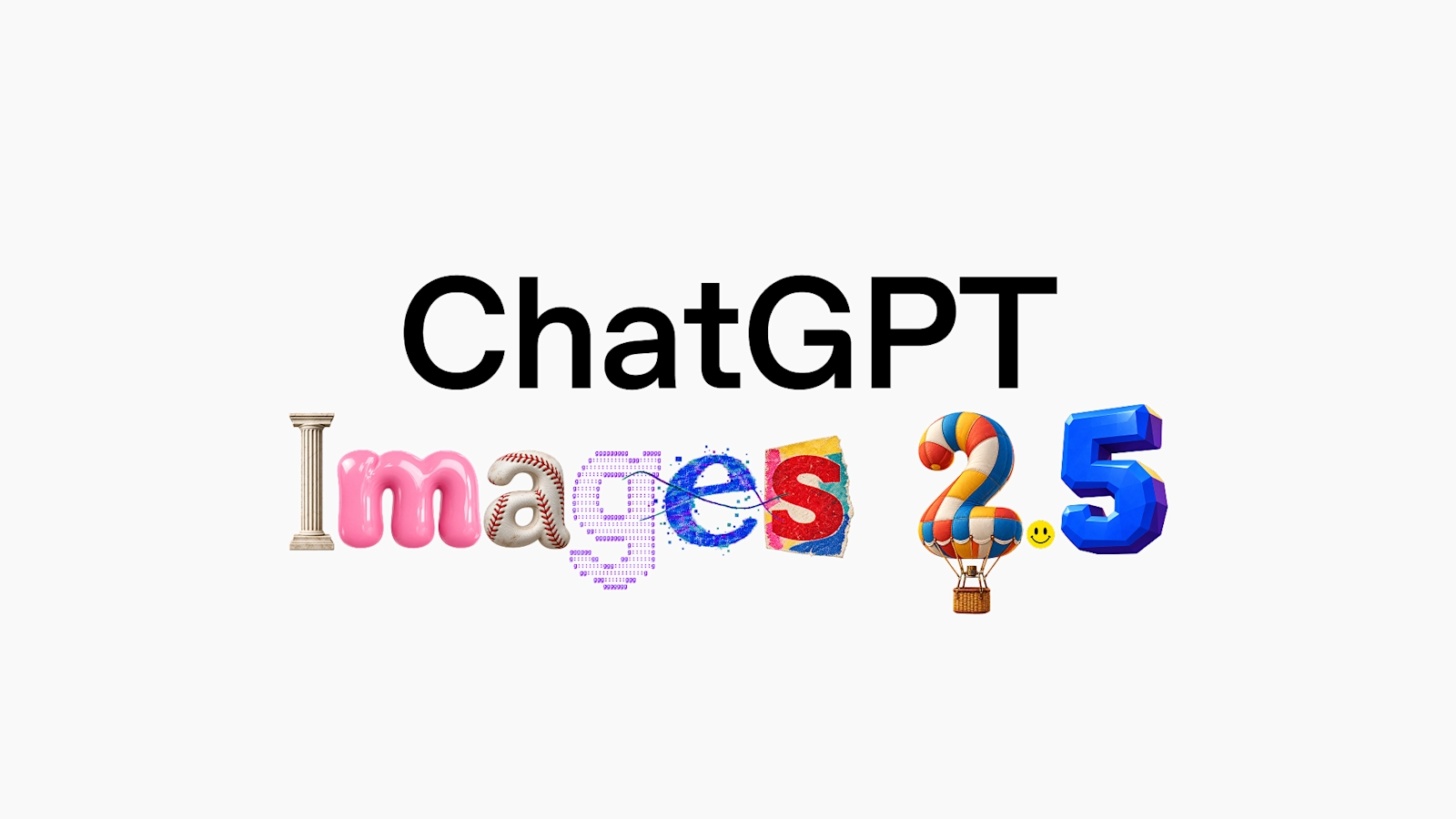
Sketches become editing input in ChatGPT Images 2.5
Sketch a rough layout, hand it to ChatGPT Images 2.5 and mark where the change goes. OpenAI says the new model renders up to 50% faster, and Axios found it held the likeness of people and pets better in early testing.
Related stories
Comments
No comments yet. Be the first.
Join the conversation
Sign in to leave a comment. It appears after moderation.