
ChatGPT's code points to a wallet for agent purchases
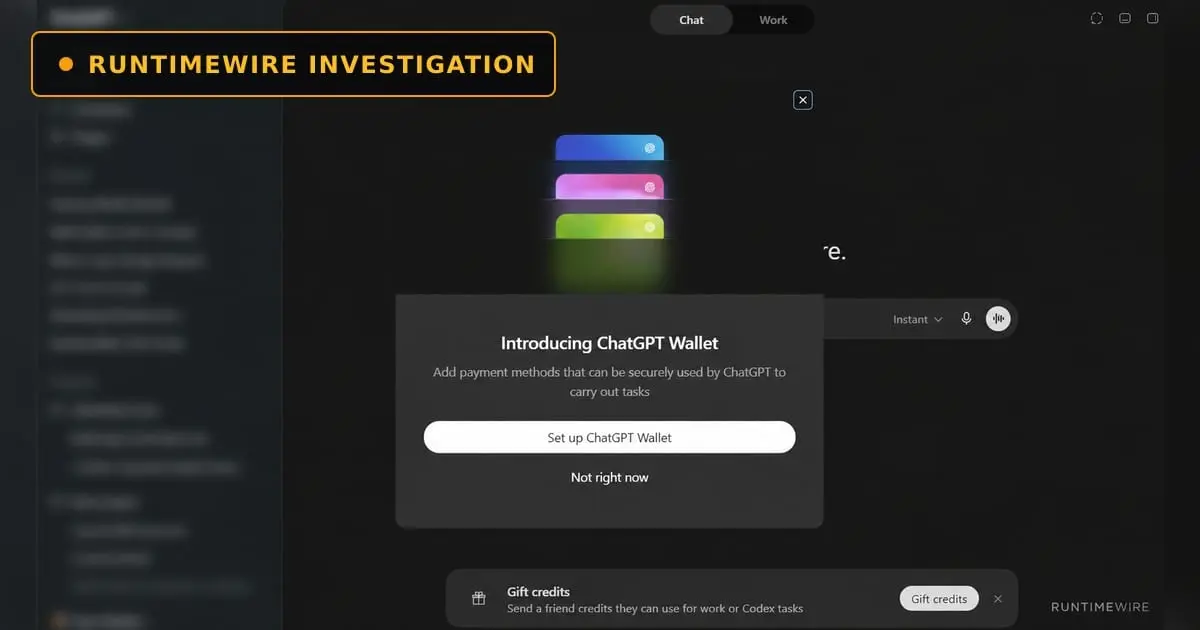
OpenAI is building a payment layer inside ChatGPT for purchases carried out by an agent, according to Runtimewire, which identifies the work through a feature gate numbered 3398492218. The outlet also names a connector, connector_openai_wallet, and an internal resource tied to enrolling a payment card.
At a glance
- The three identifiers cited by Runtimewire cover a feature gate, a connector named connector_openai_wallet and an internal resource, internal://wallet-vgs-card-enrollment, that points at linking a payment card.
- Nothing has shipped so far: as of August 14, 2026 the wallet is not live in ChatGPT, which leaves the code artifacts as the only visible sign of the work.
- A wallet would sit alongside two earlier moves: the March shift of checkout toward merchants, reported by Runtimewire, and the Visa partnership for agent purchases that Bloomberg reported on June 10, 2026.
Why it matters. Where the payment credential lives decides who controls an agent-driven purchase. If OpenAI holds a linked card, ChatGPT becomes a party to the transaction rather than a referral surface for merchant checkout, which appears to reverse the direction of the March change. It also puts OpenAI closer to the role banks, card networks and wallet providers occupy today, a position that carries fraud, dispute and regulatory obligations.
Runtimewire says the implementation references all three identifiers: the gate, the connector connector_openai_wallet and the resource internal://wallet-vgs-card-enrollment. Nothing has been released under the ChatGPT Wallet name, and as of August 14, 2026 no such feature is available to users of the assistant.
A wallet in this sense is a stored payment credential held by the platform, so a card is linked once and reused later rather than entered at each purchase. The resource named in the code, internal://wallet-vgs-card-enrollment, points at that linking step, the part of a checkout flow where card details are captured.
Two earlier steps sit behind the wallet work. Runtimewire reported in March 2026 that OpenAI had shifted checkout toward merchants, and Bloomberg reported a partnership between OpenAI and Visa, announced on June 10, 2026, that lets AI agents make purchases online.
What's next. No launch date has been given, and the artifacts describe an implementation rather than a shipped feature. Open questions include which cards and regions any enrollment flow would accept, whether the wallet would apply to purchases completed on merchant sites, and how it relates to the Visa arrangement reported by Bloomberg. Feature gates of this kind can also be removed before a product reaches users.
Up next
Zhipu AI will release GLM-5.3 weights in stages after safety reviews
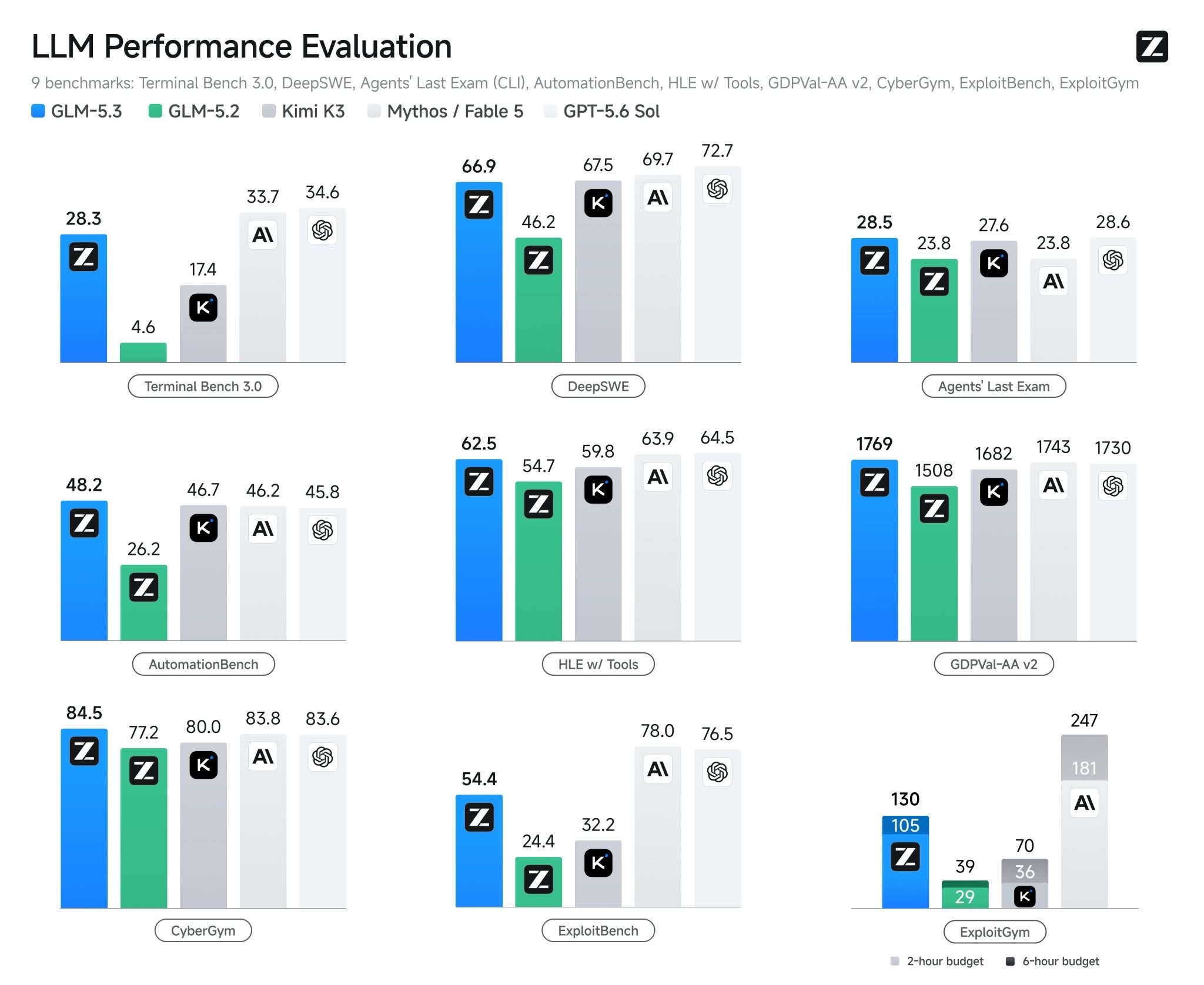
Zhipu AI announced GLM-5.3 in ZCode on August 14, saying API access and open weights will both ship in stages after strict safety checks. A Threads post claims an 84.5 CyberGym score, ahead of Mythos 5 and GPT-5.6 Sol. Zhipu hasn't confirmed that number.
Related stories
- Per FT, OpenAI's run rate sits at $50B, below Anthropic's
- OpenAI closes in on Anthropic in OpenRouter coding data
- OpenAI agents got into a Census site with found credentials
- OpenAI trains GPT-6 Astra on real Ironclad contract work
- ChatGPT Auto-review goes free for ChatGPT sign-ins
- OpenClaw agents kept reading memory after it was disabled
Comments
No comments yet. Be the first.
Join the conversation
Sign in with Google to leave a comment. Your name and avatar come from your Google profile, and the comment appears after moderation.